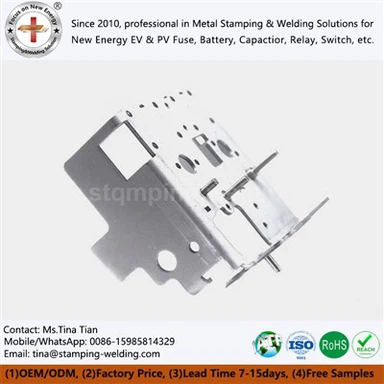
Detailed explanation of the core knowledge of copper and copper protective caps
May 20, 2026
Material properties
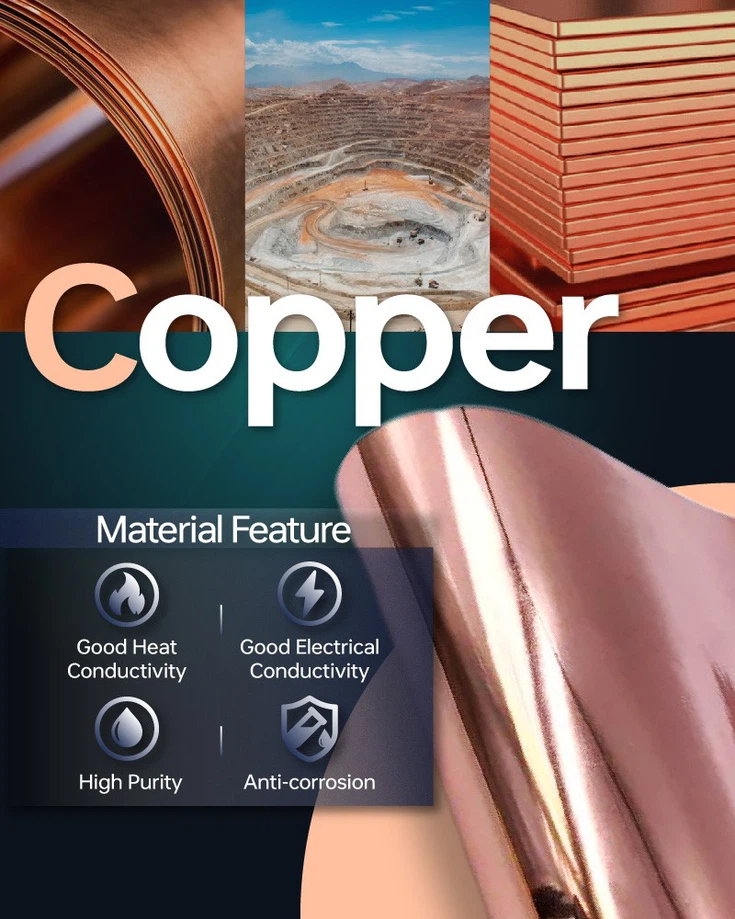
Red copper is named after its purple-red surface. It is an extremely pure copper material. Its electrical conductivity and thermal conductivity are second only to silver among all metals. Therefore, it is widely used to make electrical and thermal conductive equipment. Red copper shows good corrosion resistance in the atmosphere, seawater, and certain non-oxidizing acids (such as hydrochloric acid, dilute sulfuric acid), alkali, salt solutions, and various organic acids (such as acetic acid, citric acid), and is suitable for chemical industrial environments. In addition, red copper has good welding properties and can be made into various semi-finished products and finished products through cold working and thermoplastic processing.
According to the composition, red copper processing materials can be divided into four categories: ordinary red copper (T1, T2, T3 grades), oxygen-free copper (TU1, TU2 and high-purity, vacuum oxygen-free copper), deoxidized copper (TUP, TUMn) and special copper with a small amount of alloying elements added (such as arsenic copper, tellurium copper, silver copper). In the electrical industry, the purity of copper used to make electrical equipment such as generators, busbars, cables, switchgear, transformers, etc. is extremely high and must reach more than 99.95%, because very small amounts of impurities (especially phosphorus, arsenic, aluminum, etc.) will significantly reduce the conductivity of copper. In the above conductive applications, Fuse Copper is the key material for the core conductive component of the fuse. Its high conductivity and stable fusing characteristics directly determine the protection performance and response speed of the fuse.
Production process
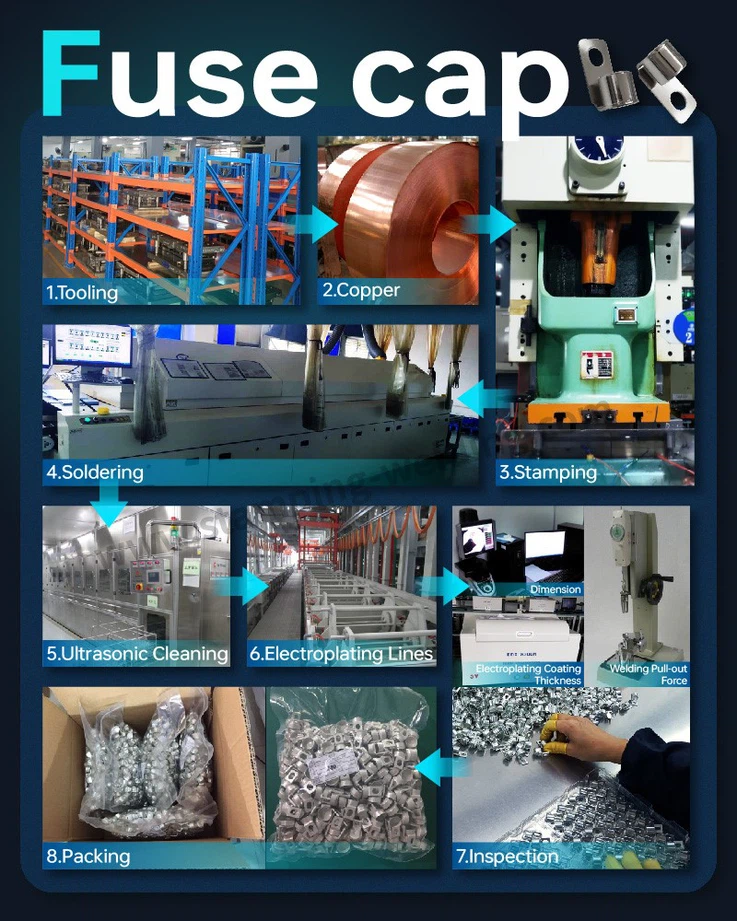
The industrial preparation and processing of red copper involves a complete technical chain from blister copper electrolysis to precision molding. During the electrolytic refining process, impure blister copper is used as the anode and a pure copper sheet is used as the cathode. Direct current is passed into the copper sulfate electrolyte. The anode copper gradually dissolves and the cathode precipitates extremely pure electrolytic copper, whose purity can reach 99.99%. According to composition differences, Chinese copper processing materials are divided into four categories: ordinary copper, oxygen-free copper, deoxidized copper and special copper with trace alloying elements added. Among them, oxygen-free copper has almost no oxygen and harmful impurities, making it the preferred material for high-fidelity electronic devices and vacuum tubes.
In the subsequent forming process, the excellent cold and thermoplastic properties of red copper enable it to be made into plates, strips, pipes and various special-shaped parts through processes such as rolling, drawing, extrusion and stamping. Copper Cap High Pressure OEM products are usually made of highly ductile copper and are precision stamped or spun formed to meet the dimensional accuracy and wall thickness uniformity requirements for end seals in high-pressure fluid systems. As the terminal sealing component of the pipeline system, Copper Stop End also benefits from the good plastic deformation ability of copper. It can achieve a close fit with the pipe mouth through the cold forging process to ensure that no leakage occurs under vibration and pressure pulsation conditions.
Application areas
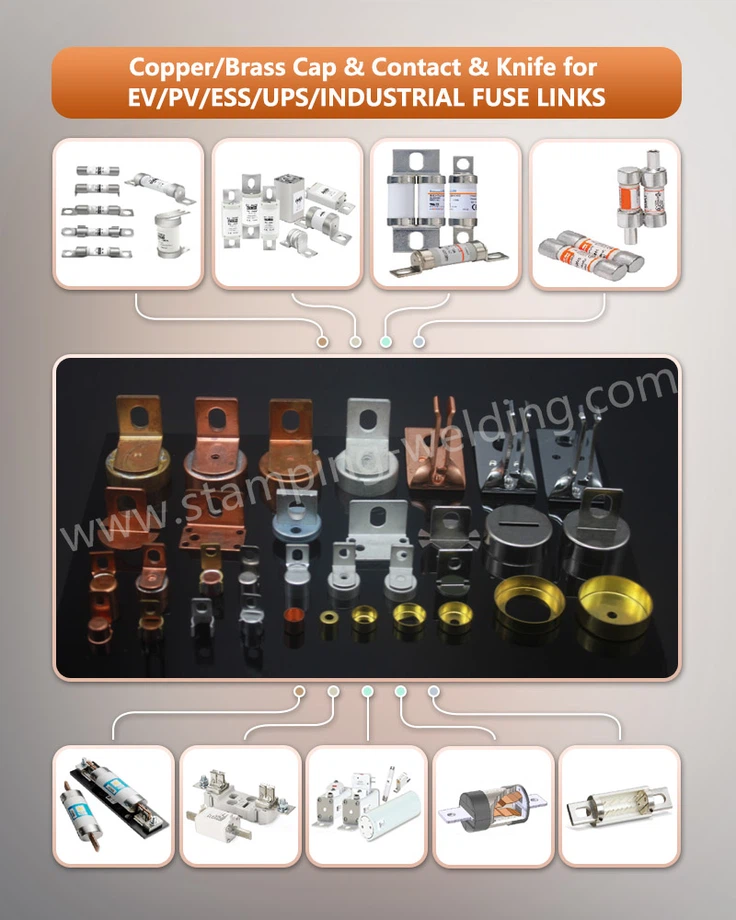
About 50% of the annual output of red copper is electrolytically purified into pure copper and used in the electrical industry. It is also widely used in the field of thermal conductive equipment. Copper is mainly used to make heat exchangers, pipes, flat plate collectors of solar heating devices and other thermal conductive equipment. In the chemical industry, copper is used to manufacture various types of corrosion-resistant pipes and containers due to its excellent corrosion resistance. In addition, red copper is also used in the field of architectural decoration, such as doors, windows, handrails and other furniture and decorative parts. Its unique purple-red color and good processing performance make it the first choice for high-end decorative materials. After the 1970s, the output of red copper exceeded the total output of other types of copper alloys, showing its important position in copper processing materials. Commonly used copper alloys also include brass, bronze and white copper. As a representative of pure copper, red copper has irreplaceable advantages in electrical and thermal conductivity. In the field of pipeline systems and fluid transportation, Copper Cap High Pressure OEM can withstand high system pressures, provide reliable sealing protection for pipeline ends, and prevent media leakage and external impurity intrusion.
Market prospects
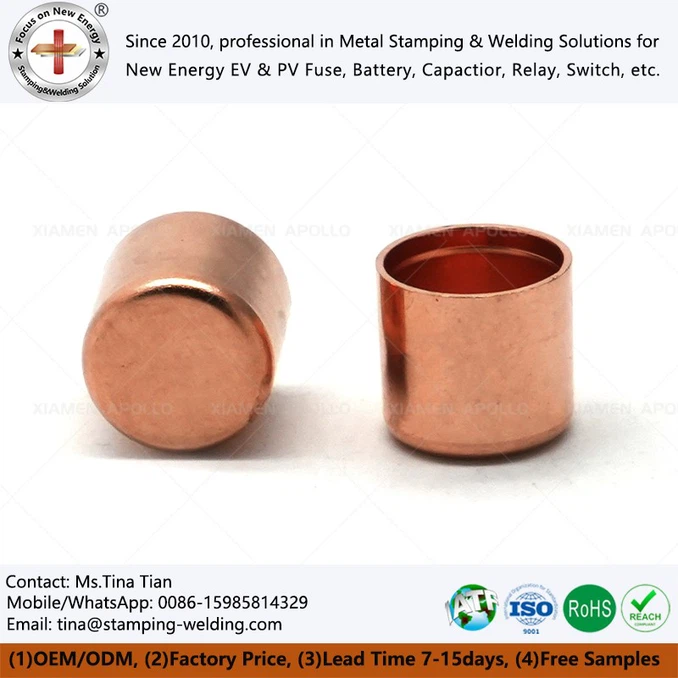
Copper protective caps offer several significant advantages. In terms of electrical conductivity, copper is an excellent conductive material, allowing the copper protective cap to have lower contact resistance and higher current transmission efficiency in electrical connections, which is particularly important for power systems that require low losses. In terms of corrosion resistance, copper has good chemical corrosion resistance and can resist erosion by a variety of acids, alkalis, and salt solutions, ensuring the long-term stability of the protective cap in harsh environments. In terms of mechanical strength, the copper protective cap has high mechanical hardness and impact resistance, can withstand certain external impact and extrusion, and protects internal precision components from physical damage. In terms of processing and molding, copper material has good plasticity and ductility, which can be easily processed into protective caps of various shapes and sizes through stamping, stretching and other processes to meet the personalized needs of different applications. For copper protective caps that require surface protection treatment, Tin Plated Copper End Caps form a dense tin plating layer on the surface of the copper substrate through the tin plating process, which not only further enhances the corrosion resistance, but also improves the welding wettability, making it suitable for electronic and electrical applications that require high welding reliability.
contact us
Whether it is standard or customized Copper End Caps for EV Fuse requirements, we can provide precise solutions according to customers' actual working conditions. If you need to know more product details or obtain technical support, please feel free to contact us at any time. We will provide you with professional services and high-quality product guarantees.