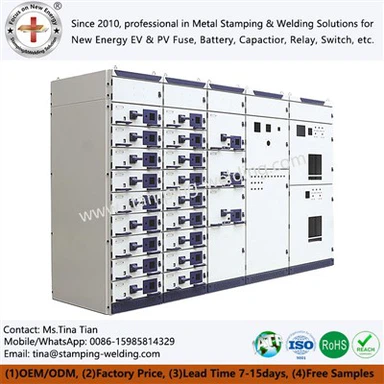
Detailed introduction and application analysis of PLC control cabinet
May 26, 2026
Basic concepts and industry positioning
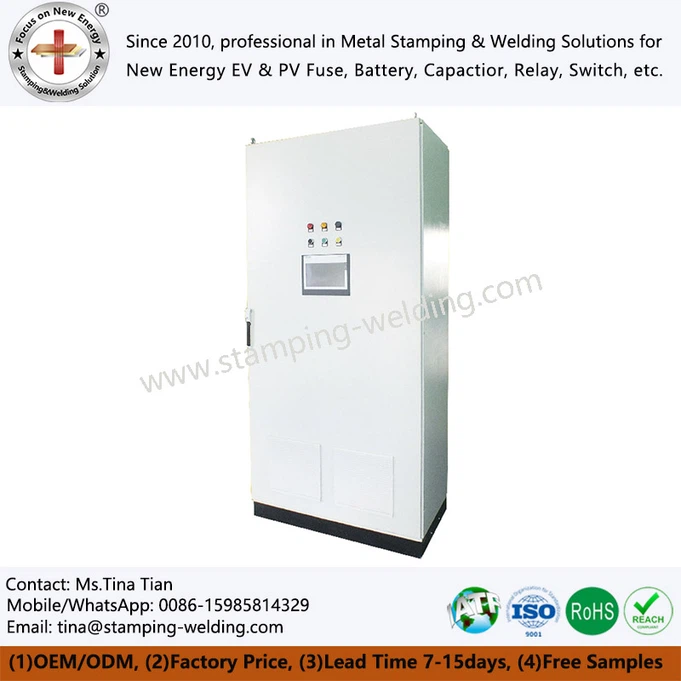
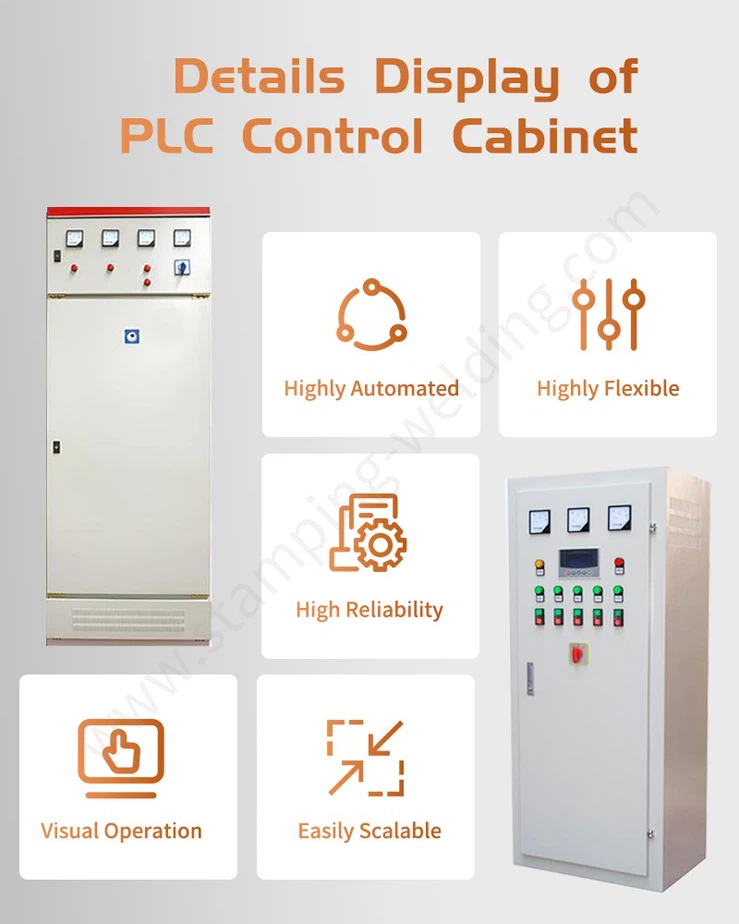
PLC control cabinet, that is, an industrial electrical cabinet with a programmable logic controller as the core control unit, is a key node device in the industrial automation system. Its basic function is to receive various input signals from on-site sensors, buttons, switches and other components, perform logical operations, sequence control, timing, counting and arithmetic operations according to pre-written control programs, and output control instructions to the actuator accordingly, thereby realizing automated control of production equipment or process flows. PLC control cabinets have an extremely wide range of applications, covering factory automation production lines, stand-alone equipment control, building intelligent systems, environmental engineering facilities, and control nodes of various process industries. As the control center of modern industrial sites, the design and manufacturing quality of this equipment are directly related to the operational stability and maintainability of the entire automation system. In industrial sites, the rationality of the selection and layout of PLC cabinet components often determines the efficiency of subsequent debugging and troubleshooting. At the same time, integrated cabinets such as PLC Panel Control Logic Program Stainless Steel Automatic Cabinet with stainless steel casing and preset control logic are increasingly used in industries such as food and pharmaceuticals that have high requirements for cleanliness and corrosion resistance.
Core composition
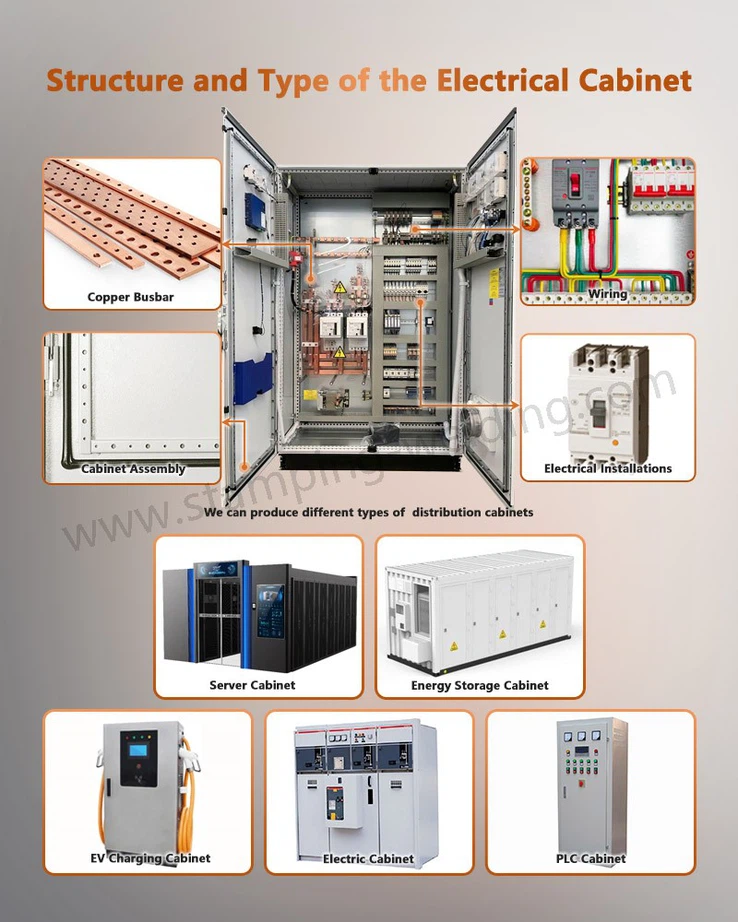
Power supply and protection system The power supply system of the control cabinet usually adopts a dual-circuit redundant design. The main power supply is distributed to each functional unit through an air circuit breaker (air circuit breaker) to ensure that any circuit failure does not affect the overall operation. The 24VDC switching power supply provides stable power for the PLC and its associated sensors and relays. Its ripple coefficient and voltage accuracy directly affect the reliability of logic operations. In PLC control cabinet, the power module often shares the same power supply bus with the Control cabinet Industrial PC (industrial control cabinet computer), and millisecond-level uninterrupted switching is achieved through UPS or supercapacitor. The logic control unit PLC controller serves as the core processor, and its selection needs to comprehensively consider the number of I/O points, analog processing capabilities, communication protocol compatibility, and environmental adaptability. Large systems often adopt a redundant CPU architecture - the main and backup CPUs synchronize data in real time. When the main CPU fails, the backup CPU seamlessly takes over control within 50ms to avoid production interruptions. The modular design allows users to flexibly expand functions according to process requirements, such as high-speed counting modules, motion control modules or PID adjustment modules.
Signal interface and drive unit. The input/output interface circuit adopts photoelectric isolation technology to completely isolate on-site strong current signals and PLC weak current logic to suppress electromagnetic interference. As a signal conversion intermediary, the relay can amplify the PLC's 24VDC control signal to 220VAC or higher voltage to drive high-current loads such as contactors and solenoid valves. The terminal block provides a standardized connection interface to facilitate on-site wiring and subsequent maintenance. Human-computer interaction and communication system. The touch screen (HMI) and operation panel provide operation and maintenance personnel with an intuitive process monitoring interface, supporting parameter setting, fault diagnosis and trend analysis. The communication module realizes data interaction with the host computer, frequency converter, and smart instruments through industrial Ethernet (Profinet, EtherCAT) or fieldbus (Modbus RTU, CANopen) to build a distributed control system (DCS).
The principle of details
The work of the programmable logic controller in the PLC control cabinet is based on the "cyclic scan" mechanism. A complete scan cycle usually contains three stages. Input sampling stage: The CPU reads the status of all input interface circuits in sequence and stores the on-off status or analog value of each input point into the "input image register" inside the system. After this stage is completed, even if the external input signal changes in subsequent stages, the contents of the image register will no longer be updated in this cycle until the input sampling stage of the next scan cycle.
Program execution stage: Starting from the first address of the user program memory, the CPU reads instructions one by one and performs operations according to the logical relationships of ladder diagrams or structured text. During the operation, the system will read the input status in the input image register, as well as the current values of internal auxiliary relays, timers, counters and other components, and refresh the status of the corresponding bits in the output image register based on the logical results. It is worth noting that the updated output status during program execution is not immediately sent to the actual output terminal but is temporarily stored in the output image area.
Output refresh stage: The CPU transfers the status data in the output image register to the output latch circuit at one time and drives the actual peripheral execution elements through the output interface. At this point, one scan cycle ends and the CPU restarts input sampling for the next cycle. In application scenarios that emphasize fast response, such as Application Cabinet or PLC Panel Control Logic Program, PLC also supports immediate input/immediate output instructions, which can directly read or refresh the status of specific physical points during the program execution phase without having to wait for the completion of the complete scan cycle.
Selection principles and environmental adaptation
Correct selection and reasonable configuration of PLC control cabinets require comprehensive consideration of multiple dimensions such as control task requirements, on-site environmental conditions, and convenience of subsequent maintenance. Determining the control scale and I/O points is the first step in selection. Engineers should summarize the number of input signals (buttons, sensors, switches, etc.) and the number of output signals (contactors, solenoid valves, indicators, etc.) of all controlled devices, and then add a 15% to 20% reserve margin on this basis to cope with later modifications or function expansions. For analog signals, the type (current type or voltage type), range and accuracy requirements should be clarified. The selection of PLC performance and processing speed needs to take into account program complexity and response time requirements. Time-sensitive applications such as high-speed counting, precise positioning, and flying shearing require a PLC model with high-speed input and output functions. For systems based on sequence control and simple PID adjustment, standard PLCs can meet the needs. In large-scale or multi-machine collaborative control systems, PLC platforms that support multi-master stations and large-capacity data exchange should be given priority.
Environmental adaptability is an important basis for determining cabinet structure and component selection. In a clean, temperature-controlled indoor installation environment, ordinary carbon steel spray cabinets with IP20 or IP41 protection levels can meet the usage requirements. In industrial sites where dust, moisture or corrosive gases exist, you need to choose a Stainless Steel Automatic Cabinet and increase the protection level to IP54 or higher. For example, when PLC System Cabinet for Sewage is used in a sewage treatment plant, the cabinet must be resistant to moisture and corrosive gas erosion; in open-air or semi-open-air layouts, a sunshade top cover and heating and dehumidification device must be added to prevent condensation.
Power supply quality and anti-interference measures affect the long-term stable operation of the PLC control cabinet. In sites with large power grid fluctuations or serious harmonic pollution, it is recommended to install a power filter or voltage stabilizer at the incoming line end of the cabinet. The wiring in the cabinet should be strictly separated between strong current and weak current circuits, and control lines and power lines should be routed in separate wire troughs or maintain sufficient distance. The DC power supply of the PLC should be supplied separately from the power supply of inductive loads such as relays and solenoid valves. If necessary, freewheeling diodes or RC absorption circuits should be connected in parallel at both ends of the inductive load coil.
contact us
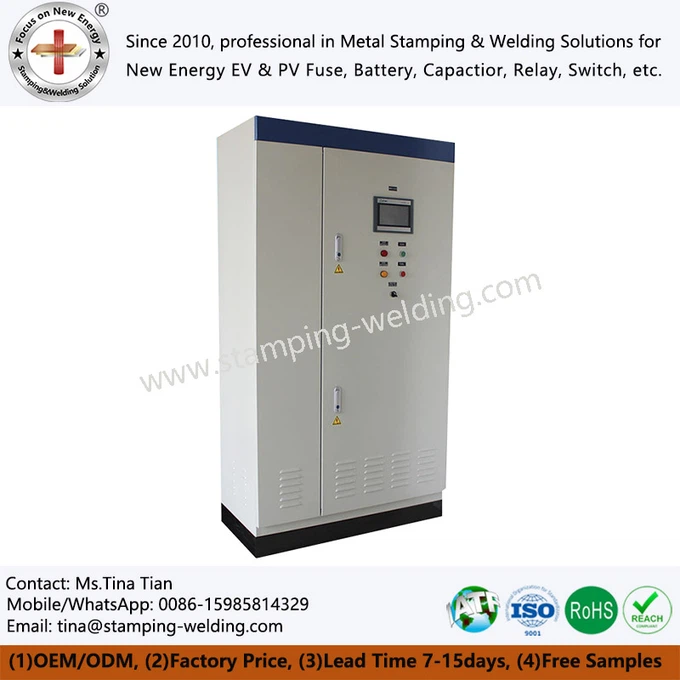
If you would like to obtain PLC Panel Cabinet configuration suggestions or technical quotations for your current project conditions, please contact our engineering and technical team for further communication.