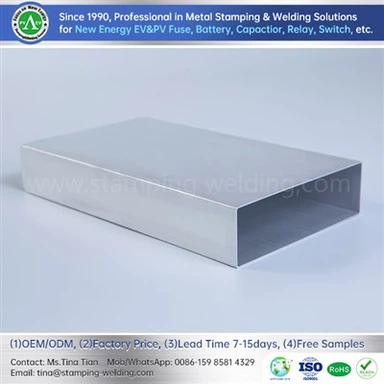
Detailed knowledge of aluminum busbar industry
May 18, 2026
In power engineering, electronic equipment and various electrical systems, aluminum busbars (also known as conductive aluminum busbars) are indispensable core conductive components. They bear the key mission of power transmission and distribution. Their performance directly affects the stability, safety and efficiency of the entire electrical system. As a standard name in the industry, Electrical Aluminum Busbar covers aluminum busbar products of various specifications and uses. It is the core carrier of current transmission in electrical systems. It is widely adapted to various scenarios from low-voltage power distribution to high-voltage transmission. Its application and development are always closely related to the progress of electrical engineering technology.
Conductive aluminum busbars (referred to as aluminum busbars) are usually made of high-purity aluminum alloy materials through extrusion, drawing or casting processes. Common cross-sectional shapes are rectangular or flat bars. Its core function is to play the role of the main current transmission channel in the power distribution system, transformer outlet, switch cabinet and bus duct, to efficiently and safely transport electric energy from the power supply side to various load equipment. For specific application scenarios, materials such as 6101 aluminum bus bar or 6061 aluminum bus bar can also be used to meet the balance requirements of different conductivity and mechanical strength.
Material properties
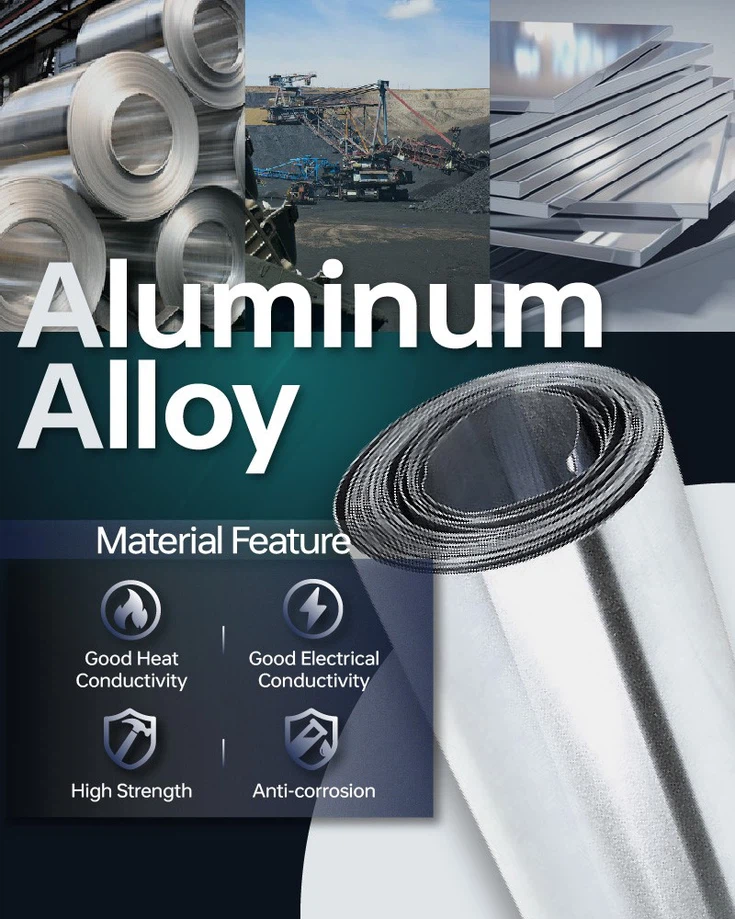
Material selection is the core link that determines the performance of aluminum busbars. High-quality aluminum busbars must rely on strict material selection standards and raw material control. High-quality aluminum busbars in the industry use high-purity aluminum alloy raw materials, and the content of various impurity elements is strictly controlled. The aluminum content must reach more than 99.70%, the iron content ≤0.22%, and the silicon content ≤0.15%. The content of other impurity elements must be controlled at extremely low levels to ensure that the conductive properties, mechanical properties and corrosion resistance of the aluminum busbars meet industry standards. Aluminum busbars made of different materials are suitable for different scenarios. For example, 6061 aluminum bus bar focuses on mechanical strength and is suitable for scenarios that require structural support, while 6101 t61 aluminum bus bar has more advantages in conductive performance and processing performance, and is suitable for medium and low-voltage power distribution systems.
Excellent electrical conductivity: The resistivity of aluminum is about 1.6 times that of copper, but through high-purity alloy design (such as 6101 alloy), the electrical conductivity can be significantly improved and Joule heat loss can be reduced. Good thermal conductivity: Aluminum has a high thermal conductivity, which can quickly take away the heat generated when current passes through, helping the equipment maintain a reasonable temperature rise range. Corrosion resistance and oxidation resistance: Through surface treatments such as anodization, the aluminum busbar can withstand moisture, salt spray and industrial pollution environments, extending its service life. Mechanical strength and processing flexibility: 6101 t61 aluminum bus bar that has been properly heat treated (such as T61 state) has good tensile strength and bending properties, making it easy to punch, bend and assemble. Lightweight advantage: The density of aluminum is only one-third that of copper, which helps reduce the total weight of the complete set of equipment.
Processing process
The processing of aluminum busbars requires multiple rigorous processes. The core includes three mainstream processes: extrusion, drawing, and casting. Different processes adapt to different production needs and product specifications. The extrusion process is currently the most widely used processing method. The aluminum block is extruded into an aluminum busbar of the required shape through an extruder in a high-temperature environment. It has high production efficiency and good molding effect, and is suitable for mass production of various conventional and complex-shaped products. The stretching process uses a stretching machine to stretch the aluminum block into a slender aluminum busbar, which can effectively improve the material. The mechanical properties and surface finish are suitable for scenes with high precision requirements; the casting process involves pouring liquid aluminum into a customized casting mold to form. It is highly flexible and can produce aluminum busbars of various complex shapes according to customer needs. However, the process control requirements are extremely high, and parameters such as temperature and cooling rate need to be strictly controlled to ensure stable product quality.
In order to further improve the corrosion resistance, conductivity and aesthetics of the aluminum busbar and extend its service life, professional surface treatment is usually required after processing. Common treatment methods include anodizing, sandblasting, polishing, and tin plating in some scenarios. Anodizing uses a specific electrolyte and applied current to form a uniform and dense oxide film on the surface of the aluminum bus, which significantly improves the corrosion resistance and surface hardness; sandblasting uses compressed air to spray the spray material onto the surface of the aluminum bus at high speed to remove impurities while increasing the surface roughness and improving the adhesion and durability of subsequent coatings; polishing uses mechanical, chemical or electrochemical methods to reduce surface roughness and obtain a bright and smooth surface; and tin plated aluminum bus By plating a tin layer on the surface, bar can form an anti-oxidation protective film to slow down electrochemical corrosion. It is especially suitable for copper-aluminum connection scenarios and reduces the risk of corrosion caused by potential difference.

Application scenarios
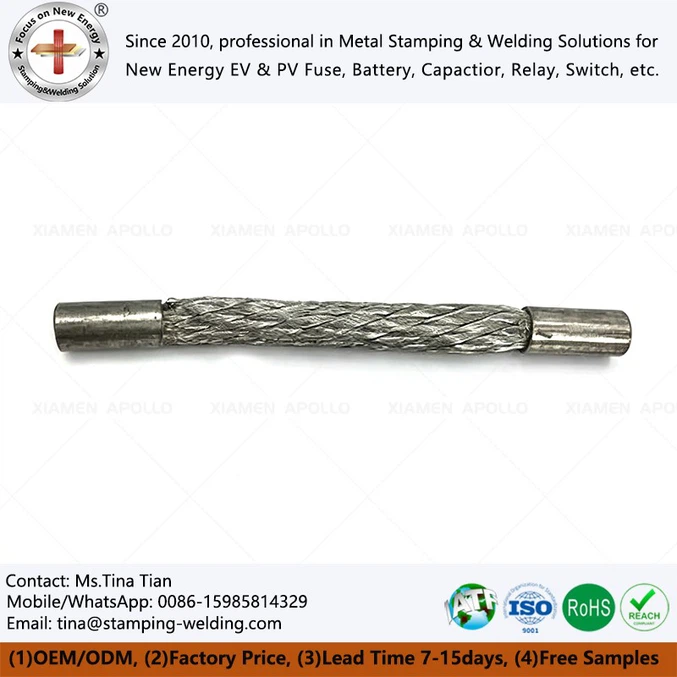
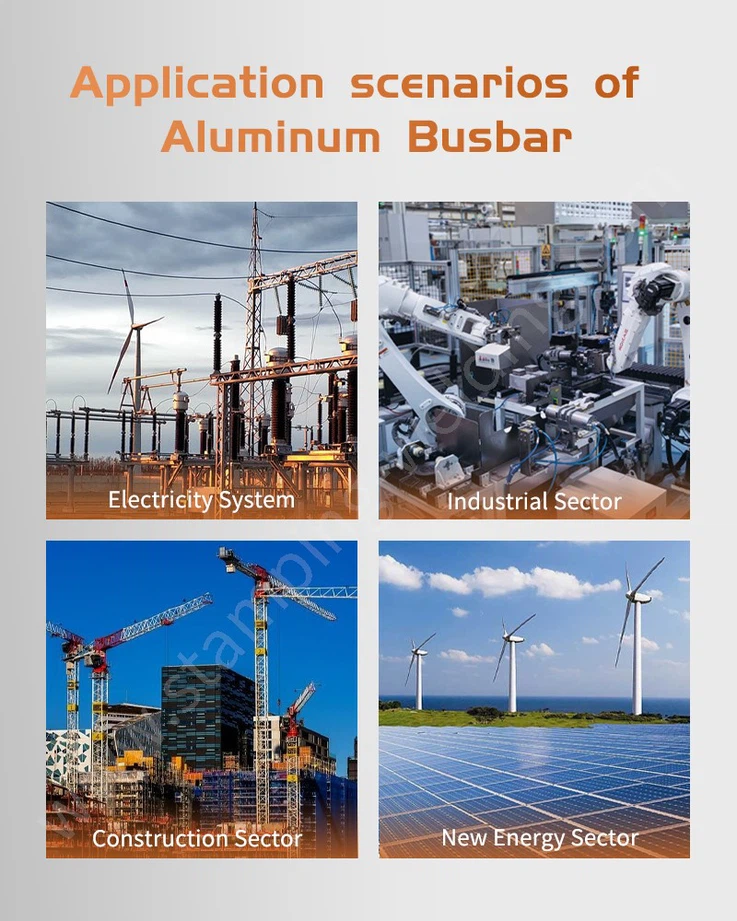
With multiple excellent properties, aluminum busbars are widely used in many fields, covering core industries such as power, electronics, transportation, and aerospace. In the field of power transmission, aluminum busbars are the core components of power distribution systems such as switchboards, switchgear, and bus ducts. They bear the mission of efficient power distribution and ensure the smooth transmission of power from the grid to various types of electrical equipment. In the field of electronic equipment, they are used for conductive connections and heat dissipation of components such as circuit boards and radiators to ensure the stable operation of electronic equipment. In the field of transportation, especially in scenarios such as electric vehicles and rail transit, aluminum busbars are used for conductive connections between battery modules and power systems, relying on lightweight advantages to improve energy utilization efficiency. Among them, Flexible Joint Aluminum Busbars can adapt to the connection needs in vibration scenarios due to their flexibility. In the aerospace field, aluminum busbars not only perform the conductive connection function, but also serve as structural support. They are suitable for extreme working conditions such as high altitude and low temperature, and provide guarantee for the stable operation of aerospace equipment.
As a key conductive component in the electrical system, the quality and performance of the aluminum busbar are directly related to the safe and stable operation of the entire system. Therefore, whether it is material selection, processing or surface treatment, it is necessary to strictly follow industry standards and select products with appropriate specifications, materials and surface treatments based on the specific needs of the application scenario. With the continuous development of electrical engineering technology, the application scenarios of aluminum busbars continue to expand, and the demand for customized and high-performance products is growing. Flexible Aluminum Connections and other flexible connection products have gradually become the core selection in fields such as new energy and rail transportation.
contact us
We are committed to providing high-quality power transmission solutions to customers around the world. Whether it is a standard Aluminium Bus Bars for Cell Connection or special-shaped busbars and flexible connectors customized according to drawings, we can rely on our exquisite craftsmanship and strict quality control system to meet your diverse needs in the fields of new energy, power engineering and electronic equipment. Feel free to contact us at any time to get the latest product specifications and quotations.