


Exploring Brass Pipe Cap: A Comprehensive Industry Insight
Nov 13, 2025
In modern piping systems the humble end-cap often plays a critical role. The Brass Pipe Cap may appear secondary, yet its material, manufacturing and application dimensions are vital for system integrity. This article offers an industry‐knowledge overview of the Brass Plumbing Cap from three perspectives-material selection, manufacturing workflow and application scenarios-to aid procurement professionals, project designers and system integrators.

Material Dimension: Why Choose Brass for the Brass Fitting Cap
Alloy Composition & Performance
- The Brass Tube Cap is typically made from copper-zinc based alloys, which through proportioning deliver a balance of machinability, mechanical strength and corrosion resistance. For instance, wrought alloys such as C41100 contain ~91 % Cu, ~8.5 % Zn and ~0.5 % Sn.
- Some variants include trace additions of tin, nickel or manganese to improve dezincification resistance and durability in aggressive environments.
Corrosion Resistance & System Compatibility
- Compared to standard carbon steel or cast iron, brass alloys offer superior performance in humid, marine or chemically aggressive settings. The Brass Compression Cap thus finds favour in applications such as water treatment, HVAC, ship-building and petrochemical systems.
- The inherent skid of corrosion and oxidation makes the Brass Terminal Cap well-suited for long-term service life and lower maintenance cycles.
Sustainability & Recyclability
- Brass material is highly recyclable, contributing to sustainable procurement and green engineering projects. Specifying a Brass Pipe End Cap made from recycled or low-lead brass supports compliance with environmental regulations and green initiatives.
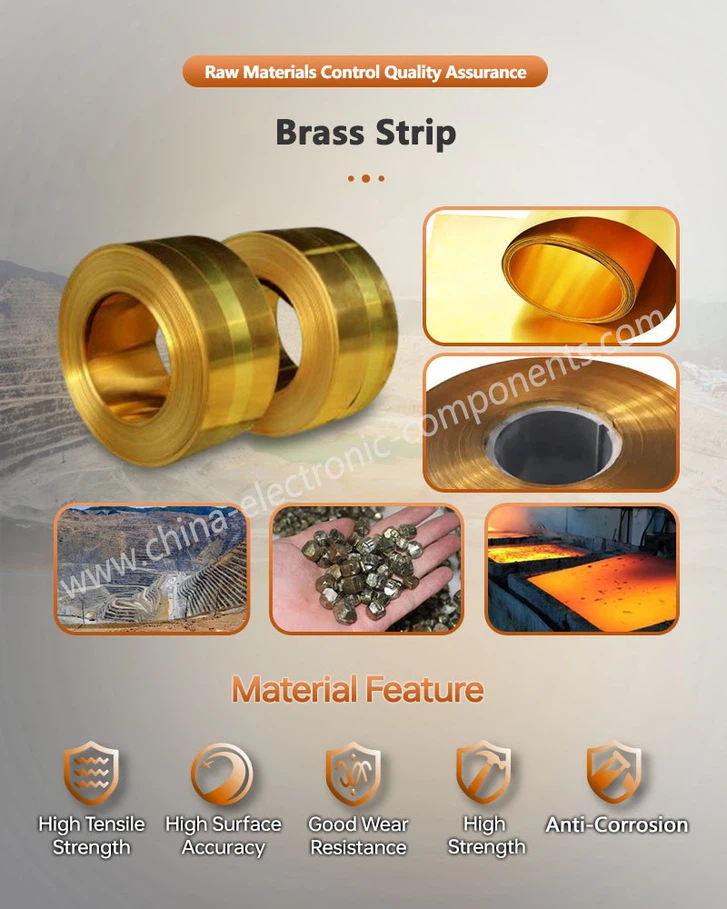
Manufacturing Dimension: Key Steps from Raw Material to Brass Tube End Cap
Raw Material Selection & Casting
- Manufacture of the Brass Fitting End Cap begins with selection of brass alloy bars or ingots with controlled chemistry and metallurgical integrity. Quality of the base alloy influences downstream performance significantly.
- After melting, the alloy is cast into billets or bars, which serve as starting blanks for further processing.
Forging/Extrusion (Where Applicable)
- In higher‐duty applications, the Brass Solder End Cap blank may undergo hot forging or extrusion to refine grain structure, increase density and improve mechanical strength.
- This process helps the cap withstand fatigue, pressure cycling and vibration in demanding system environments.
Machining & Threading
- Next the Brass End Piece is machined via CNC turning to form the cap body, internal threads, sealing face and wrench flats.
- Precision in thread pitch, depth and root profile is critical-any deviation may compromise sealing or installation reliability.
Surface Finish & Inspection
- The finished Brass Tube Cap can be supplied in natural brass polish or processed with surface treatments such as nickel plating, chrome plating or anti-corrosion coatings to meet specific environmental or aesthetic requirements.
- Prior to shipment, inspection of the Brass Plumbing Cap includes dimensional checks, thread engagement testing, pressure/air-leak tests and visual surface audit.
Packaging & Logistic Preparation
- For international shipping and project site delivery, the Brass Fitting Cap is packaged in protective, moisture‐resistant cartons, labelled with size, batch number, material code and handling instructions for efficient site installation.

Application Dimension
End-Cap & Spare Interface Closure
- In pipeline layouts, theBrass Compression Cap is routinely used to close off an unused branch, reserve a future connection or temporarily terminate a line. Its ready install/removal profile simplifies system flexibility.
- Enables system designers to plan for future expansion while maintaining present integrity.
Multi-Media & Diverse Environmental Use
- The Brass Terminal Cap serves in systems that handle water, steam, compressed air, natural gas, hydraulic fluid and other media. Its alloy and geometry allow compatibility across these varied applications.
- In marine or coastal installations, the corrosion resistance is a strong asset, helping prolong service life and reduce downtime.
Commissioning, Maintenance & Retrofit Support
- During commissioning or system flushing/pressurizing, the Brass Pipe End Cap provides a reliable closure point. It also supports engineers in maintenance and retrofit phases by offering a ready cap option for temporarily sealed branches.
- The use for future-proofing pipelines enhances project flexibility without sacrificing performance.
Reliability & Cost-Effectiveness
- Selecting a high-quality Brass Tube End Cap reduces the risk of leakage, contamination or system intrusion at open pipe ends. This contributes to operational reliability in critical infrastructure.
- Compared to makeshift end-seal solutions, offers long-term value and lower maintenance cost, making it a cost-effective choice for durable systems.

conclusion
By exploring the Brass Fitting End Cap through the lenses of material science, manufacturing technology and field application, we gain a clearer appreciation of its engineering significance. For procurement and integration professionals, understanding these dimensions supports more informed spec-selection, higher system reliability and optimized supply chain decision-making. Should you wish to review detailed alloy grades, pressure ratings, thread standards or case-studies for the Brass Pipe Cap, further technical deep-dives are available.
contact us


