From classification to selection: Master all technical knowledge of Fuse copper holders
Apr 07, 2026
Common classification methods for Fuse copper holders
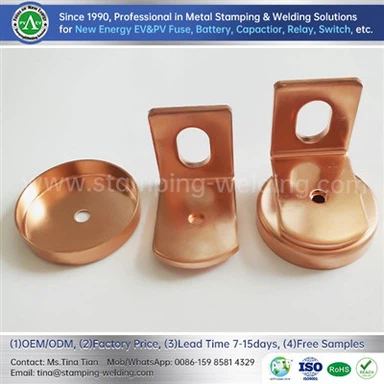
Fuse copper bases, as the core components for fixing and connecting fuses in electrical systems, are mainly classified based on three dimensions: installation method, fitting size, and material characteristics. According to the installation method, it can be divided into tubular fuse holders and chip fuse holders: the former is a tubular structure, suitable for vertically installed tubular fuses; The latter adopts surface mount design, which is compatible with circuit board layout and compatible with chip fuses. According to the size of the suitable fuse, it is usually divided into three specifications: large, medium, and small, to adapt to electrical equipment with different working current levels, ensuring installation compatibility and protection effect. According to material classification, common types include plastic fuse holders and electric wood copper conductive Fuse copper knife. Different materials have different heat resistance, insulation strength, and mechanical strength, and are suitable for various scenarios such as civilian and industrial use.

The core function of copper holder for knife type fuse
Taking the Fuse copper holders used in conjunction with knife shaped NH fuses as an example, their core functions are mainly reflected in two aspects: protection and load-bearing. The protection function refers to the auxiliary fuse completing the overcurrent protection task, by reasonably matching the rated current parameters, assisting the circuit to cut off in a timely manner when overload or short circuit faults occur, and preventing damage to electrical equipment. The load-bearing function is reflected in the fixed and orderly arrangement of the fuse body, allowing fuses of different specifications to be installed independently without interference, providing convenience for subsequent troubleshooting and fuse replacement, thereby reducing system maintenance costs and workload. Both work together to ensure the safe operation and maintenance efficiency of the electrical system.

Production process flow of conductive contacts
The production of Copper holders for knife type NH fuse links follows standardized processes, mainly including material preparation, forming processing, component assembly, and quality inspection.
Firstly, select qualified insulation materials (such as plastic and electric wood) and conductive auxiliary materials (such as copper and silver) according to the design requirements, and put them into production after inspection.
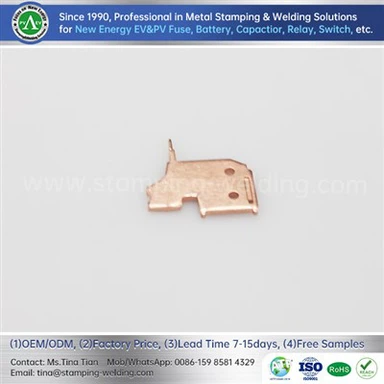
Secondly, the insulation base is processed as a whole using injection molding or compression molding processes, with strict control over mold accuracy to avoid shrinkage or cracking; Conductive components are formed through precision stamping and cutting. Subsequently, the conductive components and fixed structures are accurately assembled into the base to ensure a secure connection and good contact.
Finally, we enter the quality inspection stage, focusing on testing insulation performance, conductivity stability, installation adaptability, and appearance integrity, and removing unqualified products. Qualified Copper holders for knife type fuses are packaged and stored after cleaning and drying, and quality control is implemented throughout the entire process to comply with industry standards.

Selection and usage points
In practical applications, when selecting a Copper knife set for NH fuse, factors such as system rated current, expected short-circuit current, installation space, and ambient temperature should be comprehensively considered. Ensure that the fuse holder matches the fuse in size, current rating, and breaking capacity to avoid protection failure or abnormal heating due to improper selection. During installation, the Pure copper knife for NH fuse should be securely fixed to the card rail or circuit board, the wiring terminals should be tightened to the rated torque, and the surrounding area should be kept clean and dry. Regularly inspect the conductive parts for oxidation, looseness, or overheating marks, and promptly handle any abnormalities to ensure the long-term stable operation of the electrical system.

Contact us
If you encounter any questions during the selection, technical parameter matching, or actual installation process of Fuse copper holders, please feel free to contact us at any time. We will provide you with professional technical consultation, selection suggestions, and after-sales support to help ensure the safe and stable operation of your electrical system.