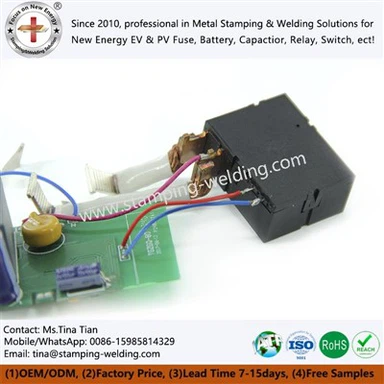
Contact terminal for NH fuse - Key supporting components for low-voltage electrical protection
Apr 08, 2026
Product definition and core functions
Contact terminal for NH fuse is a basic component used in low-voltage electrical systems to secure fuse links and provide reliable electrical connections. Together with the fuse link and supporting structure, it forms a complete protection unit. Its core functions include: providing a stable installation platform for fuse links, ensuring their precise positioning and anti loosening ability in equipment; Electrical isolation is achieved through insulating materials to prevent accidental electrical contact and short circuit risks.
Provide low resistance conductive contacts to ensure the stability of current transmission; Protect the fuse link from environmental factors such as mechanical collision, dust, and moisture; Simultaneously supporting quick replacement after fuse failure, reducing system downtime. In application scenarios such as industrial power distribution, new energy, and automotive circuits, Fuse copper holders are not only the physical carrier of protection functions, but also the key components to improve system maintenance efficiency.
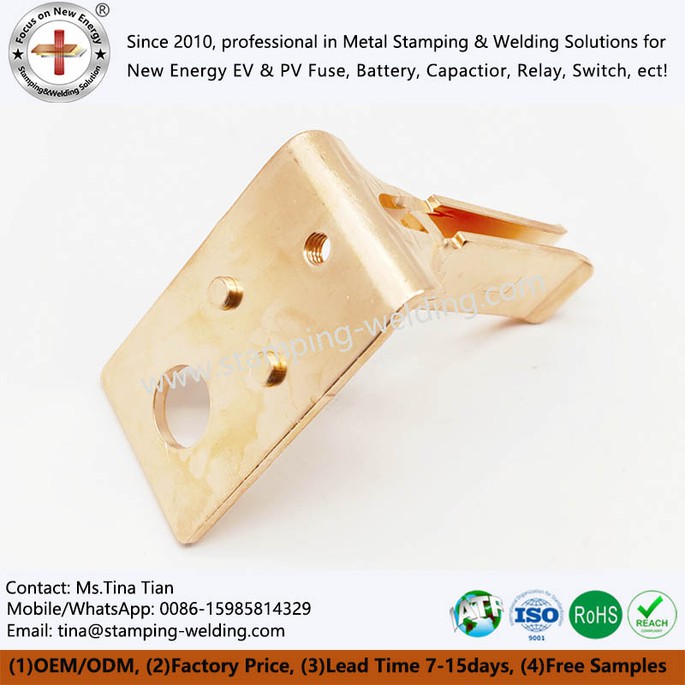
Structure composition and working principle
The internal structure of the Contact terminal for NH fuse is designed around four objectives: fixation, conductivity, isolation, and protection. It mainly consists of four core components: conductive sheets, insulation seats, connecting screws, and protective covers (or shields). The conductive sheet is made of high conductivity materials and is responsible for connecting the power side and load side circuits to ensure stable current transmission; The insulation seat is made of high temperature resistant and arc resistant insulation material, which not only supports and fixes the conductive sheet, but also achieves electrical isolation between circuits; Connecting screws provide reliable wiring points to avoid faults caused by poor contact; Some models are equipped with protective covers to prevent personnel from accidentally coming into contact with live parts and to resist external environmental erosion.
The Fuse clip holder itself does not directly disconnect the circuit, but provides a stable working platform for the fuse: when the circuit is overloaded or short circuited, excessive current causes the fuse to overheat and melt. The base ensures that the fuse remains firmly installed and reliably connected to the circuit during this process, thereby achieving fault isolation and protecting the safety of backend equipment.
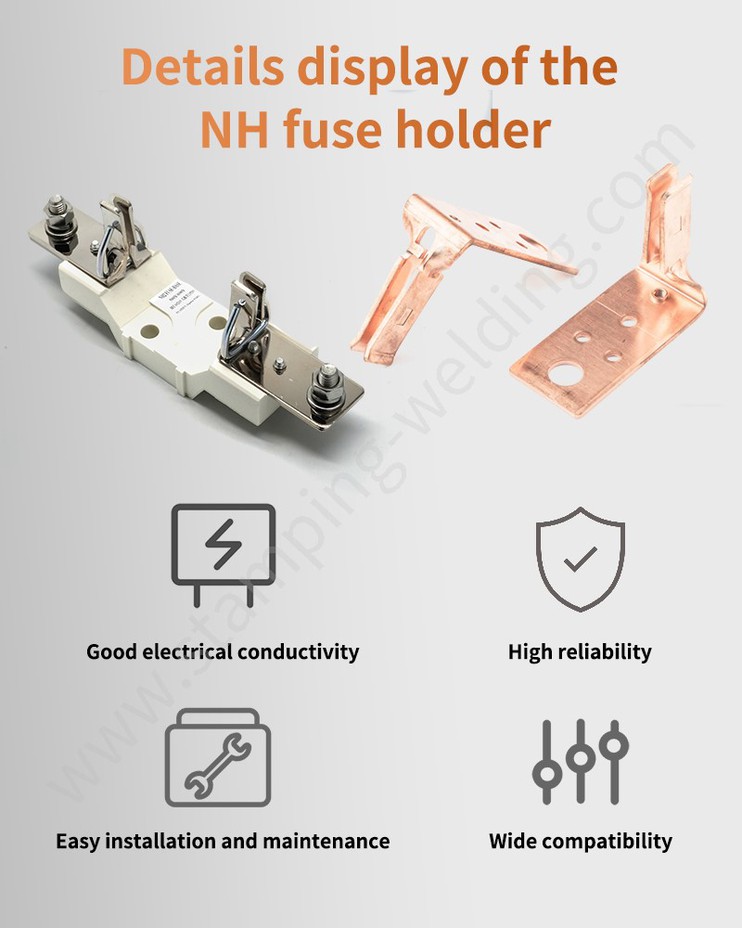
Material selection and manufacturing process
The performance and service life of Fuse copper base depend directly on material selection and manufacturing process. The insulation seat body is usually made of materials such as phenolic resin and high-temperature resistant ceramics, which have excellent insulation performance, heat resistance, and arc resistance; The conductive components are made of high conductivity materials such as copper, and can be plated with nickel or tin on the surface to further reduce contact resistance and improve corrosion resistance.
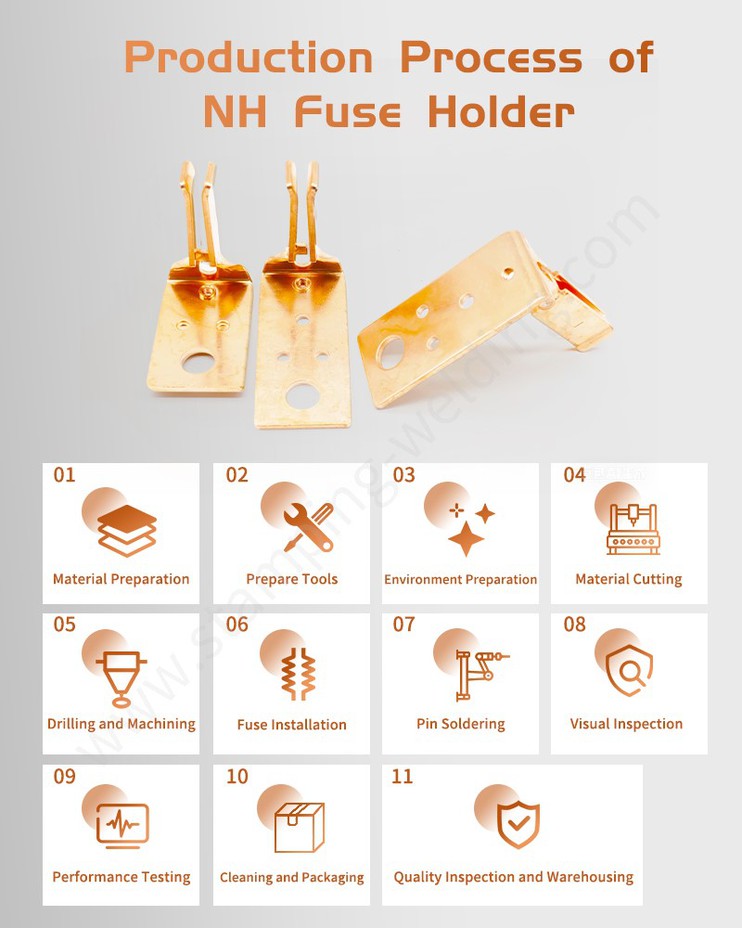
In the manufacturing process, precision stamping, injection molding, automatic welding and other processes are used to ensure the dimensional accuracy and connection reliability of each component, while strictly controlling key indicators such as insulation resistance and mechanical strength. High quality materials and standardized manufacturing processes jointly ensure the stability and safety of Fuse copper knife during long-term operation.
Application points and maintenance suggestions
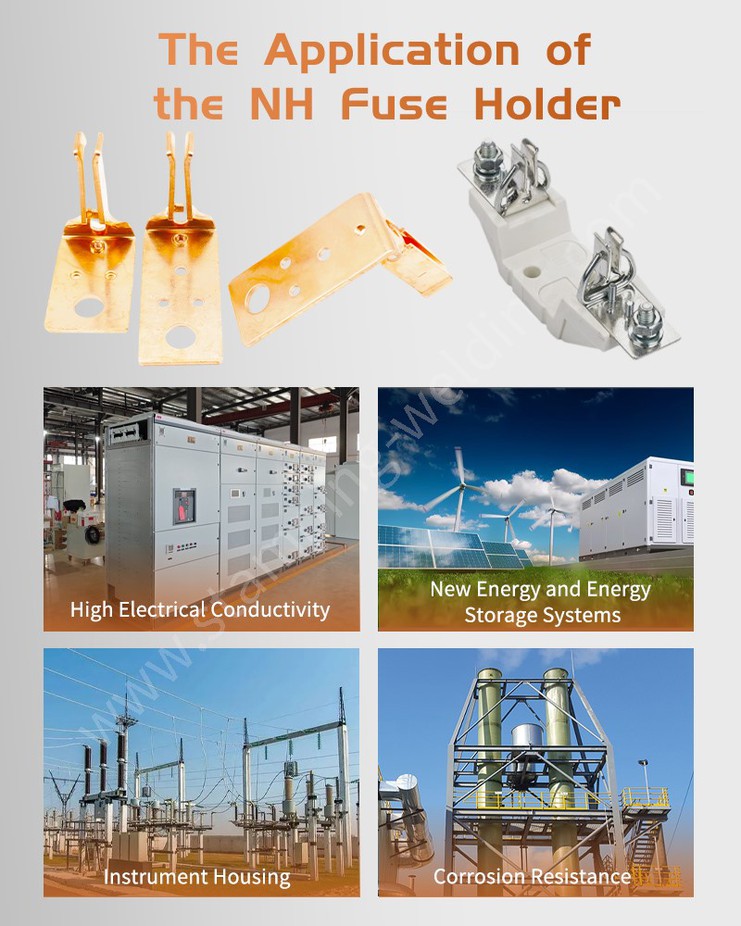
In practical applications, the selection should be based on the rated voltage, operating current, and environmental conditions of the circuit to ensure that the DC solar fuse knife contact matches the fuse link perfectly in terms of size, current level, and breaking capacity. During installation, the manufacturer's specifications should be followed, and the base should be firmly fixed to the guide rail or mounting plate. The wiring terminals should be tightened to the rated torque to ensure reliable connection and good contact. In daily maintenance, the appearance of the base should be regularly checked for deformation, burning, or contamination, and the conductive parts should be confirmed to have no signs of oxidation, looseness, or overheating.
When replacing the fuse, it is necessary to use products of the same specifications and operate them in a power-off state to avoid electric shock or short circuit accidents. Through standardized selection, installation, and maintenance, the service life of Pure copper knife for NH fuse can be effectively extended, ensuring the continuous safe operation of the electrical system.
contact us
If you encounter any questions during the selection, technical parameter matching, or installation and maintenance process of the Contact terminal for NH fuse, please feel free to contact us at any time. We will provide you with professional technical consultation and selection suggestions to help ensure the safe and stable operation of your electrical system.