From New Energy Vehicles to Energy Storage Systems: Technical Requirements for Lithium-Ion Batteries Across Different Application Fields
Sep 22, 2026
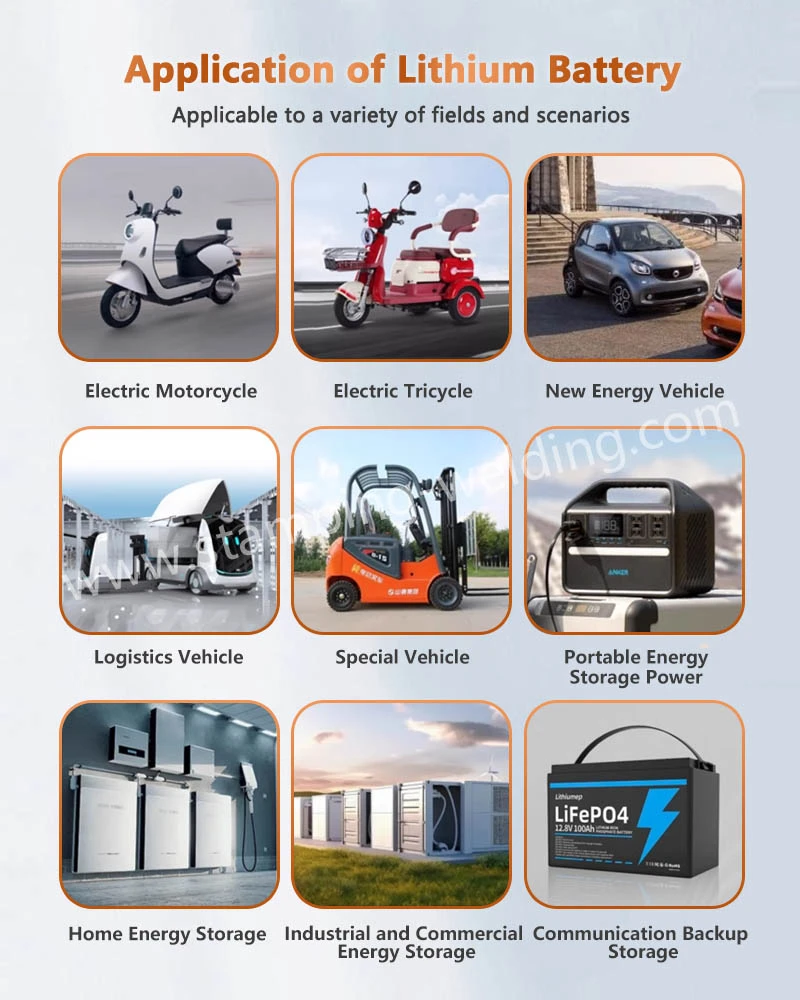
Lithium-ion batteries have expanded from their early use in consumer electronics to encompass new energy vehicles, energy storage systems, industrial equipment, UPS units, power tools, and other mobile and stationary energy systems. The U.S. Department of Energy identifies electric vehicles, stationary energy storage, aviation, and other sectors as key downstream applications for power battery cells.
However, battery requirements vary across different application scenarios. New energy vehicles prioritize energy density, power output, fast charging, cycle life, and safety; energy storage systems focus on long-term operation, cost, lifespan, and system safety; while industrial equipment typically demands stability, environmental adaptability, and ease of maintenance.
Therefore, understanding the specific needs of different application scenarios is a crucial foundation for lithium-ion battery selection and battery pack design.
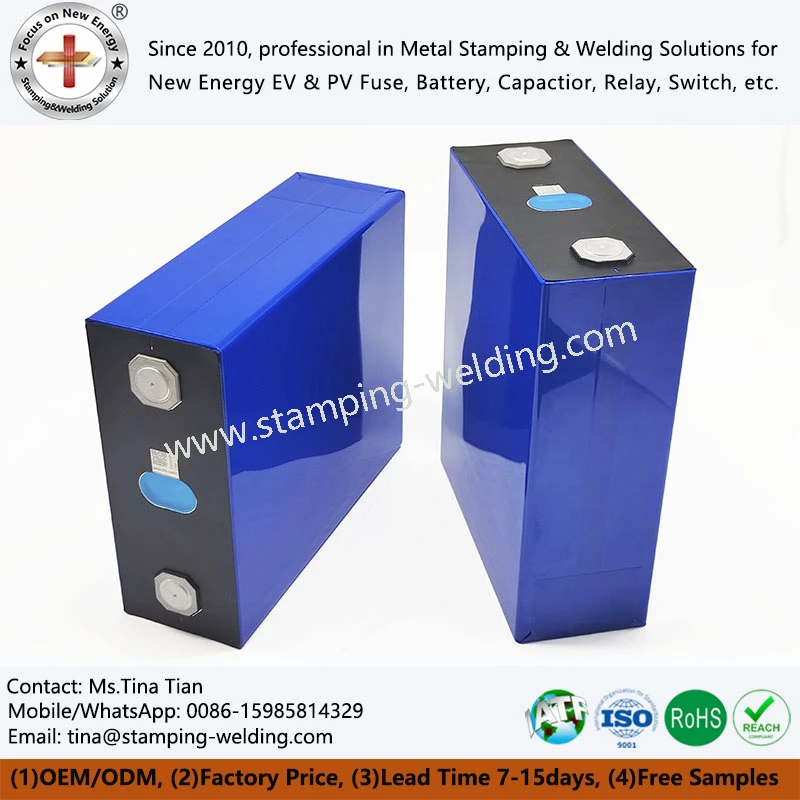
New energy vehicles represent a key application area for lithium-ion battery cells.
New energy vehicles place high demands on battery systems. First, vehicles must store as much electrical energy as possible within limited space and weight constraints, making energy density a critical factor. Second, the battery must deliver stable power output to meet the high instantaneous power demands associated with acceleration, hill climbing, and high-speed driving. Furthermore, these batteries must withstand complex operating conditions, including frequent charging and discharging, temperature fluctuations, vibration, and long-term usage.
Consequently, the design of EV LiFePO4 power cells cannot focus solely on high capacity; instead, it requires a balance among energy density, power output, service life, safety, and thermal management.

Structural components within power battery systems are equally important.
New energy vehicle battery systems consist of more than just battery cells. An actual battery pack incorporates components such as casings, cover plates, terminals, busbars, connectors, insulation, thermal management parts, and structural elements. Collectively, these components facilitate functions including current transmission, mechanical mounting, insulation, protection, and thermal management. For instance, the cover plate of a prismatic cell may integrate positive and negative terminals, a safety pressure-relief mechanism, and sealing structures, while busbars establish electrical connections between multiple cells.
Consequently, metal stamped parts, precision connectors, and battery structural components within the lithium-ion battery supply chain hold significant engineering value.

Energy storage systems place greater emphasis on long-term, stable operation.
Battery Energy Storage Systems (BESS) represent another key application area for lithium batteries. Unlike new energy vehicles, stationary energy storage systems generally do not require frequent relocation, so weight sensitivity may differ. However, as these systems typically undergo frequent, long-term charge-discharge cycles, factors such as cycle life, cell consistency, thermal management, safety, and system maintenance become critical considerations.
For large-scale energy storage projects, the battery system must maintain stable operation over a long lifecycle; consequently, cell-to-cell consistency and the control capabilities of the battery management system (BMS) are particularly important.
Synergistic Application of Photovoltaics and Energy Storage
With the growth of renewable energy, lithium solar batteries are increasingly being used for energy storage in solar and other new energy power generation systems. Solar power generation is inherently intermittent; photovoltaic systems generate significant electricity during the day but cannot produce power at night. Energy storage systems can capture excess energy during periods of high generation and release it when needed.
Consequently, lithium-ion battery energy storage helps new energy systems improve electricity utilization efficiency and supports the power grid in peak shaving, valley filling, and energy dispatch.
Battery Energy Storage in Charging Infrastructure
Beyond new energy vehicles themselves, LiFePO4 battery cells for solar products can also be utilized in certain charging infrastructure and energy-storage-based charging systems. When grid capacity is constrained, these energy storage systems can store electricity during periods of low demand and provide supplementary power during times of high charging demand. Such systems impose requirements regarding power response speed, cycle life, and thermal management that differ from those of standard consumer electronics.
Consequently, battery systems for charging infrastructure applications must be designed based on factors such as charging power, energy storage capacity, operational frequency, and the installation environment.
UPS and Backup Power Applications
Lithium superpack batteries are also suitable for UPS and backup power systems. While traditional backup power systems often rely on lead-acid batteries, lithium-ion battery packs offer advantages in terms of size and weight, making them a viable option for some modern UPS systems. For UPS applications, batteries must not only supply energy but also provide backup power rapidly when the mains supply fails.
Consequently, system design must account for factors such as instantaneous power output, response speed, battery lifespan, thermal management, and the Battery Management System (BMS).
Lithium batteries in Industrial Equipment
Industrial vehicles, automated equipment, AGVs (Automated Guided Vehicles), AMRs (Autonomous Mobile Robots), and other mobile industrial equipment can also utilize solar energy storage systems and lithium batteries pack. Since these devices often require continuous operation in factories, warehouses, or logistics centers, their battery systems must offer excellent cycle performance and charging efficiency.
Unlike batteries for passenger vehicles, those for industrial equipment are often designed with a focus on high-frequency usage, rapid recharging capabilities, and ease of maintenance. For instance, batteries for automated logistics equipment must fit within the device's internal space while meeting the power requirements of the motors and control systems.
Rechargeable Lithium Ion Battery Cell in Portable Electronics
Smartphones, laptops, tablets, digital devices, and power tools were among the early key markets for rechargeable brand-new batteries for BESS. Since these products are often sensitive to battery size and weight, high energy density is a critical design parameter.
At the same time, consumers prioritize fast-charging capabilities, cycle life, and safety. Given the limited internal space within these devices, batteries often require customization to fit the product's structure; consequently, pouch, cylindrical, and other compact battery configurations each have their own specific use cases.
Material Requirements Vary by Application
Different application scenarios influence the choice of battery material systems.
New energy vehicles may require a balance between energy density, cost, and safety.
Energy storage systems may place greater emphasis on cycle life, cost, and long-term stability.
Portable electronics prioritize size, weight, and energy density.
Industrial equipment may require superior mechanical robustness and the ability to handle high-frequency charge-discharge cycles.
Therefore, the selection of lithium-ion battery materials should be based on specific application requirements rather than a simple comparison of the materials' theoretical performance.
Battery structures must be tailored to specific applications
Beyond internal chemistry, the external structure of a battery must also be designed with the specific application in mind.
Cylindrical batteries are characterized by high standardization and structural stability.
Prismatic batteries offer high space utilization due to their regular shape, making them widely used in new energy vehicles and energy storage systems.
Pouch batteries utilize a flexible packaging structure, offering advantages in terms of weight and space efficiency.
Different packaging methods impact cell assembly, thermal management, mechanical mounting, interconnection, and the subsequent design of the battery pack.
Battery safety is a universal requirement across all application sectors.
Whether used in new energy vehicles or energy storage systems, safety is a critical concern for lithium-ion batteries for Solar Products. Battery safety encompasses multiple aspects, including materials, cell structure, manufacturing processes, thermal management, and battery management systems (BMS).
Among these components, the separator must provide physical isolation between the positive and negative electrodes while allowing ion transport; consequently, its mechanical and thermal stability are paramount. In recent years, extensive research has focused on ceramic-coated separators, composite separators, and other functionalized separators to enhance thermal stability, mechanical properties, and ion transport characteristics.
This demonstrates that battery safety is not determined by a single component but is the result of the combined performance of the entire battery system.
Transitioning from Cells to Systems Requires Enhanced Engineering Integration
As the scope of lithium-ion battery applications expands, market demands for battery pack integration are becoming increasingly stringent. A complete battery system typically integrates multiple components, including cells, busbars, structural parts, insulation, thermal management systems, the Battery Management System (BMS), and the housing. For new energy vehicles and large-scale energy storage systems, factors such as mechanical mounting, electrical connections, heat transfer, and system maintenance must also be considered.
Consequently, beyond offering standard products, battery component suppliers must possess the capability to customize dimensions, materials, connection methods, and surface treatments based on customer specifications.
Future Application Trends for Lithium Ion Batteries
Future applications for flash battery lithium batteries will continue to center on new energy vehicles, energy storage, industrial power supplies, and other areas of electrification.
At the same time, the battery industry is focusing on achieving higher energy density, faster charging, longer lifespans, enhanced safety, and lower manufacturing costs.
Innovations in materials and manufacturing technologies will continue to shape battery development. For instance, there remains room for ongoing optimization across cathode and anode materials, separators, electrolytes, and battery structures.
Meanwhile, battery manufacturing itself is increasingly emphasizing automation, process monitoring, quality traceability, and material recycling.
Various types of lithium-ion battery cells can be customized.
Lithium batteries for energy storage have established a broad application ecosystem spanning consumer electronics, new energy vehicles (NEVs), energy storage, industrial equipment, UPS systems, and other electrified systems.
No single battery design is universally applicable across these different scenarios. NEVs prioritize energy density and power output; energy storage systems emphasize long-term cycle life and safety; industrial equipment focuses on high-frequency operation and reliability; while consumer electronics prioritize compact size, light weight, and runtime.
When selecting battery energy storage or related components, engineers and procurement professionals should adopt a comprehensive design approach that considers the specific application environment, electrical parameters, mechanical space constraints, thermal management requirements, and service life.
Only by integrating cell materials, structural components, electrical connections, and system controls can one develop lithium-ion battery solutions that are truly optimized for specific application scenarios.
Whether you are developing next-generation EV pack designs, scaling ESS projects, or seeking custom component solutions, our team is here to support your product lifecycle from DFM engineering to volume production. Contact our technical experts today to discuss your custom specifications, request sample evaluations, or discover how our integrated component manufacturing can enhance your battery performance.

Contact Us