From Aluminum to Precision Components: Why Is There an Increasing Emphasis on Material-Structure Synergy in Prismatic Lithium Battery Casings?
Sep 22, 2026
With the development of new energy vehicles and energy storage systems, prismatic lithium-ion batteries are increasingly widely used. Compared to cylindrical and pouch cells, prismatic cells feature a regular structure, high space utilization, and ease of module integration. The prismatic lithium battery canopy-or cover plate-located at the top of the cell serves as a critical component connecting the cell's interior to external electrical systems and safety mechanisms.
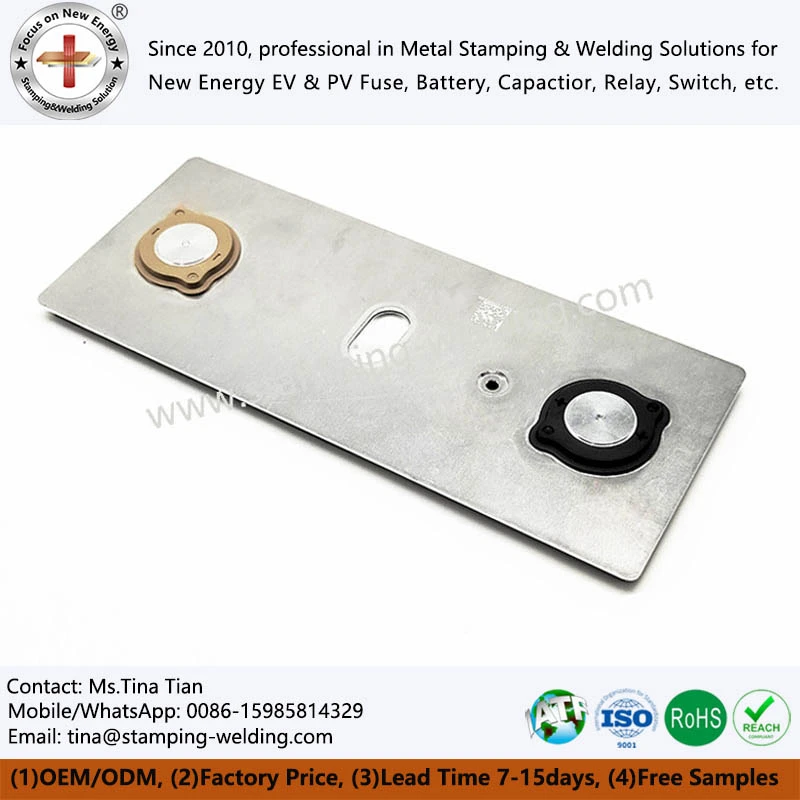
When first encountering a battery cover plate, one might easily mistake it for a simple stamped metal lid. In reality, however, modern prismatic lithium battery cover plates have evolved from basic sheet metal parts into precision assemblies that integrate sealing, electrical connection, safety pressure relief, electrolyte filling ports, and assembly positioning functions.
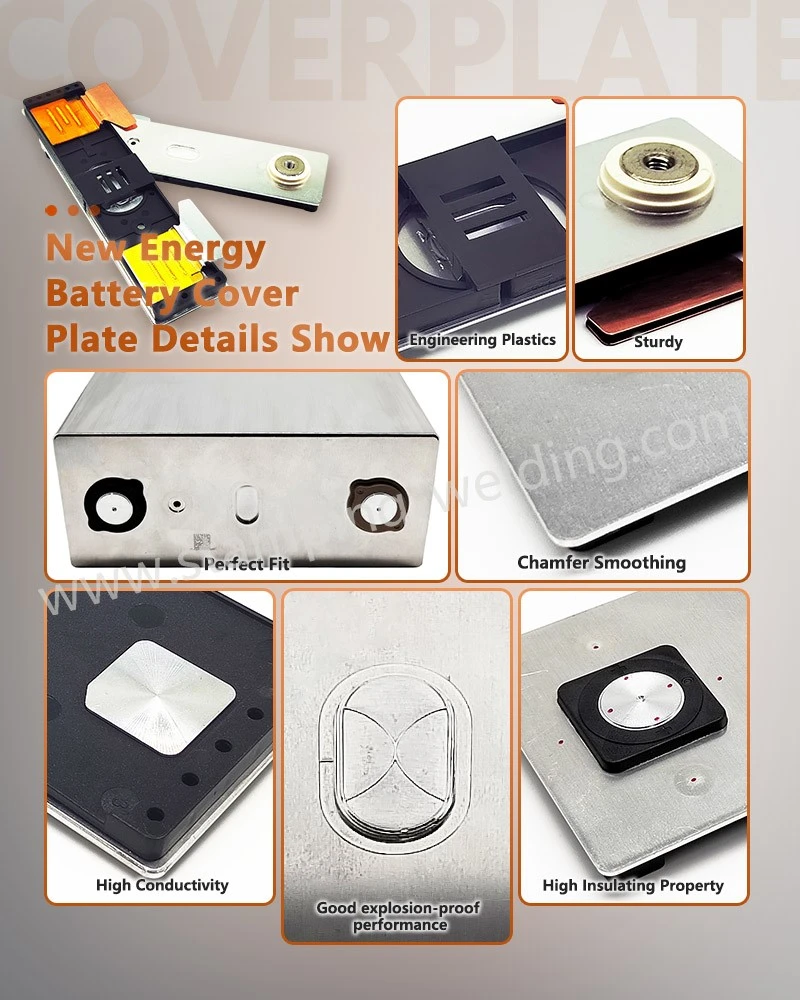
Structurally, a typical prismatic battery cover plate assembly comprises the cover plate body, positive and negative terminals, insulation structures, seals, an electrolyte filling port, and a safety pressure relief mechanism. Technical specifications for prismatic lithium batteries typically list components such as the cap plate, electrode terminal, insulating plate, and terminal plate, alongside the electrolyte filling hole and safety pressure relief structure.
Why have aluminum and aluminum alloys become important materials?
For prismatic lithium battery packs, material selection must first address the issue of weight. New energy vehicles require greater driving range and higher power performance within strict vehicle weight limits; consequently, battery structural components cannot simply increase in weight without restriction. Aluminum is characterized by low density, as well as excellent electrical and thermal conductivity and formability, making it well-suited for use in prismatic battery cell casings and cover plate structures.
However, the material requirements for battery cover plates go beyond the simple principle of "lighter is better." Cover plates undergo stamping, punching, and forming, followed by assembly and welding; consequently, the material must strike a balance between strength, ductility, dimensional stability, and processability. If the material is too soft, significant deformation may occur during stamping; if the material properties are incompatible with the welding process, subsequent joining operations may become more difficult. Thus, selecting a material for battery cover plates is effectively an integral part of both product design and the manufacturing process.
How do material properties affect the stamping process?
Battery cover plates typically feature multiple functional zones with distinct requirements. For instance, the terminal mounting area requires the precise formation of holes and positioning features; the edges must ensure a proper fit with the aluminum battery casing; the electrolyte filling area requires specific flatness and dimensional accuracy; and the safety pressure-relief zone must incorporate a specific "weakened" structure designed for safety performance. These zones do not necessarily share identical forming requirements. Therefore, material selection must take into account the product's overall structure, balancing factors such as elongation, springback, thickness uniformity, and stamping stability.
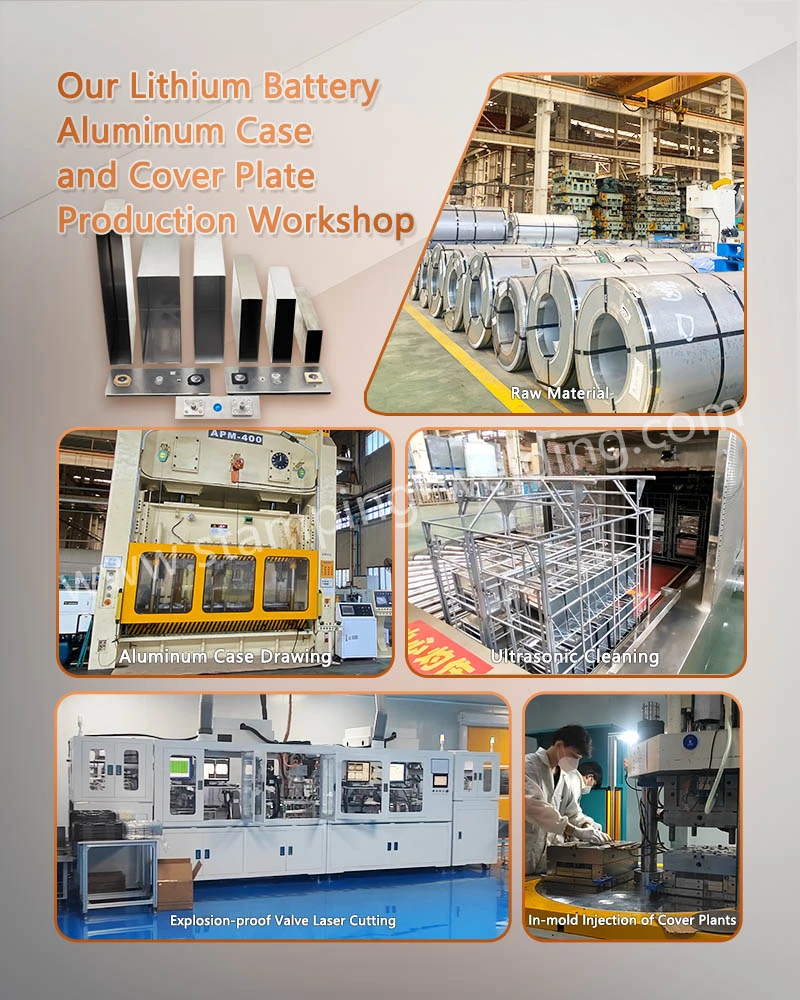
Consistency across material batches is also crucial for mass production. Significant variations in properties between batches of the same material can lead to inconsistencies in stamped dimensions, springback behavior, and subsequent welding performance. Consequently, a truly mature battery cover plate manufacturing process goes beyond merely controlling "die precision"; it requires the integrated management of material stability, die design, and stamping parameters.
The cover plate requires not only structural strength but also a solid foundation for effective sealing.
Since the battery cell contains electrode assemblies and electrolyte, a stable seal must be formed between the cover plate and the casing. This means the edge of the cover plate serves not merely as a mechanical connection point but also as a critical foundation for the subsequent sealing weld. Significant warping, deformation, or dimensional deviations at the edge can compromise the fit between the cover plate and the casing, which in turn affects the welding process. Consequently, the mechanical dimensions of the cover plate cannot be viewed in isolation.
From an engineering perspective, factors such as cover plate flatness, edge geometry, welding zone dimensions, and the fit with the casing must be considered holistically.
Why must battery cover plates integrate terminals?
Electrical energy generated within the battery cell must ultimately be output via external terminals. Consequently, positive and negative terminals are typically integrated into the cover plate assembly. These terminals serve not only a conductive function but must also meet requirements for mechanical fixation and electrical insulation. In a typical configuration, the electrode terminals pass through openings in the cover plate and maintain the necessary electrical isolation from the plate through insulating components or sealing structures. Publicly available patent literature clearly describes the relationships between the terminals, the cover plate, and the insulation structures.
This is why a battery cover plate cannot be viewed merely as a simple stamped metal sheet. The cover plate body is a structural metal component, whereas the terminals are functional electrical components; the two must be precisely assembled to form a complete unit.
The safety pressure relief structure is a critical component of the cover plate design.
Under abnormal conditions, lithium-ion batteries may generate gas and experience a rise in internal pressure; consequently, prismatic cells typically require a dedicated pressure-relief mechanism. These safety structures are usually designed as "weakened zones" or specific components with defined activation characteristics. They must remain sealed during normal operation but provide a controlled path for gas release when internal pressure reaches the design threshold.
Patents for prismatic batteries reveal that safety pressure-relief structures can be located on either the cover plate or the battery casing, utilizing specially designed weakened zones to facilitate pressure release. Therefore, during the cover plate design phase, the pressure-relief zone cannot be evaluated solely on the feasibility of the stamping process; considerations must also integrate cell safety requirements and downstream manufacturing processes.
Why is the electrolyte filling structure a critical feature of the cover plate?
Electrolyte is a vital component of lithium-ion batteries, and the production of prismatic cells requires a dedicated interface for electrolyte injection. Consequently, the cover plate must incorporate a designated filling structure. Once the filling process is complete, the injection port requires final sealing.
Publicly available data on prismatic battery structures indicates that electrolyte is injected into the cell through a hole in the cover plate, which is subsequently sealed. From a product design perspective, the placement of the filling hole not only affects the operational space for production equipment but also necessitates consideration of the subsequent sealing process and the overall structural layout of the finished product.
Materials and Structures Must Be Designed in Tandem
For specialized battery component suppliers, the real challenge lies not merely in selecting an aluminum alloy, but in determining:
Can the material reliably achieve the target structure?
Can the structure be mass-produced using existing tooling?
Will the stamped cover plate meet welding requirements?
Will the terminal assembly remain stable?
Can the safety pressure-relief structure be manufactured consistently?
These questions ultimately point to a single principle: material selection cannot be divorced from manufacturing processes, nor can structural design be separated from material properties. This is precisely why modern aluminum battery box covers increasingly emphasize DFM (Design for Manufacturing).
Product Advantages Derived from Precision Structural Design
A well-designed cover plate enables greater functional integration within the limited space of the battery cell. For instance, consolidating terminals, the electrolyte filling port, and safety mechanisms in the top region reduces the number of additional structural components. Furthermore, an optimized terminal layout facilitates the subsequent installation of busbars.
In the context of power batteries, this design promotes compact cell arrangement and simplifies the internal connection structures of the module.
For energy storage systems, the regular prismatic shape facilitates the modular assembly of multiple cells.
Consequently, the cover plate design serves not only the individual cell but also influences the structural design of the subsequent modules and battery packs.
From a Single Component to Part of a Battery System
As new energy vehicles and energy storage batteries evolve toward higher levels of integration, the power battery cover plate is no longer a simple, standalone component. It serves as an interface connecting several systems:
On one side, it connects to the internal tabs and current-collecting structures of the battery cell;
On the other, it connects to external busbars and electrical systems;
Simultaneously, it forms a mechanical seal with the battery housing;
And it performs critical safety functions.
This implies that the design of the cover plate must be approached with the entire battery cell in mind. For battery manufacturers, selecting a supplier with capabilities spanning material development, stamping, terminal assembly, welding, and inspection can minimize process integration issues that often arise when dealing with multiple vendors.
Key Applications of Lithium Battery Top Cap
Currently, these cover plates are primarily used in power batteries for new energy vehicles (NEVs), energy storage batteries, and other prismatic lithium-ion batteries.
Applications in new energy vehicles prioritize weight, space efficiency, vibration resistance, and long-term operational stability.
Energy storage applications, meanwhile, place greater emphasis on performance in long-term operating environments, sealing reliability, and batch consistency.
Specific dimensions, terminal layouts, safety structures, and material specifications may vary depending on the application scenario.
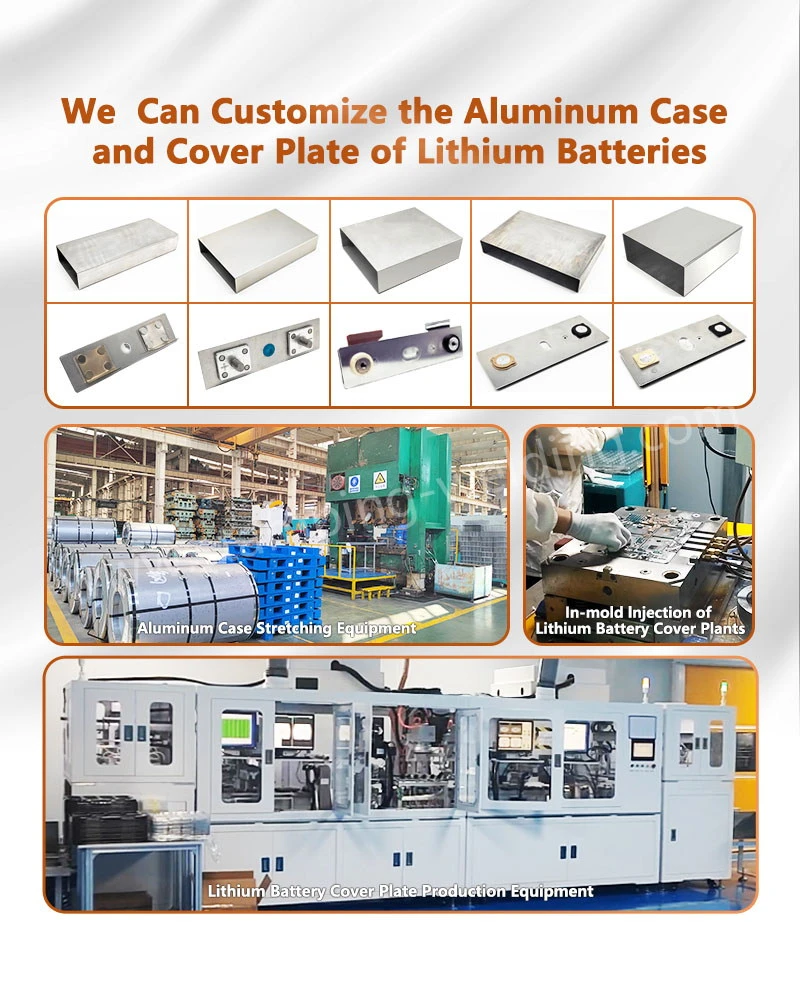
Consequently, lithium-ion battery cover plates are best developed as customized structural components rather than simply procured according to fixed, off-the-shelf specifications.
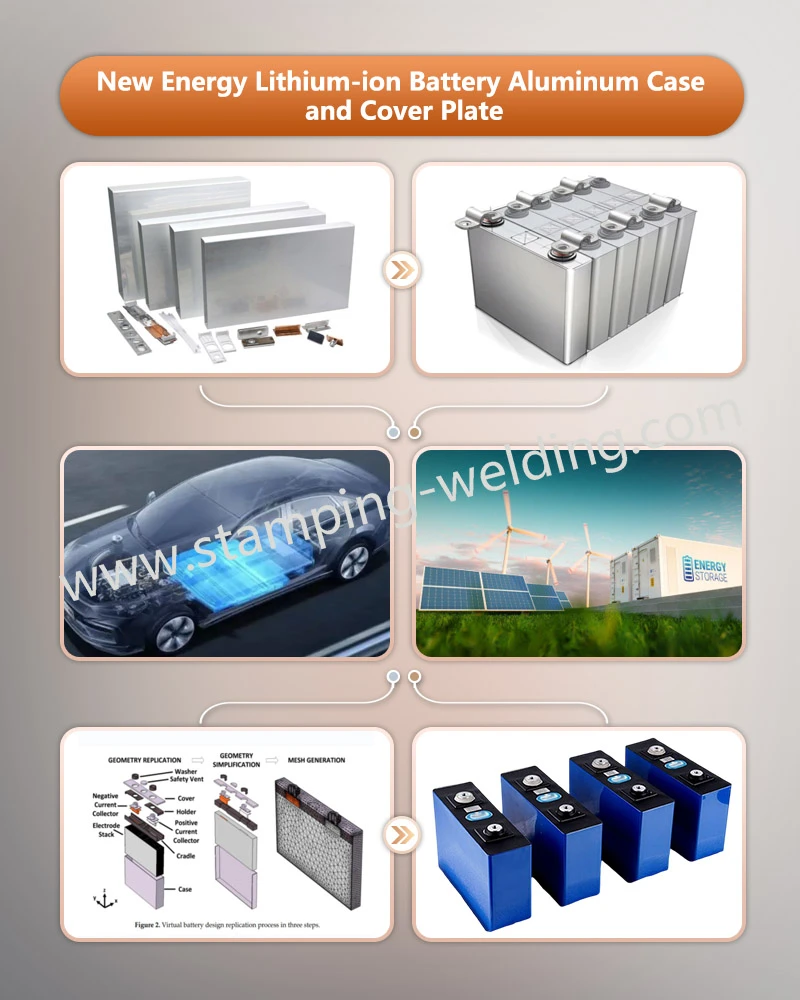
Customization Directions for Prismatic Lithium Battery Lids
The performance of a prismatic lithium battery lid is the result of the combined interaction of multiple stages, ranging from material selection to final assembly. Aluminum and aluminum alloys provide the foundation for lightweighting and formability; precision stamping creates complex structures; terminals and insulating components fulfill electrical functions; safety pressure-relief mechanisms manage internal pressure; and the connection between the cover plate and the casing forms a critical part of the cell encapsulation.
For new energy vehicle and energy storage projects, a battery cover plate of true engineering value requires more than just dimensional accuracy; it demands synergistic design across materials, structure, manufacturing processes, and the battery cell system.
Every energy storage system and electric vehicle has unique demands for performance, layout, and safety. Whether you require specific terminal configurations, custom dimensions, optimized venting pressures, or specialized aluminum alloy treatments, our prismatic lithium battery canopy designs can be fully tailored to your exact cell specifications and DFM needs. Contact our engineering team today to build a reliable, high-precision canopy customized for your next-generation battery project.
Contact Us