Full analysis of copper stamping parts industry
Jun 06, 2026
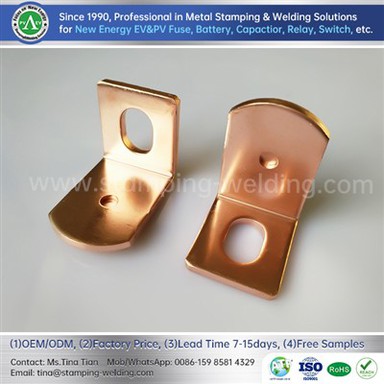
Copper stamping parts are precision metal structural parts formed in batches through the stamping process using pure copper, copper alloy or copper-plated materials as raw materials. In the segmented track of precision manufacturing, copper stamping parts have become indispensable core supporting components in automobiles, electronics, new energy, medical equipment and other industries due to the excellent electrical conductivity, thermal conductivity and corrosion resistance of copper. Compared with ordinary metal stamping parts, copper stamping parts require higher precision and stability in the production process, and their quality directly affects the electrical reliability, heat dissipation efficiency and service life of downstream products. As the representative product form of Copper Alloys Metal Stamping, copper stamping parts cover a wide range of sizes from micro terminals to large structural brackets. Stamping processing uses mechanical force to apply external force to the copper plate to cause plastic deformation or separation, thereby obtaining parts of the required shape and size. This process and forging belong to the same category of plastic processing, and the two are collectively called forging. In the production of small- or large-volume copper structural parts, stamping processing has significant advantages such as high production efficiency, high material utilization, good dimensional consistency, and low unit cost. It is especially suitable for industrial scenarios that require large-scale standardized manufacturing. China Copper Metal Stamping Manufacturer plays an important role in the global supply chain. Relying on a complete industrial chain and mature process accumulation, it can meet multi-level needs from consumer electronics to industrial equipment.

Material selection and properties
The material selection of copper stamping parts directly determines the electrical conductivity, mechanical properties and environmental resistance of the product. Commonly used copper materials include pure copper (red copper), brass (copper-zinc alloy), phosphor bronze (copper-tin-phosphorus alloy) and beryllium copper (copper-beryllium alloy). The copper content of pure copper (grade T2, TU1, etc.) is not less than 99.9%, has the highest electrical and thermal conductivity (about 101% IACS), and is suitable for occasions with stringent requirements for large current transmission and heat dissipation. However, its mechanical strength is relatively low. In applications that need to withstand large structural stress, it is necessary to increase the wall thickness or design enhanced features. Brass (such as H62, H65) contains about 30-40% zinc, and its conductivity is about 25-30% of pure copper, but its tensile strength can be more than twice that of pure copper, and it has good cutting performance and wear resistance.
It is suitable for components such as terminals, grounding plates and structural brackets in switches and sockets that have certain requirements for strength but not extreme conductivity. Phosphor bronze (such as QSn6.5-0.1) adds about 0.1% phosphorus, which significantly improves the elastic limit and fatigue resistance of the material. It is an ideal material for manufacturing spring contacts, jack reeds, and elastic contacts that require repeated bending. It is widely used in the contact pair structure in Electrical Metal Stamping Parts For Switches Sockets. After aging treatment, beryllium copper can achieve extremely high strength and hardness while maintaining good electrical conductivity. It is suitable for elastic contacts with extremely high reliability requirements in aerospace and high-end medical equipment. As the base material of China Copper Stamping Metal Parts, copper is usually supplied in the form of tape or sheet, with thickness ranging from 0.1mm to several millimeters. Before stamping, the chemical composition and hardness test of the copper material need to be re-inspected to ensure consistency between batches.

Stamping process
Although copper has good ductility and plasticity, it is prone to defects such as cracking, wrinkling, springback, or dimensional deviations during the stamping process due to anisotropy and work hardening effects. Therefore, there are strict standard requirements for the process design of copper stamping parts. The fine blanking process is one of the core technologies for manufacturing high-precision copper stamping parts. By using a three-action press with a toothed gear plate and a convex and concave die with extremely small gaps, a punching surface with a smooth cross-section and no tear strips can be obtained in one punching stroke. The dimensional accuracy can reach IT8-IT9 level. It is suitable for scenarios where high-end automotive connectors and precision components of medical equipment have strict requirements on shear surface quality. For parts such as Electrical Contact Copper Metal Stamping Terminal, the contact area needs to be fine-blanked or trimmed to obtain a flat, burr-free contact surface to reduce contact resistance and avoid local arc ablation during use. The drawing process is suitable for forming copper stamping parts with cup-shaped, box-shaped or deep cavity structures, and requires strict control of the drawing ratio, blank holder force, mold temperature and lubrication conditions.
During the deep drawing process, the flow of copper material between the male and female molds needs to be accurately guided to avoid wrinkles on the side walls or excessive thinning and cracking at the bottom corners. For parts stretched in multiple passes, an intermediate annealing process may be necessary to eliminate work hardening and restore the plastic deformation ability of the material. The rotary cutting and stretching process is a special molding method for thin-walled copper stamping parts. Through the relative movement between the rotating punch and the fixed concave mold, high-precision molding of thin-walled deep-cavity structures is achieved. It is widely used in the electronics industry for the manufacture of micro shields, sensor housings and precision sleeves for medical equipment. In the bending and forming process, since the rebound angle of copper is larger than that of steel, it is necessary to accurately calculate the bending angle compensation amount, and reserve the bending angle or set up a correction structure during mold design. For stamping parts such as Custom Metal Brackets Spring, which have both structural support and elastic functions, the stress distribution in the bending area needs to be optimized through finite element analysis to avoid early fatigue fracture caused by stress concentration during use.

Application scenarios
Copper stamping parts have a wide range of application scenarios. Their core characteristics are derived from the physical properties of copper and can adapt to the special working conditions of many industries. In the automotive industry, copper stampings are mainly used for components such as high-temperature gaskets, circuit connectors, power system seals, and sensor brackets. These components need to maintain stable electrical contact performance and mechanical fastening force for a long time in the high-temperature environment of the engine compartment and the high-vibration conditions of the chassis. Copper's oxidation resistance and stress relaxation resistance make it an irreplaceable material. In the field of electronic communications, copper stamping parts are widely used in components such as electronic plug-ins, heat dissipation components, terminal connectors, and dynamic and static contacts inside switches. Copper Stamping Contact For Electrical Switch is a typical one - the copper contacts inside the switch are stamped to obtain precise contact surface contours, ensuring stable contact resistance and controllable arc erosion during each on-off action. The dimensional accuracy requirements for these precision components often reach the micron level, because any slight shape deviation may cause signal transmission interruption or poor contact.
In the new energy industry, a large number of copper stamping parts are used in the heat sinks, circuit terminals, battery connectors, busbars and other components of charging piles. Copper's high thermal conductivity and current carrying capacity ensure the temperature rise control and electrical safety of charging piles under high-load continuous operation conditions. In the field of medical machinery and industrial equipment, copper stamping parts are used in structural parts of precision instruments, fluid control parts and electromagnetic shielding parts due to their non-magnetic, easy cleaning and bacteriostatic properties to meet the aseptic operation requirements of medical equipment and the wear resistance needs of industrial equipment. In addition, Switch Socket Precision Custom Metal Stamping Parts assume the dual functions of current transmission and mechanical support in electrical and electronic products. The flatness and surface roughness of its contact interface directly affect the service life and heat generation level of the socket. Metal Copper Stamping Bracket Parts focus more on structural support functions. While ensuring a certain conductivity, they need to provide sufficient tensile strength and vibration fatigue resistance. They are commonly found in fixed brackets and connecting bridges inside power modules.

contact us
Welcome to send your Copper Sheet Stamping for Electric Relay drawings or technical requirements to our engineering docking window, and a professional team will conduct a manufacturability assessment and mold solution comparison. We respond to your every structural part need with mold development capabilities and process control.