Full dimensional analysis of core structural components design for LiFePO4 battery cell
Mar 13, 2026
Overview of LiFePO4 battery cell structural components
The overall structure of the Power battery cell consists of two core modules, the shell and the cover plate, with clear division of labor and significant differences in process. The manufacturing process of the shell is relatively simple, and the mainstream adopts continuous stretching technology to form. The materials are mainly steel shell and aluminum shell, with outstanding structural strength and strong mechanical load bearing capacity, which can provide solid protection for the internal battery cells; The manufacturing process complexity of the cover plate is much higher than that of the shell, and it is an integrated functional component that combines multiple functions such as fixed sealing, current conduction, abnormal pressure relief, fuse protection, and reducing electrical corrosion. It is the core component to ensure the safe operation of lithium batteries.
In daily work, the top cover and aluminum shell are sealed by laser welding, fixing bare cells and isolating the external environment; The pole, adapter, and battery cell ear are welded and connected to ensure stable transmission of charging and discharging currents; When there is an abnormality or excessive air pressure inside the battery, the explosion-proof valve on the cover plate will automatically open to release pressure, reducing the risk of explosion from the source and safeguarding the safety of Rechargeable lithium ion battery cells in all aspects.

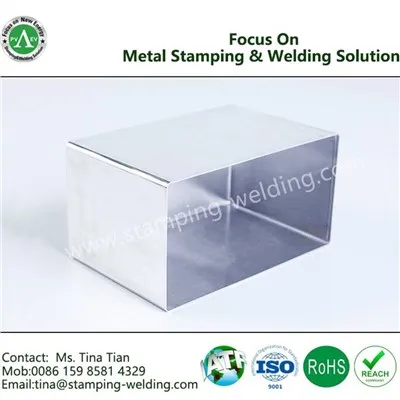
Shell: Key Points of Structure and Process
The shell is the fundamental protective component of LiFePO4 battery cell structure, playing a key role in four dimensions: fixation, protection, sealing, and heat dissipation. It is a full lifecycle barrier that isolates the internal electrochemical system of the battery cell from the external environment.
On the one hand, the shell can firmly fix the internal battery cell components, ensuring that the battery maintains structural stability in various scenarios such as transportation, use, and vibration, while resisting external mechanical impacts, avoiding external compression and collision damage to the internal battery cells.
On the other hand, the shell has excellent sealing performance, completely eliminating the problem of electrolyte leakage, maintaining the stability of the internal electrochemical environment of Battery energy storage, and assisting in heat dissipation to quickly dissipate the heat generated during battery operation, alleviate temperature rise problems, extend the service life of lithium batteries, and improve operational safety.
The shell production process system of Lifepo4 power cells is complete, with core processes including raw material cutting, precision continuous deep drawing, incision processing, cleaning, drying, and full-scale inspection. Among them, precision continuous stretching technology is the core difficulty of the entire production process. This process requires strict guarantee of uniform wall thickness of the shell to avoid problems such as fracture and deformation during the stretching process.

Cover plate: detailed explanation of multifunctional integrated components
As the most integrated core component in Lithium-ion batteries for solar products, the cover plate integrates multiple functions such as connection, isolation, sealing, explosion-proof, and conductivity. The internal components are finely divided and closely coordinated to ensure the normal operation of lithium batteries. The steel cap at the top of the cover plate has high mechanical strength and strong resistance to external deformation. It can not only protect the internal explosion-proof aluminum sheet from damage, but also serve as a key component for battery PACK connection; The sealing ring around the cover plate serves as an insulation and isolation function, separating the internal metal parts from the shell to prevent internal short circuits in the battery. At the same time, it cooperates with the sealing process to achieve secondary sealing, further improving the battery's airtightness.
The explosion-proof component of the cover core is composed of isolation rings, explosion-proof aluminum sheets, and connecting aluminum sheets. It is a key structure for overload protection, pressure relief, and explosion-proof of Lithium superpack batteries. The explosion-proof aluminum sheet is located in the middle of the cover plate and is the core of controlling the circuit cut-off and critical pressure relief; The connecting aluminum sheet is located at the bottom of the cover plate and is connected to the explosion-proof aluminum sheet through laser welding. In dangerous situations, the connection can be disconnected in a timely manner to cut off the circuit; The isolation ring is installed between the connecting aluminum sheet and the explosion-proof aluminum sheet to achieve isolation and insulation.
Design value of module connectors and structural components
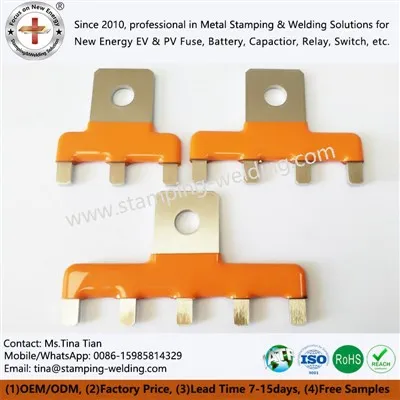
The battery module connector is a key conductive component in the power Solar energy storage systems lithium batteries pack module, mainly used to achieve electrical connection between the battery cell and the module. It is mostly made of multi-layer composite materials stacked together, with a dedicated connection layer to ensure welding performance with the pole. The multi-layer structure synchronously ensures stable overall conductivity efficiency.
Part of the connecting plate substrate is processed by stacking multiple layers of foil to form a flexible buffer area, which can effectively compensate for the displacement caused by the expansion of the core during the charging and discharging process of the Battery pack kit, reduce the stress impact on the low strength interface, and improve the overall structural stability of the module. The shape of the connecting piece is usually rectangular, trapezoidal, table shaped and other conventional specifications. A 0.1 thick nickel plated copper foil is pasted on the connecting surface to improve welding reliability. Before and after welding, the surface should be polished and cleaned to avoid high-temperature oxidation and discoloration, while not damaging the original surface coating to ensure connection performance.
Overall, the design and process control of Lithium battery pack structural components are directly related to the performance, safety, and service life of lithium batteries. With the continuous expansion of the new energy vehicle and energy storage markets, the market demand for square shell structural components will continue to rise, and the industry will continue to upgrade towards high precision, high integration, and high stability, further promoting the overall technology and application quality improvement of lithium batteries.
Contact us
For the selection of LiFePO4 battery cells, process optimization, and customized solutions for the demand side, please feel free to consult at any time and look forward to cooperation.