Fuse clamp product industry knowledge details
Jun 04, 2026
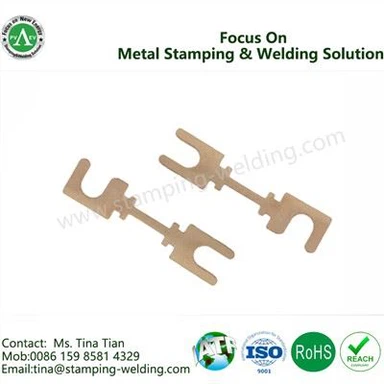
Fuse clamp is a base-type electrical connection device used to install and fix blade-type contact fuses (such as NH series, square tube blade-type fuses). It is usually composed of one or more pairs of elastic clamping pieces and an insulating base. The clamping piece forms a pluggable electrical contact with the contact blades at both ends of the fuse, and the insulating base is fixed on the distribution cabinet panel through guide rail buckles or screws. This product covers a variety of specific forms, including NH Fuse Bases specially designed for NH-type fuses (in compliance with IEC 60269-2-1 and DIN 43620 specifications, common sizes from NH00 to NH4), and Fuse Bases for Knife Type that are adapted to various blade contact fuses. Inside the base, Knife Contact, as a conductive clamping element, is usually made of copper or copper alloy and relies on its own elasticity or an external spring to provide stable contact pressure. In photovoltaic DC systems and industrial control cabinets, this product often appears in the form of NH Series Fuse Base Knife Contact or Copper Holder for NH Type Industrial Fuse-links, emphasizing the matching relationship between its copper holder and NH fuse. For applications that require mounting on standard 35mm rails, we also provide NH Fuse Links for Mounting on DIN/EN Rail or with Screw Fixing bases with dual-purpose structures, which can be mounted on DIN rails or fixed to the back panel with screws. In addition, Copper Bases for Knife Type NH Fuse Links further highlight the advantages of bases made of pure copper or high copper alloy in conductive performance.

Material selection
Material selection for conductive clamping sheets requires a balance between conductivity, elasticity, resistance to stress relaxation, and cost. CuSn6 phosphor bronze has an electrical conductivity of 15%~18% IACS and a tensile strength of 450~550MPa. This material is the first choice for applications that require extremely high elasticity and fatigue life. CuZn37 brass has an electrical conductivity of 26%~28% and a tensile strength of 340~420MPa. It is cost-effective and suitable for general use. Industrial clamp; CuBe2 beryllium copper, although more expensive, has a conductivity of 22%~25% and a tensile strength of 1000~1300MPa, which is suitable for high-temperature environments (≥150℃) or military-grade applications; the solution of pure copper T2 with stainless steel springs pursues extremely low resistance (conductivity ≥97%), and the elasticity is provided by an external spring. For NH Series Fuse Base Knife Contact, we use CuSn6 phosphor bronze by default because phosphor bronze has better stress relaxation resistance than ordinary brass under long-term power heating and repeated plugging and unplugging during fuse replacement.
The material selection of the insulating base considers the flame retardant level, dielectric strength and mechanical strength: PA66+GF30 (nylon 66 plus 30% glass fiber) is the most widely used solution, with excellent properties such as UL94 V-0 flame retardant (1.6mm thickness), CTI ≥ 600V (material group I), heat distortion temperature ≥ 240°C, etc., and is suitable for NH Fuse Most models of Bases; PC polycarbonate is a transparent material, suitable for occasions where the status of the internal fuse needs to be observed, but has weak resistance to chemical solvents; Bakelite PF phenolic molding compound is a traditional material, resistant to high temperatures (long-term 200°C) and low price, but is brittle and not suitable for DIN rail card-mounted structures. In terms of surface treatment, the clamping piece is usually tin-plated (2~6μm) or silver-plated (3~8μm). Tin-plating is low-cost and corrosion-resistant and is suitable for dry environments. Silver-plated contact resistance is extremely low and suitable for large currents or frequent plugging and unplugging. The base incoming end is usually equipped with an M5, M6 or M8 copper bolt/nut combination, made of nickel-plated brass or stainless steel to prevent rust. The guide rail buckle is made of POM polyformaldehyde or PA66 material, which is elastic and wear-resistant and supports multiple disassembly and assembly without breaking.

Manufacturing process
The conductive clamping piece is formed by first using a high-speed precision punch (80~160 tons) and a progressive die to punch the copper strip (thickness 0.8~3.0mm) out of the unfolded shape of the clamping piece, and then performing multi-angle bending to form the clamping curved surface and terminal connection lugs. For Knife the key dimensions for Contact are the initial opening width between the two pieces (0.3~0.5mm larger than the thickness of the fuse contact blade) and the clamping angle (usually designed as a 15°~20° bell mouth). Then multiple longitudinal grooves are punched out on the clamping surface, which not only reduces the contact area (increases the contact pressure density) but also scrapes off the oxide film on the surface of the contact blade during insertion and removal. For phosphor bronze or beryllium copper materials, stress relief annealing (280°C to 350°C, heat preservation for 1 to 2 hours) is required in a protective atmosphere furnace to stabilize elastic properties and prevent stress relaxation during use, resulting in a decrease in clamping force. Hot runner or cold runner molds are used for injection molding of the insulating base. The number of mold cavities ranges from 1 to 8. The injection molding machine has a clamping force of 80 to 200 tons and a barrel temperature of 260 to 300°C (PA66+GF30). Key control points include insert injection molding - for those who need Copper Holder for NH Type Industrial The one-piece design of Fuse-links is directly embedded into the base.
The stamped clamping piece needs to be placed into the injection mold for positioning first. After injection, the plastic wraps and fixes part of the clamping piece, thereby eliminating the need for subsequent assembly processes. The guide rail buckle parts use secondary injection molding or subsequent assembly to install DIN buckles made of POM. The raw materials must be fully dry (moisture content ≤0.2%) to prevent hydrolysis during injection molding and to lower the flame retardant level. In the assembly and testing stage, the formed and heat-treated clamping piece is inserted into the reserved slot of the base and pressed with a pneumatic press until the claws are locked. For the split clamping piece design (the left and right pieces are independent), a pass gauge and a stop gauge are required to check the consistency of the opening size, and then accessories such as guide rail buckles and terminal bolts are installed. The final product undergoes a full electrical performance inspection - use a standard fuse contact knife simulation block to perform 100 plug-in and pull-out cycles and then retest the pull-out force (required ≥12N), and conduct sampling temperature rise test and salt spray test (neutral salt spray ≥ 48 hours, tin-plated parts have no red rust).

Application industry
In the field of industrial power distribution and control cabinets, fuse clamps are widely used in factory power distribution boxes, PLC control cabinets and motor control centers. The input side of each inverter is usually installed with NH00~NH2 specification fuses and matching clamps as backup protection for semiconductor devices. In the renovation of old production lines, replacing the original spiral fuse bases with Fuse Bases for Knife Type can achieve lower contact resistance (≤0.2mΩ) and a more convenient fuse replacement experience. For workshops with a lot of dust (such as cement plants and wood processing workshops), the clamp base can be equipped with a transparent dust cover to prevent conductive dust from accumulating on the Knife Contact surface and causing creepage. In photovoltaic and energy storage systems, DC side photovoltaic combiner boxes and energy storage high-voltage boxes are the main application areas of DC Solar Fuse Knife Contact. DC voltages as high as 1000V/1500V require clamps with larger electrical clearances and creepage distances (according to IEC 60947-3, 1500V Creepage distance under DC ≥ 20mm).
Outdoor installation leads to temperature cycle (-25℃~+70℃) and ultraviolet radiation, which requires the insulating base to use weather-resistant materials such as PA66+GF and the UV resistance level reaches the UL 746C f1 standard. At the same time, the risk of DC arc is higher than that of AC. The slotted design of the clamping piece and the arc extinguishing partition have become necessary safety measures. We focus on promoting Copper Bases for Knife Type NH Fuse Links in the photovoltaic field. The clamping piece adopts a thickened design (thickness ≥ 2mm) to withstand the temperature rise under long-term DC load without stress relaxation. In the field of communication power supply and data center, the requirements for fuse holders in communication base stations - 48V power cabinets and precision power distribution units in server rooms focus on high-density installation and low heat generation. For example, the ultra-thin NH Fuse with a center distance of only 17.5mm is used to arrange up to 6 fuse protections within 1U height. The clamp base must pass a 100% temperature rise test to ensure that the terminal temperature rise does not exceed 45K at 1.0 times the rated current to ensure the reliability of adjacent electronic components.
At the same time, the model with a status indicator light that supports hot-swap replacement of fuses without interrupting the circuit also facilitates online maintenance. In the field of electric vehicle charging facilities, the main circuit protection of DC fast charging piles usually uses large-size NH3 or NH4 fuses, and the matching Copper Holder for NH Type Industrial Fuse-links must meet the fast plug-in design (the fuse needs to be frequently pulled out and inserted during charging pile maintenance, and the clamp needs to withstand ≥200 plugs and pulls without significant decrease in clamping force, and the allowed decrease is ≤20% of the initial value). At the same time, the front of the clamp is designed with finger protection (IP2X) to prevent operation and maintenance personnel from accidentally touching the live Knife Contact. Moreover, when a short circuit occurs at the charging pile, the fault current can reach tens of kA.

contact us
If you are looking for fuse clip holder for existing equipment that are completely interchangeable with imported brands, or want to obtain a clamping solution with low contact resistance and high plugging and unplugging life in a new project, our team of application engineers will issue a selection proposal and reference quotation based on the fuse contact blade size, installation method and current requirements you provide.