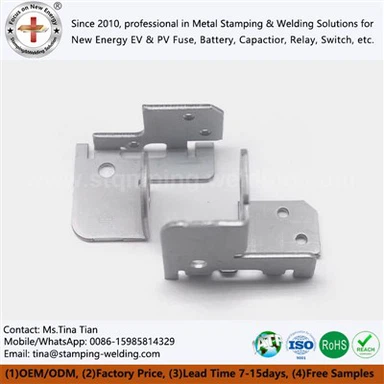
Fuse copper knife selection and installation guide - full analysis of electronic safety critical components
Apr 27, 2026
Analysis of the core functions of Fuse copper knife
Blade contact is not a simple mechanical bracket, but an electrical component that plays three key roles: current conduction, fuse fixing, and arc isolation. When an overload fault occurs in the circuit, the fuse will melt in the slot of the base, and the insulation shell of the base can effectively block splashing metal particles, preventing the occurrence of secondary short circuit accidents.
The typical Knife type contact blade fuse link base holder structure includes conductive terminals (usually made of copper alloy material to ensure low contact resistance), an insulating housing (made of flame-retardant composite materials such as V0 grade engineering plastic), and a snap mechanism designed to prevent vibration and detachment. Industry statistics show that about 35% of fuse failure cases are caused by poor contact of the base, indicating that the quality of the base has a direct impact on system safety.
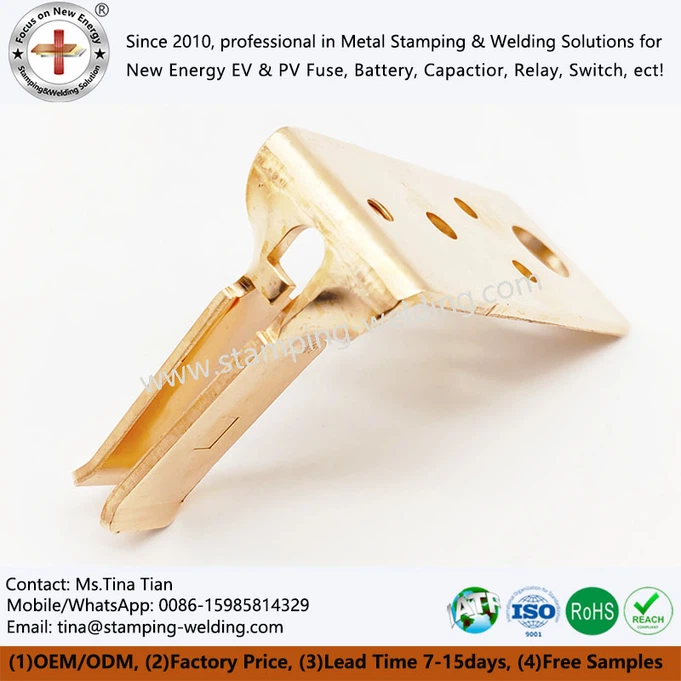
Four essential parameters to consider when making a purchase
When choosing a Fuse copper knife, it is important to evaluate the following four technical parameters. Firstly, electrical parameter matching. The rated voltage of the base should be higher than the maximum operating voltage of the system, and the current carrying capacity must match the current of the fuse and the line. At the same time, the breaking capacity of the base combined with the fuse must meet the expected short-circuit current requirements of the system.
Secondly, security certification identification. Different export markets have corresponding certification requirements for the NH fuse base for Siemens. The North American market focuses on the fire rating in UL/CSA certification, the Chinese market requires temperature rise testing under CCC certification, and the European Union market specifies creepage distance based on IEC standards.
Thirdly, environmental adaptability. Glass fiber reinforced housing should be selected for high-temperature environments, IP67 or above protection level is required for humid places, and snap on Pure copper knife for NH fuse installation structure should be preferred for vibration conditions.
Fourth, spatial compatibility. Before installation, it is necessary to measure the three-dimensional spatial dimensions, paying special attention to the space for inserting and removing fuse links and the heat dissipation gap between adjacent components.
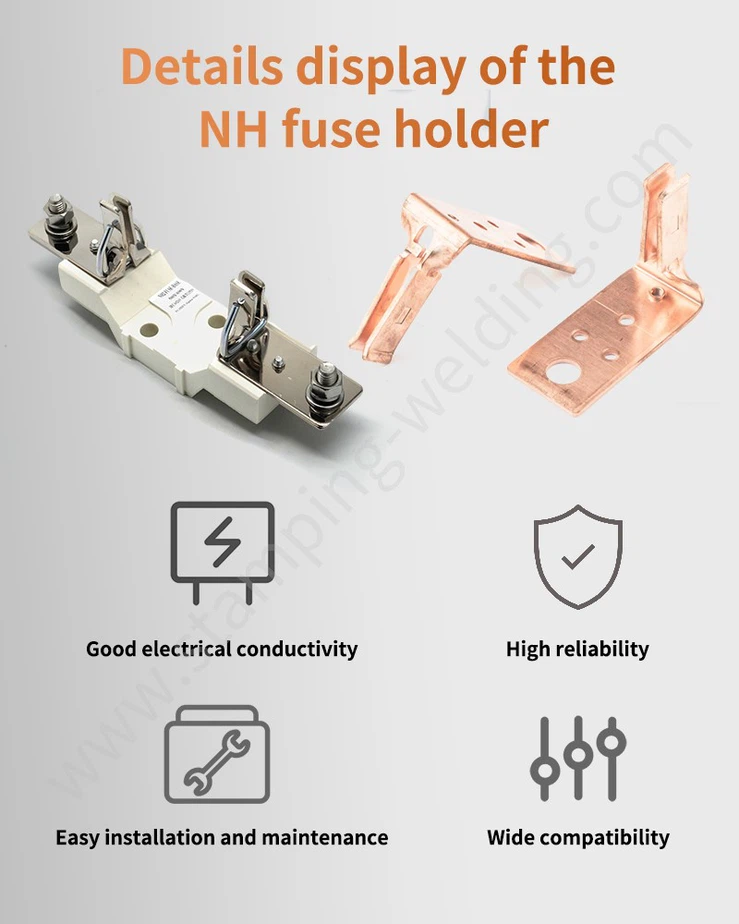
Installation operation standards and common misconceptions
The installation process of Contact terminal for NH fuse should strictly follow the following steps and avoid risks. In the pre-processing preparation stage, it is necessary to cut off the power and verify that there is no voltage, remove the oxide layer on the terminals, and prepare a torque screwdriver (recommended torque range is 0.6 to 1.2N · m). The key points of wiring operation include: the cross-sectional area of the wire should meet the terminal specifications, multi strand wires should be crimped with copper sleeves, and the cable should reserve a bending radius to prevent stress concentration.
In common installation errors of Fuse copper holders, directly connecting twisted wires to terminals can result in insufficient contact area and temperature rise exceeding the standard by up to 30%. Before powering on, the insulation resistance should be tested with a megohmmeter (should be greater than 100M Ω), the circuit status should be verified with a multimeter, and a no-load power on inspection should be conducted to confirm that there is no abnormal heating before it can be put into operation.
Maintenance and upgrade suggestions
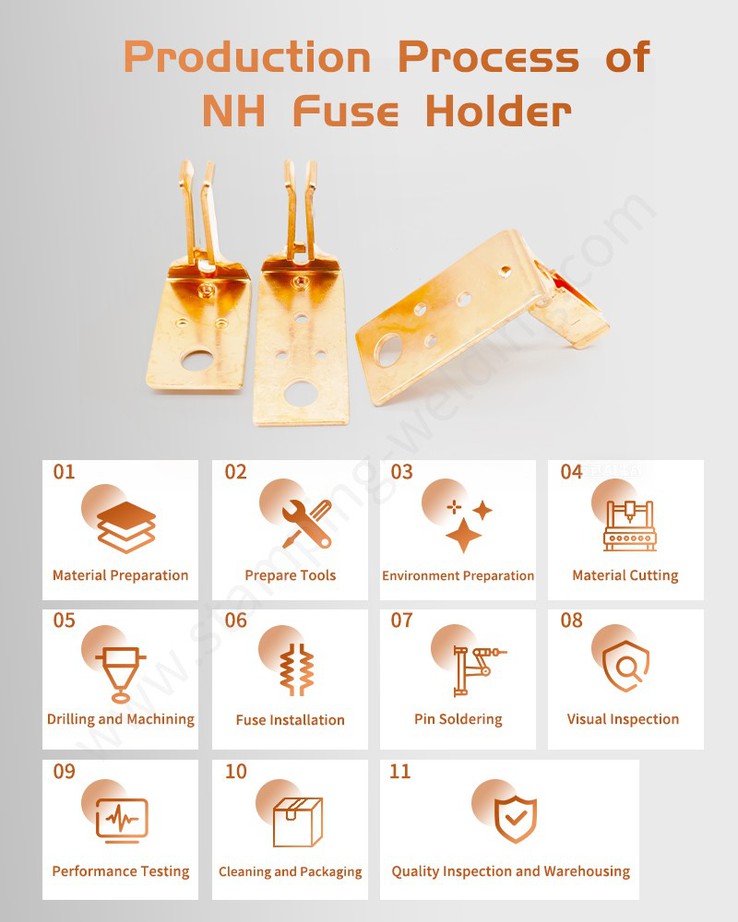
The design lifespan of Fuse copper bases typically exceeds 10 years, but regular maintenance is still required during long-term operation. It is recommended to check the terminal fastening status once a year, use compressed air to blow in reverse to clean up dust accumulation, and replace the shell that appears yellow or brittle in a timely manner.
In terms of technological upgrading, it is possible to consider replacing the traditional ceramic Fuse clip terminal with a composite engineering plastic base, which can reduce weight by about 40%; At the same time, upgrading the screw connection method to spring snap connection can increase installation efficiency by three times, significantly improving on-site construction convenience and long-term contact reliability.
contact us
If you encounter any technical problems during the selection, parameter matching, installation and maintenance process of the Fuse copper knife, please feel free to contact us at any time. We will provide you with professional technical consultation and selection suggestions to help ensure the safe and stable operation of your electrical system.