Industry Insights into the Power Control Cabinet: From Details to Applications to Production Process
Nov 02, 2025
In modern industrial automation and power systems, the Power Control Cabinet has become an indispensable core component. This article explores three dimensions: first the product's structural details; second the application scenarios; and third the production process. It aims to offer valuable reference material for industry professionals, procurement decision-makers and technical personnel.

Structural Details and Key Components
The motor starter cabinet's main function is to protect automation components, power distribution systems and electrical equipment from dust, moisture and extreme temperatures, thereby ensuring long-term, stable operation of the system or device. It not only supplies power and controls startup but also allows for orderly arrangement of complex electronic devices and prevents unauthorized access.
Key components
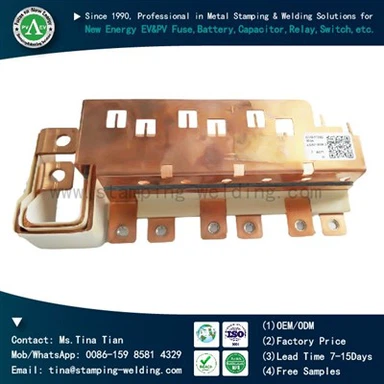
- Busbars (copper or aluminium): serve as the main power distribution pathway, enabling efficient transmission and reducing energy loss.
- Circuit breakers, relays, contactors: used for protection, switching and controlling circuits.
- Terminal blocks, wiring ducts, connection terminals: responsible for signal and power connection, distribution and management.
- Enclosure and structure: includes the cabinet frame, door, cooling/ventilation system and dust/water-proof design; the design must consider industrial environmental conditions.
Design considerations
- Heat dissipation and ventilation: when internal devices are densely packed, locomotive electrical cabinet must include natural convection or forced air-cooling systems to control internal temperature.
- Wiring planning: power cables, control cables and signal cables should be clearly zoned; width of the wiring duct and routing space must comply with standards.
- Environmental adaptability: in humid, dusty or vibration-intensive environments, the enclosure's protection rating, sealing and anti-vibration capability must all be enhanced.

Typical Application Scenarios
The mcc cabinets electrical finds use in a wide range of fields, and its reliability directly impacts equipment operational efficiency and safety. Below are several representative application areas:
Industrial production workshops: In manufacturing plants, automated workshops and robotic system sites, the cabinet is responsible for providing stable power to drive equipment and automation devices, and for managing functions such as start, stop and monitoring. For example, PLCs, inverters and motor-control units are often integrated within the electronic control cabinet.
Smart grid / renewable energy scenarios: In solar power, wind power and energy storage systems, the cabinet must cope with outdoor environments (e.g., ultraviolet exposure, corrosion, temperature variation) while delivering intelligent monitoring, power switching and protection functions.
Data centers and edge computing: In data centers, network base stations and 5G edge nodes, the cabinet not only requires stable power supply but also good electromagnetic interference (EMI/EMC) resistance to ensure continuous operation of critical equipment.
Equipment control and automation systems: The motor starter cabinet is also used in water treatment, air-conditioning systems, machine tools, paper machines, food processing and other fields. It supports PLC control, signal acquisition and device linkage functions.
When selecting a unit, combine actual scenario factors: power rating, environmental conditions, complexity of control logic, expansion requirements, etc.

Production Process Overview
Understanding the production process helps assess a manufacturer's technical capability and delivery quality of the Power Control Cabinet. The typical steps are:
Requirement analysis and planning
Based on the customer's site environment, electrical parameters, control requirements and protection rating, determine the cabinet specification, internal components and functional logic.
Mechanical processing
Mcc cabinets electrical processing includes bending, cutting, drilling, opening, spraying/ surface treatment. The mounting plate and busbar slot structural parts are also machined at this stage.
Component selection and procurement
According to design drawings, select circuit breakers, contactors, relays, PLCs, busbars, terminal blocks, etc. Materials must meet the environment and application standards.
Pre-assembly and wiring
Component installation, busbar connection, cable routing, terminal wiring, labeling, dry test, etc. The wiring quality directly affects safety and future maintenance convenience.
Testing and verification
Includes insulation resistance test, grounding resistance test, functional test, dielectric withstand test, temperature rise inspection, etc., to ensure the locomotive electrical cabinet meets electrical safety standards.
Installation and commissioning
After delivery on site, situate the cabinet, connect power supply, integrate devices, verify functionality, monitor operation, and hand over documentation such as wiring diagrams, parts lists and maintenance instructions.

Conclusion
With the acceleration of Industry 4.0, smart manufacturing and renewable energy trends, the Power Control Cabinet, as a key node in electrical systems, is increasingly important in terms of reliability, maintainability and intelligent features. By diving into its structural details, application fields and production workflow, we gain better insight into how to select, design, procure and operate. We hope this article helps you in planning and decision-making within this domain..
contact us