Industry knowledge analysis of rectifier cabinets
May 26, 2026
Basic concepts and industry positioning
Rectifier cabinet is a kind of power equipment that converts alternating current (AC) into direct current (DC). It is widely used in industrial manufacturing, communication infrastructure, transportation electrification, energy systems and other fields. Its core function is to unidirectionally process the AC waveform through a rectifier circuit and output DC power that meets the load requirements. Rectifier cabinets are usually composed of rectifiers, filters, control systems, heat dissipation devices, etc., and have engineering characteristics of high efficiency, stability, and continuous operation. In power distribution systems, rectifier cabinets are often deployed in conjunction with electrical meter cabinets or electrical supply cabinets to achieve quality monitoring and distribution management of input power. In addition, in some engineering scenarios, the output side of the rectifier cabinet will integrate a cabinet power outlet or an in-cabinet power outlet to provide a convenient DC power interface for auxiliary equipment in the cabinet (such as monitoring units, lighting, and cooling fans).
Working principle and technical classification
The working principle of the rectifier cabinet is based on the power electronic rectifier circuit. According to the different control methods, it can be divided into two categories: uncontrollable rectification and controllable rectification. Uncontrollable rectification uses diodes as rectifier elements and utilizes their unidirectional conduction characteristics: when the positive half cycle of alternating current is applied to both ends of the diode, the diode conducts and the current flows through the load; when the negative half cycle arrives, the diode cuts off and the current is interrupted. In this way, the AC input is converted into a pulsating DC output. In order to obtain a smoother DC voltage, a filter circuit (such as a capacitor filter, inductor filter or LC combination) is usually added to the rectifier cabinet to reduce the ripple component in the output current. In situations where higher power density is required, power supply cabinet or data cabinet power supply can be used as a supplement or alternative to the rectifier cabinet to meet the DC power supply needs of the equipment inside the communication cabinet or data cabinet.
Controlled rectification uses controllable switching elements such as thyristors (SCR) or insulated gate bipolar transistors (IGBT). By adjusting the phase angle of the trigger pulse (i.e., conduction angle), the average value of the output voltage can be precisely controlled. The advantage of controllable rectification is that it can realize dynamic adjustment of DC output, and is suitable for industrial scenarios that have strict process requirements for voltage and current, such as electroplating, electrolysis, and DC motor speed regulation. From the perspective of circuit topology, single-phase rectifier circuits are suitable for low-power applications (such as single-phase half-wave, single-phase full-wave rectification), while three-phase rectifier circuits are suitable for high-power industrial environments. Among them, three-phase bridge full-wave rectification has become a mainstream solution due to small output current fluctuations and high transformer utilization. The rectified DC usually still has a certain amplitude of ripples, which needs to be smoothed by the filter circuit. For loads with extremely high voltage stability requirements, the rectifier cabinet may also add closed-loop voltage stabilization control. By detecting the output voltage and comparing it with the reference value, the trigger angle is adjusted to achieve a regulated output.
Application scenarios
Rectifier cabinets play an irreplaceable role in multiple engineering fields with their efficient, stable and configurable output characteristics. In the industrial field, electroplating and electrolysis processes require long-term output of high-current, low-ripple DC power. Rectifier cabinets can provide accurately controllable DC power to ensure coating uniformity and electrolysis efficiency. In DC motor drive systems, rectifier cabinets provide adjustable DC armature voltage for rolling mills, cranes and other equipment. Welding equipment relies on rectifier cabinets to convert the AC power grid into high-current DC output to meet the stability requirements of the welding arc. In the field of communication, communication base stations and data centers widely use a comms cabinet power bar or a cabinet with a power supply as the cabinet-level power distribution unit. The front-end main rectifier cabinet converts the mains AC into a stable DC bus voltage (usually -48V or 240V) to provide an uninterrupted DC power supply for base station equipment, servers and network switches. In the rail transit system, subways, light rails and trams generally use DC traction power supply.
The traction rectifier cabinets installed along the line convert the AC power of the grid into 750V or 1500V DC to provide traction power for the trains. Electric vehicle charging piles also rely on rectifier cabinets to convert the AC power grid into adjustable DC voltage to meet the charging needs of batteries of different models. In the energy field, the DC power generated by photovoltaic power generation systems needs to be connected to the grid through inverters, but some energy storage systems still require rectifier cabinets to convert AC power into DC for battery charging. After the wind power generation system outputs AC power from the generator, it also needs to be converted into DC through the rectifier cabinet and then connected to the grid through the inverter link or supplied to the DC load. In the field of medical and scientific research, X-ray machines, CT machines and various precision experimental instruments have extremely high requirements on power supply ripple and stability. The rectifier cabinet can be used as a front-end DC power supply to provide pure DC power supply in conjunction with subsequent filtering and voltage stabilization stages.
Thermal, protection and auxiliary interfaces
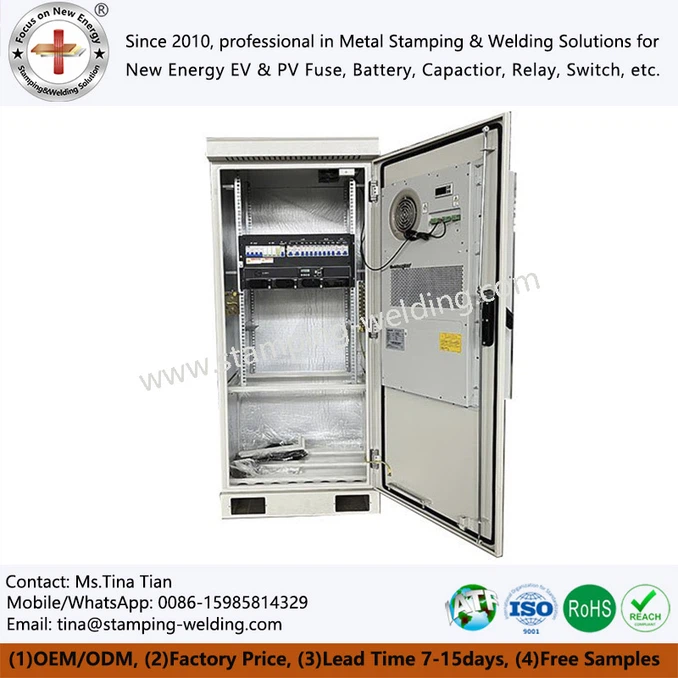
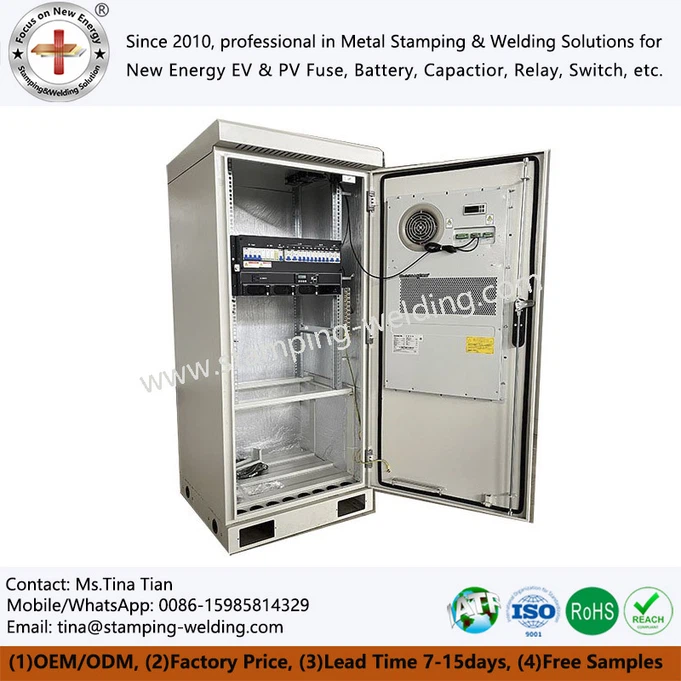
During the operation of the rectifier cabinet, power components (especially thyristors or high-power diodes) will generate significant heat. If the heat cannot be dissipated in time, the component junction temperature will rise, which will affect the life of the equipment and even cause failure. Therefore, the rectifier cabinet must be equipped with reliable heat dissipation devices. Common methods include forced air cooling (axial flow fans), natural convection heat sinks and water cooling systems. The specific selection depends on the rated power and on-site environmental conditions. In terms of protection design, the rectifier cabinet integrates overvoltage protection, overcurrent protection, short circuit protection and temperature monitoring and other protection circuits to ensure that the output can be quickly cut off or the current is limited under abnormal working conditions to protect the rectifier components and back-end loads. For rectifier equipment deployed outdoors or in humid environments, outdoor waterproof electrical cabinets or outdoor power cabinets can be used as the housing solution of the rectifier cabinet to increase the protection level to IP54 and above to resist rain, dust and condensation erosion. In addition, in application scenarios that require large current measurement, the 1000 amp ct cabinet can be installed on the input side of the rectifier cabinet to sample the current transformer on the AC incoming line to achieve energy consumption statistics and protection settings.
contact us
We welcome global engineering purchasers and system integrators to contact us regarding delta rectifier cabinet project requirements. We will use our solid power electronics engineering experience and rigorous delivery management system to provide a high-reliability equipment guarantee and full-cycle technical support for your DC power supply system.