Overview of Brass Precision Stamping Parts Manufacturing Technology
Apr 29, 2026
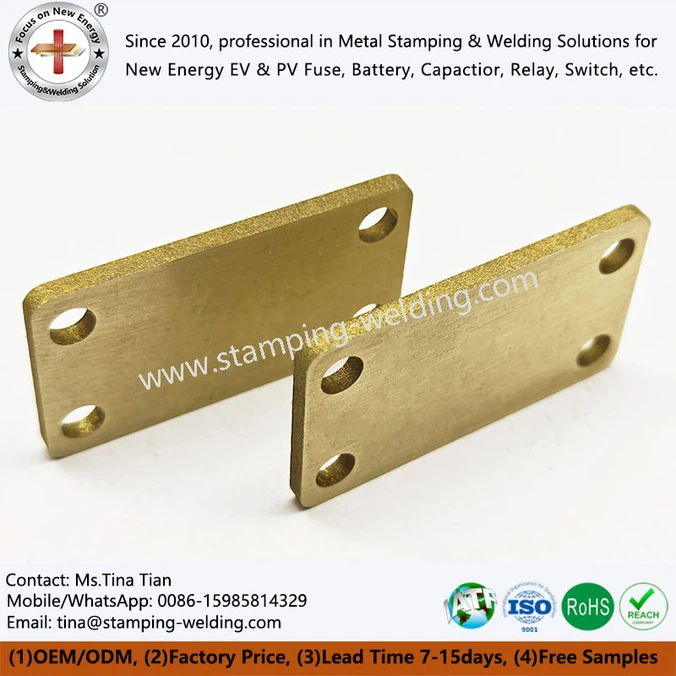
Brass is an alloy material with copper and zinc as its main elements. It is widely used in the field of precision parts manufacturing because of its good mechanical properties and corrosion resistance. Brass precision parts refer to brass components with high dimensional accuracy and complex shapes made through precision machining technology. They are usually used in situations with strict size and performance requirements. Its manufacturing process involves multiple links, from material selection to final processing, and each step needs to be strictly controlled to ensure product quality meets technical standards.
Characteristics of brass materials
The main components of brass materials are copper and zinc, with the zinc content usually ranging from 5% to 45%. As the zinc content changes, the mechanical properties of brass will also change significantly: low-zinc brass has better ductility and is suitable for cold working; high-zinc brass has higher strength and hardness, but reduced ductility. In order to improve cutting performance, corrosion resistance or mechanical strength, elements such as lead, tin, and aluminum can also be added to brass. In addition, brass has good electrical and thermal conductivity and is suitable for electronics and heat exchange fields. Its excellent corrosion resistance makes it less likely to rust in humid environments, and its good wear resistance is also suitable for frequently moving parts.

Manufacturing process
The manufacturing process of Relay Pin Brass Terminal mainly includes five links: material preparation, molding, processing, heat treatment and surface treatment. During the material preparation stage, the composition and state of the brass need to be determined based on the use environment and performance requirements of the parts. For example, high-zinc brass is used for high-strength parts, and lead-containing brass is used for parts with good cutting performance. Forming methods include casting, forging, and stamping: casting is suitable for parts with complex shapes, forging is used for parts requiring high strength, and stamping is suitable for thin-walled parts. Precision machining typically uses CNC machines for turning, milling, drilling, and grinding to ensure high accuracy and consistency. Heat treatment, such as annealing can eliminate internal stress and improve ductility, while quenching and tempering can increase strength and hardness. Surface treatments include plating, painting, and polishing to improve the appearance, corrosion resistance, or wear resistance of parts.

Application fields
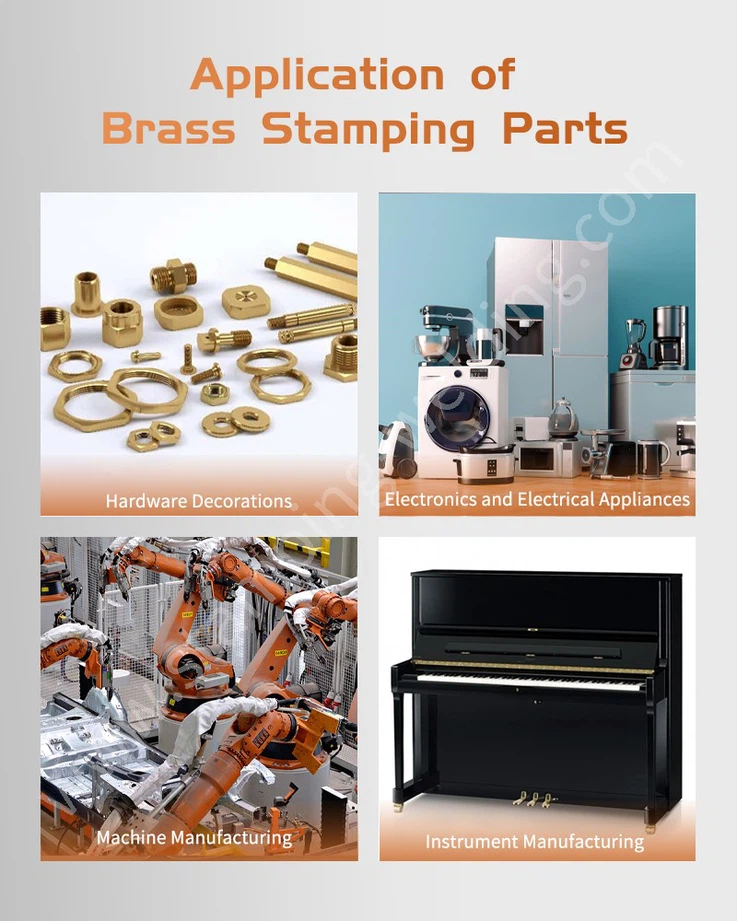
Brass precision parts are widely used in electronics, automobiles, aerospace, instrumentation, daily hardware and other industries. In the electronics industry, it is often used in components such as connectors, terminals and switches, which require good conductivity and dimensional stability. In the automotive industry, brass parts are used in fuel systems, braking systems and air conditioning systems, such as valves and joints, with excellent sealing and corrosion resistance. The aerospace field requires high precision and reliability, and brass parts are used in hydraulic systems, navigation and communication equipment. In the instrumentation industry, parts such as pressure gauges, thermometers and flow meters rely on brass for its dimensional stability and ease of processing. In the field of household hardware, parts such as door locks, faucets and furniture accessories value brass for its appearance and durability.
contact us
We focus on the customization and production of various types of Brass Precision Stamping Parts. Through precision stamping and forming processes, we are able to provide customers with brass electrical accessories and connectors with precise dimensions and reliable performance. We support a variety of customization needs and are widely used in electronics, electrical appliances, automobiles, instruments and other fields. If you have any needs for related products, please welcome further consultation and cooperation.