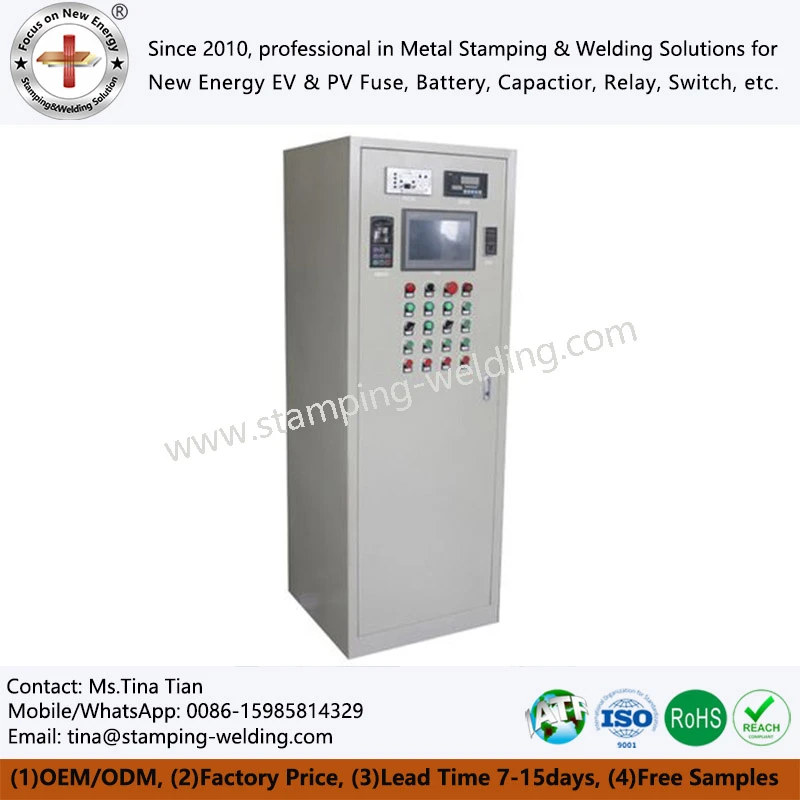
PLC Control Cabinet Maintenance Tips for Long-Term Reliability
Sep 04, 2025
According to the "2025 China Industrial Automation Development Report" released by the China Industrial Automation Association, the penetration rate of PLC control systems in key manufacturing industries has reached 58%. A PLC control cabinet is the core of automated production lines, but the report points out that 35% of equipment downtime is caused by irregular maintenance. This article summarizes practical maintenance tips from industry standards and engineering experience, covering daily care, environment control, troubleshooting, and application adaptation. It also introduces Xiamen APOLLO's targeted solutions.
Daily Maintenance Core Points
1. Regular Cleaning and Dust Removal
For an industrial PLC cabinet, clean the air filter and heat dissipation fins once a month. Use compressed air (0.4-0.6MPa) to blow dust from the inside out, and avoid wiping with wet cloths to prevent short circuits. This reduces overheating faults by 40%.
2. Terminal Connection Inspection
Check all wiring terminals every three months with a torque wrench. Fasten terminals to 3-5N·m (adjust according to wire gauge), and apply anti-oxidation grease to copper terminals. This avoids poor contact caused by vibration or oxidation.
3. Firmware and Software Updates
Update PLC firmware once a year, and back up the program to two separate storage devices (such as U disks and cloud drives) before updating. Choose to operate during equipment shutdowns (e.g., weekends) to avoid production losses.
Environmental Control Measures
1.Maintain the cabinet's internal temperature between 15-40℃. Install DS18B20 temperature sensors; when the temperature exceeds 40℃, automatically start axial fans. For workshops with temperatures over 45℃, install mini air conditioners (cooling capacity ≥500W).
2. Control relative humidity below 60%. In water treatment plants or southern humid areas, place silica gel desiccants inside the cabinet or install small dehumidifiers to prevent condensation on electric cabinets PLC panel cabinet components.
3. For explosion-proof PLC cabinet in chemical or oil refinery areas, check the O-ring sealing gaskets monthly. Replace gaskets that are hard or cracked to maintain the IP65 protection level and prevent flammable gas from entering.
4. Install rubber shock absorbers (damping coefficient ≥0.3) for cabinets near stamping machines or forging equipment. Use flexible shielded cables to reduce vibration damage to internal modules.
Troubleshooting Practical Methods
1. Alarm Code Analysis
When a fault occurs, first record the code on the PLC panel (e.g., F03 for power module failure, F10 for communication loss). Check the manufacturer's manual (such as Mitsubishi FX5U series manual) to locate the fault point and avoid blind disassembly.
2. Component Replacement Guidelines
Relays and contactors should be replaced every 3-5 years or after 120,000 operations. Use original brand parts (e.g., Omron G2R relays) to ensure voltage and current matching, and test the new component's resistance before installation.
3. Grounding System Inspection
Test the grounding resistance annually with a ground resistance tester, ensuring it is ≤4Ω. Check the grounding wire (cross-sectional area ≥2.5mm²) for rust; if the insulation layer is damaged, replace it with copper wire of the same specification immediately.
Application-Specific Maintenance Adaptation
Different application scenarios require targeted maintenance. In photovoltaic power stations, industrial PLC cabinet are exposed to high dust and strong UV rays, so clean the cabinet exterior weekly and apply anti-UV coating every six months. In automotive welding workshops, custom PLC cabinet need monthly checks for welding slag adhesion-use a vacuum cleaner to remove slag to avoid short circuits. In chemical plants, explosion-proof PLC cabinet require monthly gas tightness tests (using a soap bubble test) to ensure no gas leakage. Such scenario-specific maintenance can extend the cabinet's service life by 3-5 years.

Xiamen APOLLO's Reliable Solutions
Xiamen APOLLO's PLC control cabinet adopts 304 stainless steel (thickness 1.2-1.5mm) and meets IP65 protection standards, which is in line with GB/T 4208-2017. The cabinet is equipped with a dual-fan heat dissipation system and a humidity control module, which can automatically adjust the internal environment. We hold ISO 9001:2015 and IATF16949 certifications, and each product undergoes 72-hour continuous operation testing before leaving the factory .
We provide custom services for electric cabinets PLC panel cabinet and explosion-proof PLC cabinet-we can adjust the cabinet size, interface type, and protection level according to customer needs (such as photovoltaic, automotive, and chemical scenarios). Our sea-land-air transportation network covers all parts of China: sea transportation for large batches (delivery time 7-10 days to coastal cities), land transportation for inland areas (5-8 days), and air transportation for urgent orders (2-3 days). Our after-sales team provides on-site maintenance guidance within 48 hours for domestic customers, ensuring long-term reliable operation of your PLC control cabinet.
contact us