Selection Guide for L-Feet (L-Shaped PV Mounting Brackets): A Key Component for the Stability of Rooftop Solar Mounting Systems
Jul 07, 2026
When designing rooftop solar photovoltaic (PV) systems, the focus is often placed on solar modules, inverters, and power generation efficiency, while the supporting components that connect the mounting structure to the roof surface are frequently overlooked. Among these, L-shaped PV feet (or "L-feet") serve as fundamental connectors within the mounting system, playing a crucial role in the system's safety, stability, and long-term operational lifespan.
The L-foot is a vital load-bearing component that links the roof structure to the PV mounting rails. It must not only support the weight of the solar modules, mounting rails, and accessories but also withstand environmental stresses such as wind and snow loads, thermal expansion and contraction, and long-term vibration.
Within the PV array structure, L-feet are responsible for safely transferring loads generated by the modules to the building's main structure. Poorly designed L-feet can lead to loose modules, rack deformation, or damage to the roof's waterproofing layer, potentially compromising the safety of the entire system during extreme weather. Therefore, the proper selection of materials, structural design, and installation methods is essential for ensuring the long-term, reliable operation of the PV system.
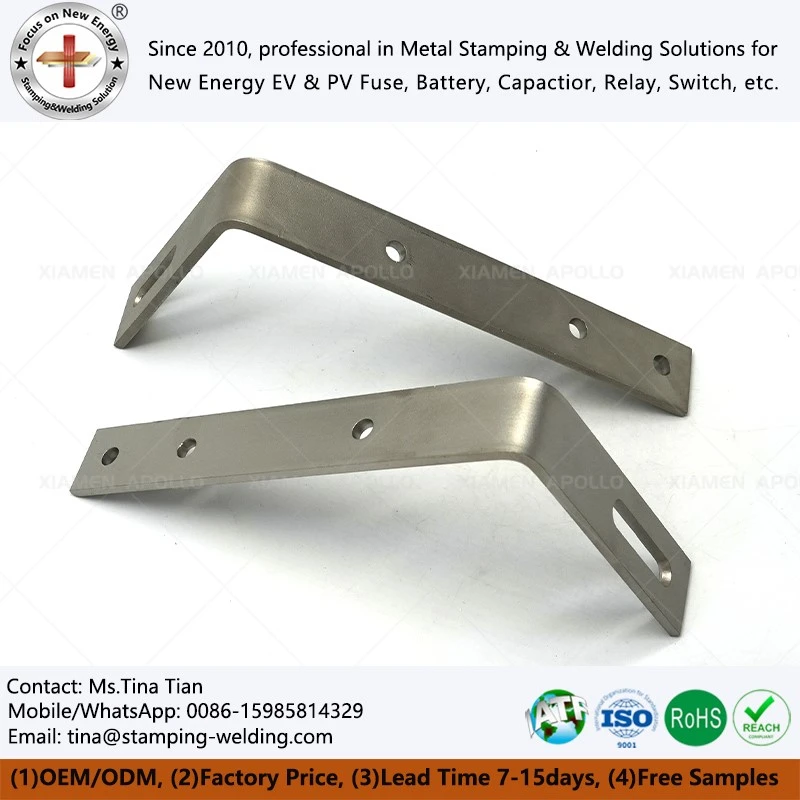
What is an L-shaped PV foot?
An L-shaped PV foot is a metal mounting connector featuring a right-angle design; it is also referred to as an L-bracket, L-base, or roof-mounted support. Its primary function is to secure solar mounting rails to various types of roof surfaces, providing stable support for the PV modules.
A typical L-foot consists of two perpendicular mounting faces:
One side connects to the roof structure using bolts, clamps, or other fastening methods;
The other side is used to mount the PV rail and maintain the correct positioning and spacing of the modules.
L-feet must be compatible with specific fastening methods depending on the roof application. For instance, installations on metal roofs may utilize L-shaped connectors designed for thin-sheet structures, whereas tile roofs require specialized mounting structures tailored to the specific roof profile.
L-foot kits for solar panel racking currently on the market are typically manufactured from aluminum alloy. This material offers a balance of lightweight properties, corrosion resistance, and ease of installation, making it widely used in both residential and commercial PV projects.
Primary Functions of L-Feet in PV Systems
1. Securing PV Mounting Rails
PV modules are typically installed on aluminum alloy rail systems, which require stable positioning and alignment. L-feet ensure precise spacing between rails, thereby enhancing the accuracy of module installation.
For large-scale solar arrays, a stable rail connection structure minimizes the risk of displacement during the modules' long-term operation.
2. Distributing Structural Loads
Once installed, solar modules exert continuous downward pressure due to their weight while also being subjected to external forces such as wind and snow.
High-quality L-feet distribute localized pressure to the roof's load-bearing structure, preventing roof damage caused by concentrated stress points.
3. Resisting Wind Loads
In open areas, coastal regions, and high-wind environments, wind-induced uplift forces can exceed the weight of the modules themselves. Consequently, PV mounting structures must not only withstand vertical pressure but also possess sufficient uplift resistance.
For instance, L-feet designed for tin roof solar mounting are specifically engineered for metal roofing environments, enhancing the system's wind resistance through effective fastening methods.
Common Materials and Characteristics of L-Feet
The material used for L-feet directly impacts the system's strength, weight, corrosion resistance, and service life. Common materials currently in use include aluminum alloy, stainless steel, and coated steel.
1. Aluminum Alloy L-Feet
Aluminum alloy is one of the most widely used materials in PV mounting systems.
Key characteristics:
Lightweight, facilitating transport and installation;
Surface oxide layer provides natural corrosion resistance;
Easily extruded, allowing for complex structural designs;
Excellent compatibility with aluminum PV rails.
Common alloys include 6005-T5 and 6063-T6.
However, aluminum alloy has lower strength compared to steel; therefore, for projects involving high wind pressure or challenging environments, appropriate specifications must be selected based on structural calculations.
2. Stainless Steel L-Feet
Stainless steel offers high mechanical strength and excellent corrosion resistance.
It provides a longer service life, particularly in:
Coastal environments with salt spray;
High-humidity regions;
Areas with industrial pollution. Among them, 316 stainless steel offers superior resistance to chloride ion corrosion due to its molybdenum content.
3. Coated Steel L-Feet
Galvanized steel or zinc-aluminum-magnesium coated steel offers high strength and cost-effectiveness.
Advantages include:
High load-bearing capacity;
Lower manufacturing costs;
Suitability for large-scale PV projects.
However, care must be taken during installation to avoid damaging the protective surface coating, as this could compromise corrosion resistance.

Key Factors Influencing the Selection of L-Feet
1. Roof Type
Different roof structures require specific installation methods.
Tiled Roofs
Fixing directly through the tiles is generally avoided, as it may compromise waterproofing performance.
Installation typically requires a combination of:
Roof hooks;
Specialized mounting bases;
Waterproof sealing structures.
For example, "Solar Roof Hook (Flat Tile Hook)" is primarily used for mounting connections on tiled roofs.
Metal Roofs
Metal roofs include standing seam and corrugated sheet varieties.
Specifically:
Standing seam roofs typically utilize clamping mechanisms for fixation;
Corrugated metal roofs require the use of sealing gaskets and specialized fasteners.
"L-Feet Clamp Roof Hooks" can minimize roof penetrations and improve installation efficiency.
Concrete Flat Roofs
Concrete roofs typically utilize:
Expansion bolts;
Chemical anchors;
Ballasted mounting structures.
These applications focus primarily on the load-bearing capacity of the base and the strength of the fixation.
Load Requirements for PV L-Feet
The dimensions and quantity of L-feet must be determined based on actual project load calculations.
Key factors to consider include:
Static Loads
Including:
Weight of PV modules
Weight of mounting rails;
Weight of mounting accessories.
Wind Loads
Wind-induced uplift and lateral forces are critical design factors for rooftop PV systems.
Especially in:
Coastal areas;
High-rise buildings;
Open, exposed areas;
...the wind resistance of the mounting structure must be enhanced.
Snow Loads
In cold regions, the weight of accumulated snow must be considered to ensure the L-feet do not undergo plastic deformation under long-term loading.
During the design process, local building codes should be consulted, and structural calculations performed using appropriate safety factors.
Corrosion Protection Design Requirements for L-Foot Brackets
Photovoltaic systems typically have a design lifespan exceeding 25 years; therefore, corrosion resistance is a critical factor when selecting mounting brackets.
Recommendations based on environment:
Standard inland environments
Anodized aluminum or standard coated steel may be used.
Marine environments
316 stainless steel or high-grade corrosion-resistant aluminum is recommended.
Industrial areas
The impact of chemical gases and acidic or alkaline environments on metal materials must be considered.
Additionally, direct contact between dissimilar metals must be avoided to prevent galvanic corrosion. For example, nylon washers or insulating materials should be used to isolate aluminum brackets from stainless steel fasteners.
Common Types of L-Foot Brackets
1. Standard L-Foot Bracket
Simple structure and easy installation.
Suitable for:
Standard residential roofs;
Standard commercial projects;
Flat/even installation surfaces.
Advantages:
Low cost;
Stable supply;
High installation efficiency.
2. Adjustable L-Foot Bracket
Installation height and angle can be adjusted via slotted structures or adjustment mechanisms.
Suitable for:
Uneven roof surfaces;
Older buildings;
Projects requiring high precision in module alignment.
Adjustable L-foot brackets help installers compensate for construction variances and improve installation flexibility.
3. Reinforced Corrosion-Resistant L-Foot Bracket
Utilizes high-grade materials and advanced surface treatment processes.
Suitable for:
Coastal PV projects;
High-humidity regions;
Industrial buildings.
These structures typically offer a longer lifespan and require less maintenance.
Installation Considerations for L-Foot Brackets
1. Confirm fixing locations
Before installation, verify the roof structure to ensure that the fixing points can withstand the design loads.
2. Ensure proper waterproofing
All roof penetration points must utilize:
EPDM gaskets;
Waterproof sealant;
Specialized sealing structures.
This prevents water leakage issues during long-term operation.
3. Control installation torque
Overtightening bolts can damage materials, while undertightening may lead to structural looseness.
Installation should be performed according to the torque specifications provided by the manufacturer.
4. Check rail levelness
After installation, verify that the rails are level and flat to avoid inducing additional stress on the modules.
Maintenance and Inspection of L-Foot Brackets
Although photovoltaic (PV) systems require minimal maintenance, periodic inspections enhance long-term reliability.
Key areas for inspection include:
Corrosion
Check for signs of:
Metal rust;
Surface oxidation;
Pitting corrosion.
Fastening Status
Check for loose bolts and re-verify torque specifications if necessary.
Waterproofing Performance
Inspect sealing materials for:
Aging;
Cracking;
Detachment.
Module Stability
If modules exhibit significant wobbling or movement, the mounting feet and fixing structures must be inspected immediately.

Development Trends in L-Foot PV Brackets
With the growth of distributed PV, commercial and industrial PV, and large-scale solar power plants, PV mounting systems are evolving towards lightweight designs, high reliability, and rapid installation.
Future L-foot products will increasingly focus on:
Use of higher-strength materials;
Modular installation designs;
Improved anti-corrosion treatments;
Compatibility with diverse roofing systems.
Currently, lightweight aluminum support structures-such as aluminum L-shaped solar panel mounting brackets and roof hooks-have become a primary installation solution for many rooftop PV projects.
Selecting the appropriate L-foot bracket not only improves installation efficiency but also ensures the long-term, stable operation of the entire PV system in challenging environments.
A comprehensive assessment covering roof structure, material properties, load calculations, corrosion resistance ratings, and installation methods is crucial to ensuring the safe operation of the solar system for over 25 years.
contact us