Technical characteristics and industry application analysis of laminated busbars
May 18, 2026
Structure and physical basis
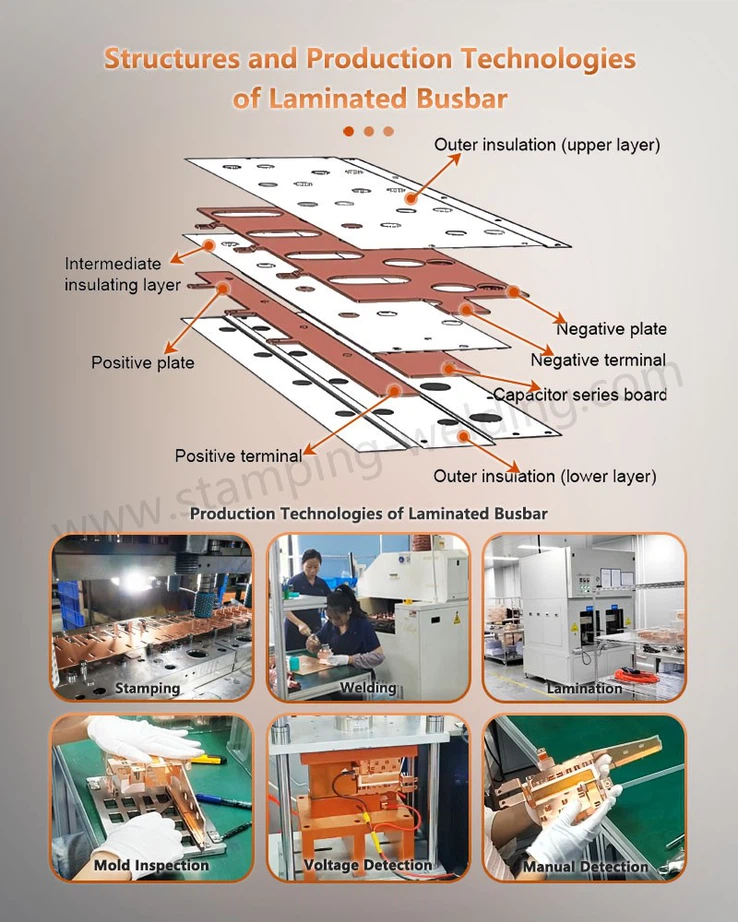
Laminated BusBar is a composite electrical connection structure formed by alternately laminating multiple layers of conductive materials and insulating materials. Its typical components include conductive layers (such as copper bars), polymer insulation films, flame-retardant materials and adhesives. Through this precision lamination process, the spacing between the phase conductors is significantly shortened, resulting in a low-inductance path. This structure directly determines the low impedance and high current-carrying capacity of the laminated busbar in power transmission. Compared with traditional distributed cables or single-row busbars, Laminated BusBars can increase current density and transmission efficiency without expanding the cabinet volume. Its compact stacking form reduces the distance between phases and increases the effective conductive cross-sectional area. These two physical characteristics together form the basis of its excellent electrical performance.

physical composition
From the perspective of physical composition, the laminated busbar is not a single conductor structure, but a composite component composed of multiple layers of conductive sheets and insulating films alternately laminated. Its core structure design fully takes into account conductive performance and insulation safety. Each layer of conductive sheets corresponds to a phase current path, and the layers are isolated by high-temperature and high-voltage-resistant polymer insulating materials. This tightly stacked arrangement not only greatly reduces the distance between phases, but also maximizes space utilization. The reduction of the phase distance effectively reduces the loop inductance, while the multi-layer parallel conductive structure significantly increases the effective conductive cross-sectional area. These two factors work together to form the core physical basis for the low impedance characteristics of the laminated busbar. Among them, the Laminated Copper BusBar uses high-quality electrolytic copper as the conductive material, which further improves the conductive efficiency and current-carrying capacity.
Laminated Copper BusBar is usually made of high-conductivity electrolytic copper as the core conductive material, combined with high-performance insulating film, flame-retardant materials and special adhesives. Electrolytic copper plays an important role in the preparation process of laminated busbars due to its excellent conductivity and processing characteristics, which directly affect the current-carrying capacity and temperature-rise performance of the finished product. The choice of material for the insulating layer is also critical, taking into account electrical strength, heat resistance level, flame retardant properties, and bonding reliability to the conductive layer. High-quality insulation materials can not only ensure electrical safety for long-term operation, but also withstand instantaneous high temperatures without failure during short-circuit faults, providing a basic guarantee for the reliability of the entire system.
manufacturing process
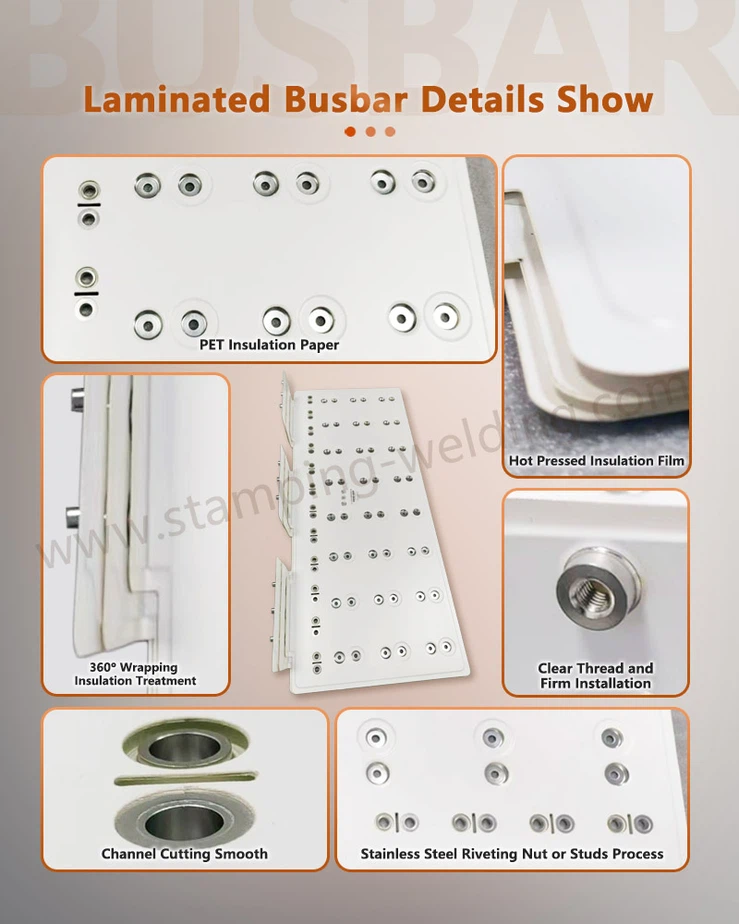
At the manufacturing process level, the production of Laminated Copper Bar involves multiple processes such as precision stamping, surface treatment, lamination, insulation coating and electrical testing. Conductive sheets need to be precisely cut and punched to ensure inter-layer alignment accuracy; the surface is usually nickel-plated or silver-plated to enhance oxidation resistance and contact reliability; the lamination process requires strict control of temperature, pressure and time parameters to ensure inter-layer bonding strength and insulation performance. Finished products must undergo quality verification such as withstand voltage testing, insulation resistance testing and partial discharge testing to ensure compliance with relevant electrical safety standards. Advanced manufacturing processes not only determine the upper limit of product performance, but also directly affect its long-term operational reliability.
The integral structure of the laminated busbar has brought about innovation in assembly methods, greatly improving installation efficiency and reliability. Laminated busbars are usually prefabricated in the factory according to the precise layout of the specific device (e.g. switchgear) and delivered as a standardized modular component. When installing on site, you only need to fix it as a whole and accurately connect it to electrical components such as circuit breakers and isolating switches, eliminating the need for cumbersome on-site wiring work. This modular assembly method not only shortens the installation period, but also reduces the probability of failure caused by manual wiring errors. It also makes the internal layout of the equipment clearer and more organized, making it easier to maintain and repair later.
Key application areas
The application prospects of laminated busbars are very broad, covering industrial equipment, power systems, the national defense industry, new energy and other fields. In power systems, it is the core component for connecting capacitor banks in parallel with IGBT modules; in the field of national defense and military industry, its good environmental adaptability makes it suitable for harsh scenarios such as armored vehicle rectifiers. The new energy field is currently the largest source of demand, accounting for approximately 60% of the overall market, and is mainly used for photovoltaic inverters and energy storage converters. As the installed capacity of new energy power generation continues to grow, the market demand for products such as Laminated Bus Bar for IGBT-based Motor Drive and Capacitor Laminated Bus Bar for IGBT-based Motor Drive continues to expand. From the perspective of material supply, my country's electrolytic copper production is sufficient, providing reliable guarantee for the large-scale manufacturing of Laminated Copper BusBar. The overall market size is close to 100 billion and maintains a steady growth trend.

contact us
We use high-quality electrolytic copper and high-temperature-resistant insulating materials, combined with precision lamination processes and strict factory testing, to ensure that each set of Inverter Busbar for Rail Traffic meets stringent industry standards in terms of low inductance, high current carrying capacity, thermal management and short-circuit resistance. Welcome to contact our technical team for selection suggestions and sample support.