Aluminum busbar industry knowledge analysis
May 19, 2026
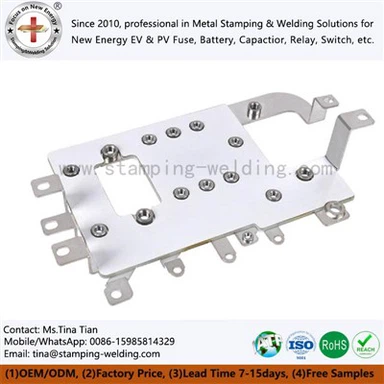
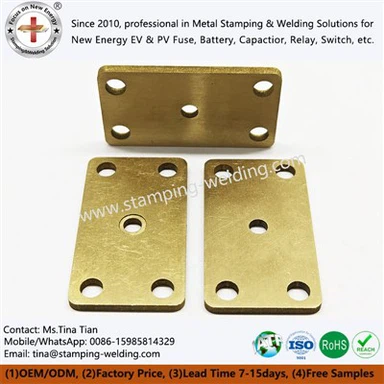
Aluminum busbars are conductive busbars made of aluminum alloy as the main material and are widely used in power distribution and transmission systems. Compared with copper busbars, aluminum busbars have significant advantages such as light weight, low cost, and good electrical conductivity. In electrical engineering practice, aluminum busbars help reduce line resistance and power loss, thereby improving overall power transmission efficiency. The density of aluminum flat busbar is about one-third that of copper. Under the same current-carrying capacity requirements, although the cross-sectional area of aluminum busbars needs to be slightly larger than that of copper busbars, the overall weight is still significantly reduced. This provides significant advantages for weight-sensitive application scenarios such as large switchgear cabinets and offshore substations. Among them, 6101 aluminum bus bar has become one of the common technical choices in the industrial field due to its good balance between electrical conductivity and mechanical properties. It is widely used in busbar systems that require both strength and conductivity.
Material advantages
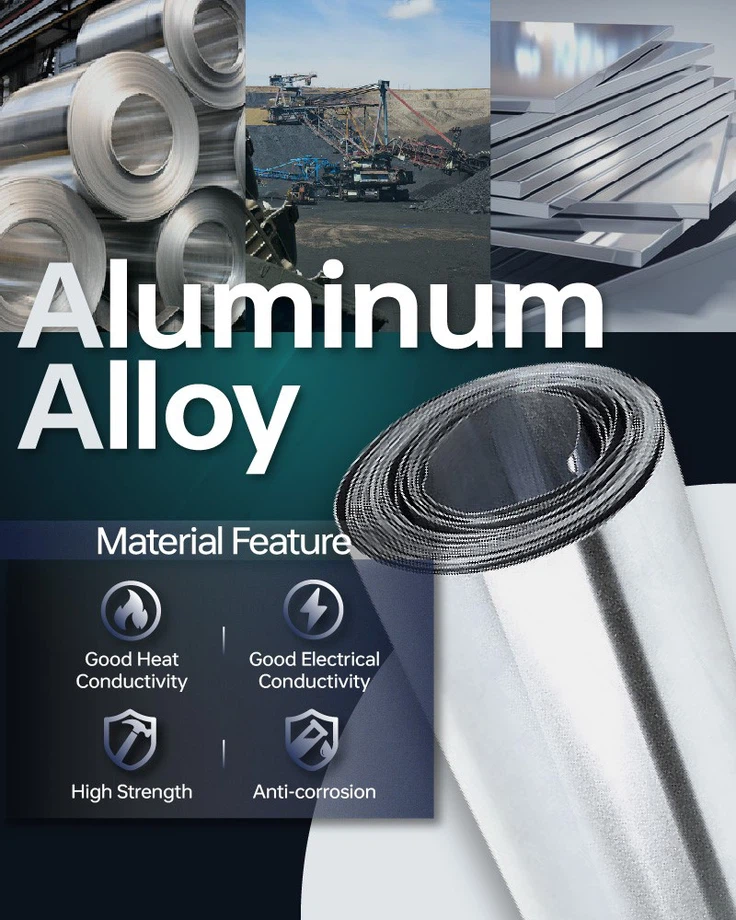
The main advantages of aluminum busbars focus on three aspects: First, the raw material cost is lower than copper and the density is low, which can save overall costs in transportation, installation and support structure design. According to industry estimates, the material cost of aluminum busbars is about 30% to 40% of copper busbars with the same current carrying capacity. Secondly, the lightweight properties reduce construction complexity and facilitate layout in compact equipment. For scenarios that require high-altitude operations or installation in small spaces, aluminum busbars can significantly reduce labor intensity and lifting equipment requirements.
Finally, modern aluminum alloy technology has significantly improved the electrical conductivity. For example, 6101 t61 aluminum bus bar can achieve a combination of high electrical conductivity (usually above 55% IACS) and yield strength in the heat treatment state to meet most power transmission requirements, including medium and low voltage distribution cabinets, transformer outlet sides, and main busbar systems in reactive power compensation devices. 6101 aluminum bus bar with its excellent electrical conductivity and lighter specific gravity, it effectively reduces structural load-bearing and transportation and installation costs while ensuring current carrying capacity. Especially in large substations and switch stations, tin-plated aluminum bus bar further enhances the oxidation resistance and contact reliability of the contacts through surface tin plating, improving the long-term operation stability of the system. In addition, the thermal expansion coefficient of aluminum busbars is more consistent with aluminum equipment terminals, which can reduce the risk of joint loosening under temperature cycling conditions.
Application areas
Aluminum busbars play a key role in the following industries: Electric power industry: used in substations, distribution rooms and other places as a connection and distribution component between equipment, taking into account both performance and economy. In gas-insulated switchgear (GIS) and air-insulated switchgear (AIS), aluminum busbars gradually replace copper busbars and become the mainstream material selection for main busbars. Aluminum Bus Bars for Cell Connection are widely used for series and parallel connections between battery clusters to reduce power consumption and simplify assembly. In large energy storage power stations, the application of aluminum busbars can significantly reduce the overall weight of the battery rack while reducing the total cost of the connection system.
Industrial automation: In power distribution systems, aluminum busbars have become the core conductive components of automation equipment due to their lightweight and efficient transmission characteristics. For example, in robot control cabinets, servo drive backplanes and PLC power supply modules, aluminum busbars are stamped or bent to form complex spatial shapes, achieving compact electrical layouts.
New energy field: Wind energy and solar power generation systems have an urgent need for efficient power transmission. In photovoltaic inverters and wind power converters, aluminum busbars are used to connect power modules, DC support capacitors and AC output terminals, which not only reduces the weight of the entire machine, but also simplifies the assembly process. As the power levels of string inverters and distributed inverters increase, the current carrying capacity requirements of aluminum busbars are also increasing.

Technology development trends
The technological evolution of aluminum busbars in the future will focus on three directions: Material innovation: New aluminum alloys and composite processing technologies will improve the synergy of strength, corrosion resistance and electrical conductivity. For example, by adding trace amounts of rare earth elements or using a continuous extrusion process, the grain structure can be refined and the conductivity and tensile strength can be improved at the same time.
Smart manufacturing: Automation and digital production can improve product consistency and reduce manufacturing costs. Online eddy current testing, dimensional laser measurement and automatic coating thickness feedback systems are gradually replacing traditional manual spot inspection methods, significantly reducing quality fluctuations in mass production.
Environmental protection and sustainability: Green manufacturing and material recycling have become industry standards, promoting the low-carbonization of the entire life cycle. The energy consumption of aluminum busbars during the production process is much lower than that of copper busbars, and waste aluminum busbars can significantly reduce carbon emissions through remelting and regeneration. Some leading manufacturing companies have begun to use hydroelectric aluminum or recycled aluminum blanks to further reduce the carbon footprint of their products. For aluminum flat busbar for switchgear, an environmentally friendly chromium-free passivation surface treatment process is also gradually promoted to reduce heavy metal pollution.

contact us
Our company focuses on the R&D and manufacturing of high-performance aluminium-based conductive materials and can provide complete solutions for bus bar aluminium. If you need technical selection support or sample testing, please contact our technical team.