Technological Development of Aluminum Profiles and Aluminum Alloys in Power Batteries and Energy Storage Systems
Oct 05, 2026
As the industries for new energy vehicles, energy storage systems, and power batteries continue to evolve toward higher energy density, lightweighting, and enhanced safety, the materials used for battery structural components are constantly being optimized. Thanks to their low density, high specific strength, excellent thermal conductivity, strong corrosion resistance, and good formability, aluminum and aluminum alloys are widely used in battery casings, structural frames, trays, heat dissipation components, and other metal connection structures. Material selection not only affects the weight and structural integrity of the battery system but also impacts thermal management, sealing, protection, and manufacturing costs.
In the power battery sector, aluminum alloy structural components are particularly well-suited for battery systems that require a balance between lightweighting and mechanical protection. Battery packs for new energy vehicles must withstand vibrations, impacts, and complex environmental fluctuations during operation; consequently, casing materials must meet stringent requirements for strength, corrosion resistance, dimensional stability, and manufacturability.
Depending on the specific battery architecture and operating conditions, factors such as the aluminum alloy grade, sheet thickness, forming method, and subsequent surface treatment must be tailored to actual design requirements.
Aluminum Alloy Battery Casings: A Key Component of Lightweight Structures
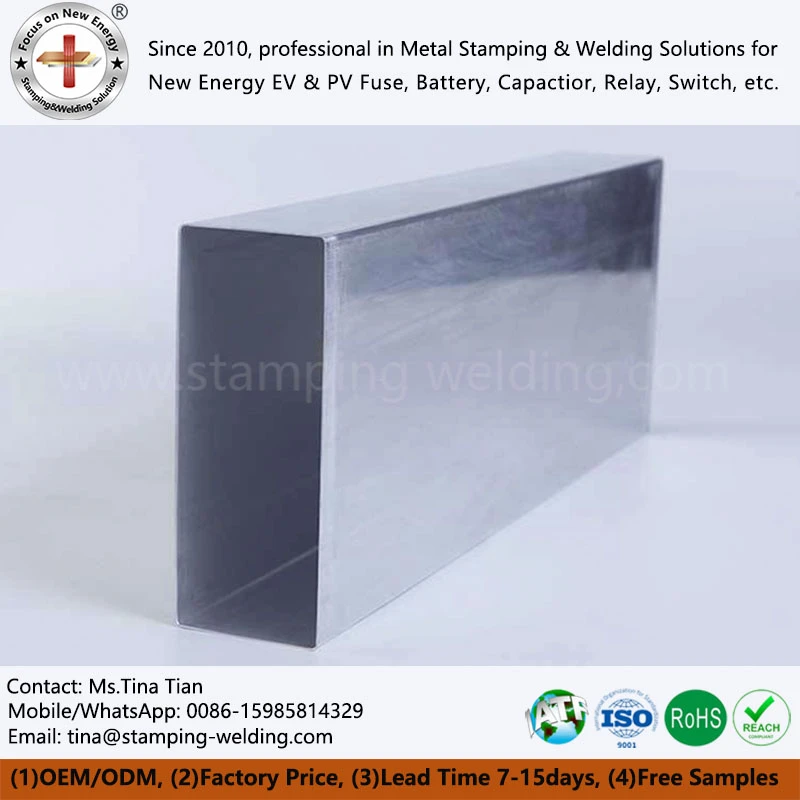
The battery casing plays a vital role in protecting internal cells, isolating them from the external environment, and integrating with the thermal management system. Compared to traditional, denser metals, aluminum alloys allow for reduced overall weight while still meeting structural design requirements, making them a popular choice for new energy vehicle battery packs and energy storage systems.
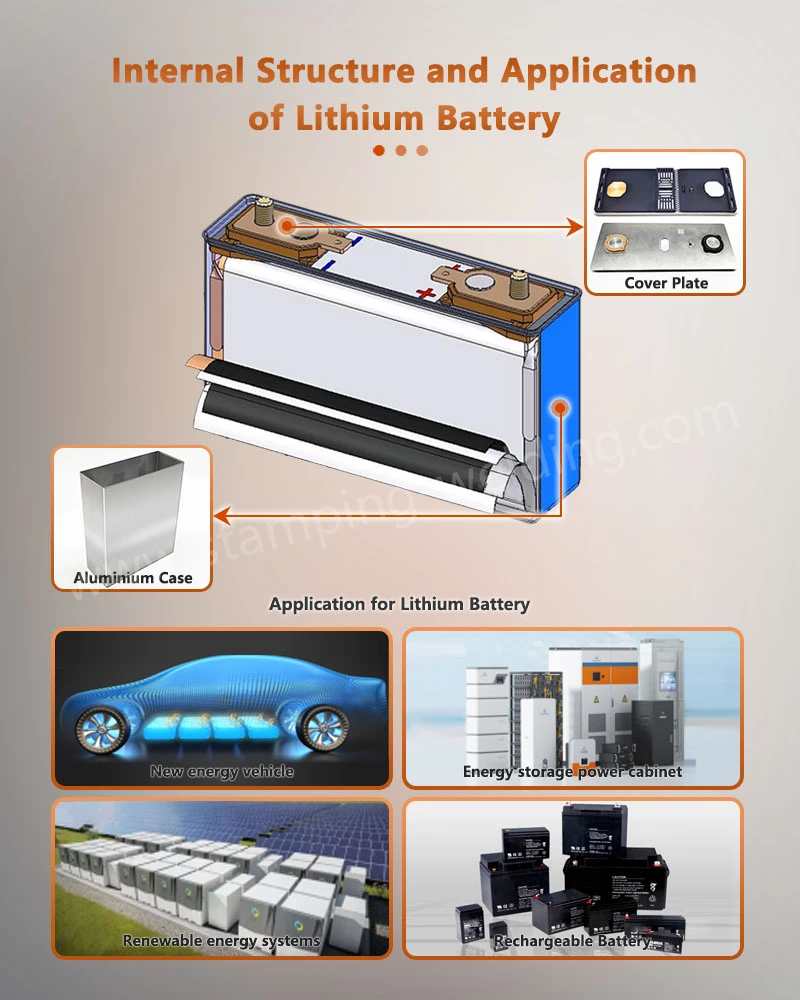
The design of an aluminum battery casing for a new energy vehicle must account for cell dimensions, internal space, sealing methods, and the overall pack structure. For prismatic cells, the casing typically requires high dimensional accuracy and forming consistency to ensure stable positioning after assembly. For batteries of varying capacities, designers must also consider factors such as casing wall thickness, bottom strength, welding zones, and internal pressure resistance.
Aluminum alloy sheets can be formed into various structures using processes such as stamping, deep drawing, bending, and extrusion.
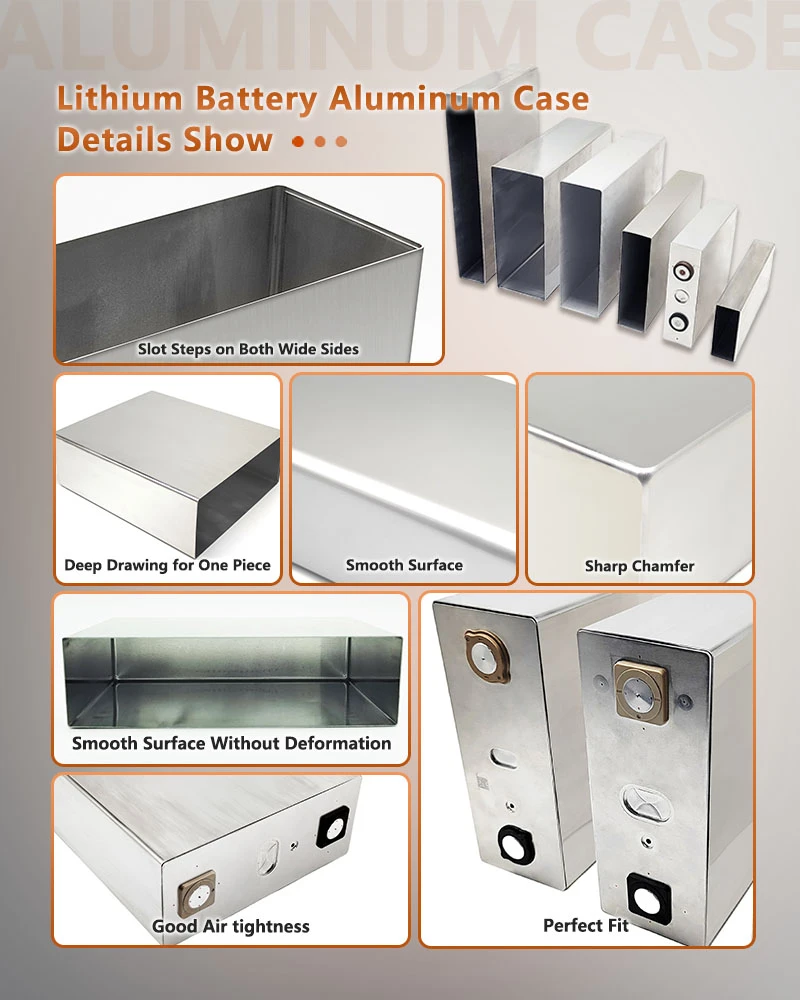
Stamping is suitable for high-volume production, allowing for precise control of dimensions and shapes through the use of molds, whereas deep drawing is ideal for casing structures that require significant depth and complex cross-sections. For battery packs with large dimensions, a complete housing can also be formed by welding together multiple aluminum alloy components.
In practical engineering, the design of aluminum battery cases cannot focus solely on material strength; factors such as sealing, welding, thermal conductivity, and assembly tolerances must be evaluated concurrently. For instance, the interface between the housing body and the cover plate requires stable dimensional accuracy to ensure a continuous, reliable weld seam during subsequent laser welding or other joining processes.
Prismatic Cells Drive Demand for Precision Aluminum Case Forming
As the use of prismatic batteries in new energy vehicles and energy storage systems grows, cell housings are increasingly trending toward thinner walls, lighter weight, and high dimensional consistency. Aluminum offers excellent plasticity and formability, allowing for the precision manufacturing of metal housings tailored to various cell specifications.
Aluminum cans for lithium cells serve primarily as metal enclosures for cylindrical or specific cell structures; their core function is to provide a stable mechanical protective structure while working with internal components to ensure sealing and safety. For cell housings, factors such as material thickness, corner radii, bottom structure, and material flow behavior during forming all influence the quality of the final product.
Prismatic cells typically utilize aluminum alloy housings featuring large flat surface areas. Manufacturing these square aluminum casings requires strict control over flatness, edge dimensions, corner forming, and the condition of welding zones. Significant springback, cracking, or localized wall thinning during stamping or deep drawing can compromise cell assembly and subsequent sealing performance; therefore, die design and forming parameters must be specifically optimized.
For deep-cavity structures, controlling material flow during the deep-drawing process is critical. Proper die clearance, blank holder force, and lubrication conditions help minimize defects such as wrinkling, cracking, and uneven wall thickness. In mass production, die life management and in-process inspection are also essential to ensure product consistency across different batches.
Aluminum Alloy Stamping Supports Large-Scale Production of Battery Structural Components
Aluminum alloy applications in the battery sector extend beyond housings to include brackets, reinforcements, connectors, cover plates, and other structural parts. As the level of battery system integration increases, so do the requirements for dimensional accuracy, structural strength, and assembly consistency of these components.
Aluminum stamped parts are typically formed through processes such as blanking, bending, deep drawing, and coining. Compared to traditional steel, aluminum alloys differ in material elongation, springback characteristics, and surface conditions; therefore, die parameters cannot simply replicate the experience gained from steel part production. For high-precision battery structural components, adjustments to die clearance, stamping speed, and forming sequences must be made based on the specific material grade and sheet thickness.
Aluminum stamping is suitable for battery metal components with relatively regular geometries and high production volumes. Progressive dies, or multi-station stamping, allow multiple processing steps to be integrated into a continuous production flow, thereby reducing intermediate handling and repetitive positioning. For battery components with complex structures, manufacturing can also be achieved by combining stamping with processes such as laser cutting and welding.
In actual production, stamping aluminum sheet metal requires careful control of material surface quality and the contact conditions between the material and the die. Aluminum alloy surfaces are prone to scratching, necessitating specific designs for die surface treatment, lubrication methods, and automatic feeding processes. For casings and cover plates with strict aesthetic requirements, issues such as indentations, scratches, and localized deformation must be avoided.
Battery casing manufacturing requires balancing forming precision with joining processes
Casings for power batteries and energy storage batteries are typically produced through a multi-stage process-encompassing material forming, precision machining, cleaning, welding, inspection, and surface treatment-rather than a single operation. For large structural components, such as aluminum battery pack housings, spatial compatibility must be ensured with trays, cooling structures, top covers, and other system components.
Aluminum alloy casings are often assembled using techniques such as laser welding, friction stir welding (FSW), or MIG welding. Different welding processes impose varying requirements regarding material condition, weld dimensions, heat input, and clamping methods. Particularly in the sealing areas of the battery casing, weld continuity and airtightness are critical to the long-term operational reliability of the battery system.
Consequently, a comprehensive quality control system-covering everything from raw materials to the finished product-must be established during the manufacturing of battery structural components. For raw materials, it is necessary to verify the alloy grade, thickness, and mechanical properties; the stamping stage requires checks on critical dimensions and forming defects; and the welding stage focuses on weld appearance, penetration depth, and sealing integrity. Products with high safety requirements may undergo additional verification through methods such as airtightness testing, dimensional inspection, and destructive sampling tests.
Aluminum Alloy Stamping Technology Evolves Toward High Precision and Customization
As the variety of new energy vehicle models and energy storage systems grows, battery structural components are increasingly characterized by diverse specifications. Variations in cell dimensions, module structures, and battery pack layouts necessitate specific designs for casings and structural parts, requiring manufacturers to possess strong process adaptability.
Aluminum stamping allows for mold development tailored to specific part geometries, while progressive stamping enhances mass production efficiency. For complex structural components, determining an optimal manufacturing process requires balancing product tolerances, material thickness, and forming depth.
For products with unique dimensional or structural requirements, custom aluminum stamping integrates product blueprints, tolerance specifications, material requirements, and manufacturing processes into the development phase. Engineering typically begins with verifying material formability, followed by iterative process parameter adjustments based on mold flow analysis, mold trials, and prototype validation.
Aluminum sheet metal stamping is also suitable for battery trays, support brackets, cover plates, and other thin-gauge structural components. In mass production projects, considerations extend beyond individual part precision to include factors such as mold lifespan, material utilization rates, automated feeding systems, and production cycle times.
Aluminum Alloy Selection Impacts Battery Structural Performance
The aluminum alloys used in power batteries and energy storage systems are not uniform; different grades vary in strength, elongation, corrosion resistance, weldability, and formability, necessitating selection based on the specific function of the component.
For casings requiring deep drawing and complex forming, material plasticity and forming stability are prioritized. Load-bearing structures require a focus on yield strength, tensile strength, and fatigue performance. Components involving extensive welding require consideration of material weldability and post-weld performance characteristics.
Additionally, electrochemical corrosion must be taken into account for battery structural components. When aluminum alloys come into direct contact with dissimilar metals such as copper or steel, galvanic corrosion may occur in environments where electrolytes and moisture are present. Therefore, during the structural design phase, it is essential to carefully select insulating materials, surface treatments, and connection configurations to prevent the formation of pathways for long-term corrosion between dissimilar metals.
Aluminum's Recyclability Drives Green Manufacturing of New Energy Structural Components
Aluminum possesses excellent recyclability; against the backdrop of the rapidly expanding battery industry, the value of managing its lifecycle is increasingly gaining attention. For new energy vehicles and energy storage systems, material selection involves not only initial manufacturing costs but also considerations regarding the product's service life, maintenance, disassembly, and subsequent resource recovery.
From a manufacturing perspective, improving material utilization rates can reduce scrap generated during stamping, while optimizing nesting patterns lowers raw material consumption. Furthermore, utilizing automated production to minimize human-induced variability during processing helps reduce defect rates and energy consumption. Consequently, the green manufacturing of structural components for new energy batteries depends not only on the material itself but is also closely linked to mold design, production processes, and quality management.
Structural Components for New Energy Batteries Evolving Toward Lightweighting and Integration
As the demand for longer driving ranges in new energy vehicles and higher energy densities in energy storage systems grows, battery system structural design is shifting from simple mechanical protection toward an integrated approach that combines structure with thermal management, electrical connectivity, and safety protection. Thanks to their low density, excellent thermal conductivity, and mature processing ecosystems, aluminum alloys continue to offer significant potential for application in this evolution.
Future battery casings and structural components are likely to adopt designs featuring thinner walls, localized reinforcement, and multi-functional integration, thereby reducing material usage while maintaining necessary mechanical strength. Simultaneously, processes such as stamping, extrusion, casting, welding, and machining will be more closely integrated to meet the structural integration requirements of large-scale battery packs and energy storage equipment.
For structural components in new energy vehicle batteries, stamped aluminum parts can be combined with welding, machining, and surface treatment processes to create integrated manufacturing workflows. This enables the mass production of complex structures while meeting stringent requirements for dimensional accuracy and mechanical performance.
Overall, the application of aluminum profiles and alloys in power and energy storage batteries has evolved from a simple choice of lightweight materials into a comprehensive technical system encompassing structural design, thermal management, manufacturing processes, safety protection, and lifecycle management. As battery systems trend toward higher energy density, larger scales, and greater integration, factors such as material grade selection, forming processes, welding methods, dimensional control, and quality verification will become critical elements in the engineering design of battery structural components.
From an engineering procurement perspective, the selection of suppliers for aluminum battery casings and structural components requires a comprehensive evaluation that considers material grades, forming processes, critical dimensional tolerances, welding methods, airtightness requirements, and mass production capabilities.
contact us