Technological Evolution and Application Trends of High-Reliability Buses in Power Distribution Across Multiple Fields
Jun 21, 2026
Busbars, as core conductive structural components in modern electrical systems, are primarily used for the centralized transmission and distribution of high-density current. Based on highly conductive metallic materials and multilayer composite structures, they can construct low-impedance current paths within a limited space, significantly reducing energy loss and improving system stability. Against the backdrop of rapid development in new energy and industrial electrical systems, Laminated Busbar SiC Applications are gradually becoming an important technological direction in high-power-density scenarios.

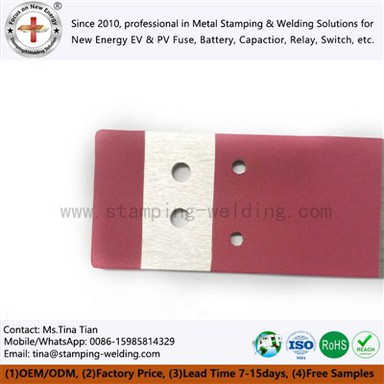
At the material and structural level, buses typically utilize high-purity copper substrates, combined with various surface treatments and insulation solutions to adapt to complex operating conditions. For example, the Laminated BusBar Copper without Tin Plated structure improves conductivity by reducing surface plating interference, while BusBar with PET Insulating Paper enhances interlayer safety and withstand voltage through high-performance insulating media. In frequency conversion and power control systems, Laminated Bus Bars for Variable Frequency Drives can effectively optimize current paths and reduce switching losses, while also improving the overall thermal stability of the equipment.

With the development of high-performance computing and data centers, the application of buses in high-density electronic architectures continues to expand. Laminated bus bars for supercomputer circuit boards or backplanes are used in the high-power power supply structures of supercomputing systems to support extreme computing load demands; laminated bus bars for distributed power backplanes enable efficient energy dispatching in distributed power architectures; and laminated bus bars for cellular base station power distribution and router backplane distribution serve the stable power supply needs of communication base stations and network equipment, respectively.
In the industrial and power systems sector, busbars have become an important component of highly reliable power supply architectures. Power distribution unit busbars are widely used in rack-level power management systems to achieve safe multi-circuit distribution; motor controller busbars are used in motor drive systems to reduce electromagnetic interference and line losses; in uninterruptible power supply (UPS) scenarios, uninterruptible power supply (UPS) system busbars can improve the transient response capability and redundancy reliability of UPS systems; in addition, composite busbars for train power supply four-quadrant power modules play a key role in rail transit and traction converter systems, ensuring stable power supply under complex operating conditions.
In the fields of communications, power electronics, and specialized equipment, the applications of busbars are becoming increasingly diversified. Laminated bus bars for telecom power distribution optimize centralized power supply in communication power systems; laminated bus bars for PDA assembly enable precise power distribution in high-dynamic load and stage lighting systems; laminated bus bars for internet router backplanes enhance power stability; laminated bus bars for rack-mount power distribution improve rack-level power management efficiency in rack-mount equipment; and laminated bus bars for medical imaging testing devices ensure stable operation of high-precision equipment under high loads.

Overall, bus technology is continuously evolving towards higher integration, lower losses, and multi-scenario adaptability, becoming a crucial foundational component supporting the efficient operation of modern power electronic systems.
contact us