The Crucial Role of Aluminum Enclosures in Powerwall Lithium Battery Pack and Beyond
Jul 15, 2025
In the realm of new energy, lithium - ion batteries play a pivotal role, and the enclosures that house them are equally important. Aluminum Battery Case and related products, such as Prismatic Cell Case, Battery Aluminum Housing, Aluminum Alloy Prismatic Battery Case, Aluminum Battery Box, and Powerwall Lithium Battery Pack, are at the forefront of ensuring battery safety, performance, and longevity.

Material Advantages of Aluminum Enclosures
Aluminum is the material of choice for battery enclosures due to its unique properties. It is lightweight, which is crucial for New Energy Vehicle Aluminum Battery Case as it helps improve vehicle range by reducing the overall weight. Moreover, aluminum offers excellent corrosion resistance, protecting the battery cells inside from environmental factors. For Primary Lithium Iron Battery LiFeS2, this corrosion resistance ensures long - term reliability, even in varying environmental conditions. Additionally, aluminum has good thermal conductivity. In Aluminum Battery Box used in energy storage systems, it effectively dissipates heat generated by the battery during operation, maintaining an optimal operating temperature and enhancing battery performance and lifespan.
Design Features for Optimal Performance
Structural Integrity |
Prismatic Cell Case and Aluminum Alloy Prismatic Battery Case are designed with precision to provide structural integrity. They are engineered to withstand mechanical stresses, such as vibrations in vehicles or impacts during transportation. For Battery Aluminum Housing in industrial applications, a robust structure ensures that the battery remains protected under harsh operating conditions, preventing damage to the cells and maintaining stable power output. |
Sealing and Protection |
Airtight and waterproof sealing is a key feature of these enclosures. In Aluminum Battery Case for mobile power solutions, it safeguards the battery from moisture, dust, and other contaminants, which could otherwise lead to short - circuits or degradation of battery performance. For Powerwall Lithium Battery Pack installed outdoors, proper sealing ensures that the battery system can operate reliably in different weather conditions. |
Manufacturing Processes
The manufacturing of these aluminum enclosures involves advanced techniques. Deep drawing is commonly used to create seamless Prismatic Cell Case and Aluminum Battery Box, ensuring high strength and durability. Precision cutting and forming processes are also employed to achieve accurate dimensions, which is essential for the proper fit of battery cells and other components. After manufacturing, processes like ultrasonic cleaning are carried out to remove any impurities, ensuring a clean and safe environment for the battery cells in Battery Aluminum Housing and other enclosures.

Applications in Different Sectors
5.1 New Energy Vehicles
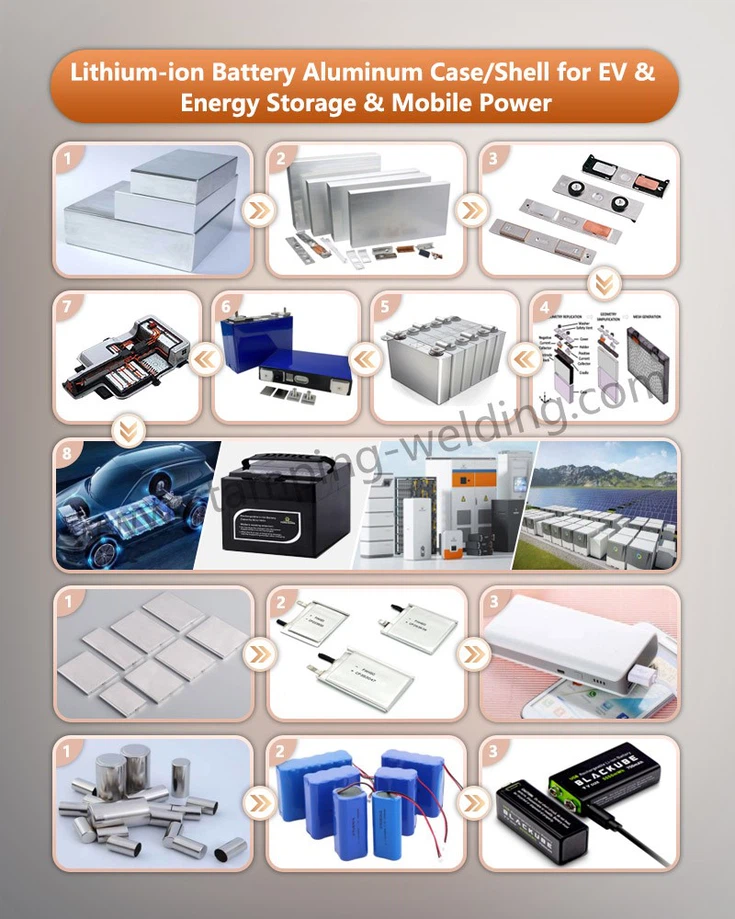
In the automotive industry, New Energy Vehicle Aluminum Battery Case is vital for protecting the battery packs in EVs. It not only provides physical protection but also helps in thermal management, ensuring the battery operates efficiently. The lightweight nature of aluminum also contributes to improving the vehicle's overall energy efficiency.
5.2 Energy Storage Systems
Powerwall Lithium Battery Pack and other large - scale energy storage setups rely on Aluminum Battery Box and Aluminum Alloy Prismatic Battery Case to house and protect the batteries. These enclosures ensure the safe operation of the energy storage system, enabling efficient storage and release of electricity, whether in a residential solar energy storage system or a large - scale grid - connected energy storage facility.
5.3 Mobile Power and Industrial Applications
For mobile power products like portable chargers, Aluminum Battery Case offers durability and protection. In industrial applications, Battery Aluminum Housing is used in UPS systems and machinery to safeguard the batteries, ensuring a continuous and reliable power supply in harsh industrial environments.
Future Trends
As the demand for new energy continues to grow, the development of aluminum enclosures for lithium - ion batteries will also evolve. Future trends may include the development of enclosures with even better thermal management capabilities, enhanced lightweight designs, and improved recyclability. Additionally, with the increasing popularity of Aluminum Prismatic Casing and other home - based energy storage solutions, there will be a greater focus on creating enclosures that are aesthetically pleasing and easy to install.
Advanced Thermal Management Integration:As the energy density of lithium - ion batteries in Aluminum Prismatic Casing and other applications continues to increase, the need for more advanced thermal management in aluminum enclosures will grow. Future Aluminum Battery Case and Battery Aluminum Housing may incorporate integrated thermal management systems, such as micro - channel cooling structures directly within the enclosure walls. These structures can enhance heat dissipation capabilities, allowing for more efficient removal of high - density heat generated by fast - charging and high - performance battery cells. This not only ensures the battery operates within optimal temperature ranges but also extends the battery's cycle life and overall lifespan.
Smart and Adaptive Enclosures:The trend towards smart energy systems will also impact aluminum enclosures. Future Prismatic Cell Case and Aluminum Alloy Prismatic Battery Case could be designed with embedded sensors that monitor parameters like temperature, pressure, and humidity inside the enclosure in real - time. These sensors can communicate with the battery management system (BMS) of the Powerwall Lithium Battery Pack or other battery systems. Based on the data, the BMS can adaptively adjust cooling, charging, and discharging strategies. For example, if the sensors detect an abnormal temperature rise in the Aluminum Battery Box, the BMS can automatically increase cooling or reduce the charging current to prevent thermal runaway, thus enhancing the safety and reliability of the entire battery system.
Sustainable and Circular Design:With the growing emphasis on sustainability in the new energy industry, aluminum enclosures will move towards more circular and sustainable designs. Manufacturers will focus on using recycled aluminum for Aluminum Battery Case and related products, reducing the environmental impact of raw material extraction. Additionally, the design of Battery Aluminum Housing will consider ease of disassembly and recycling at the end - of - life of the battery system. This includes using modular designs that allow for simple separation of the aluminum enclosure from other battery components, facilitating the recycling process and promoting a more circular economy in the lithium - ion battery industry.
Contact us