Why Does a PLC Control Cabinet Need Thermal Management? Applications and Cooling Solutions
Sep 23, 2026
The PLC control cabinet serves as a critical control platform within industrial automation systems. In traditional automation setups, PLCs primarily handle tasks such as logic control, data acquisition, and equipment interlocking. However, as automation systems increasingly incorporate variable frequency drives (VFDs), servo drives, industrial switches, HMIs, remote I/O, and communication devices, the number of electronic components and the associated thermal load within the cabinet have risen.
Consequently, modern PLC-Based control cabinet design must address not only the physical installation of components but also their long-term, stable operation. Factors such as thermal management, environmental protection, and specific application scenarios have become increasingly important engineering considerations.
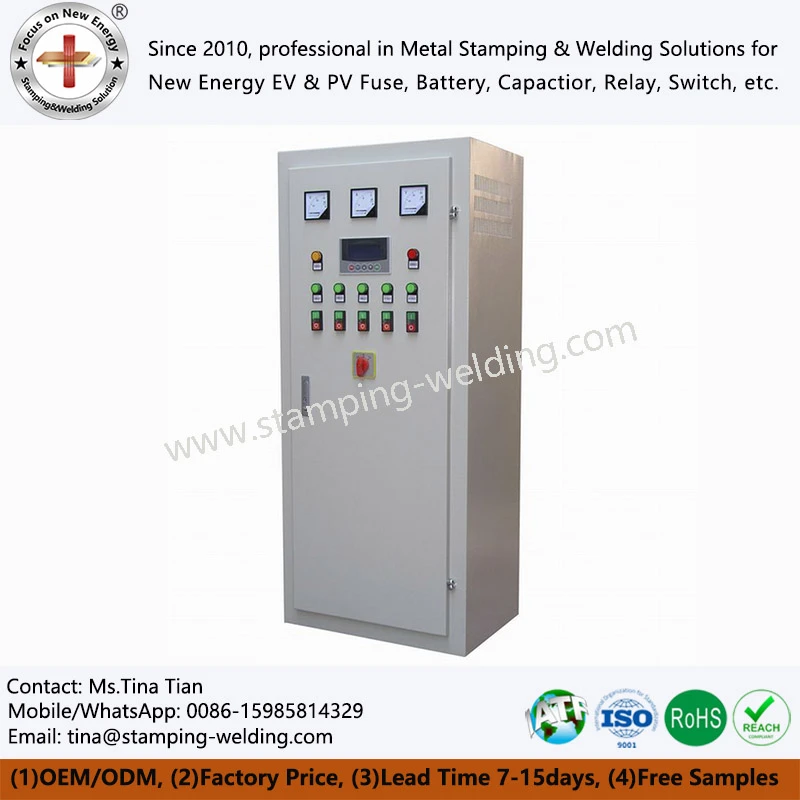
Why does an electrical control cabinet generate heat?
Although the PLC CPU itself is usually not the primary heat source within the cabinet, other equipment inside-such as variable frequency drives (VFDs), servo drives, power supply modules, contactors, and industrial network devices-can generate continuous heat due to power losses. When multiple devices are installed in the same enclosure, this heat accumulates.
If the heat cannot be effectively dissipated, the internal ambient temperature may rise. Therefore, cooling solutions for application cabinets must be based on the total thermal load of the entire cabinet, rather than focusing solely on the PLC itself.
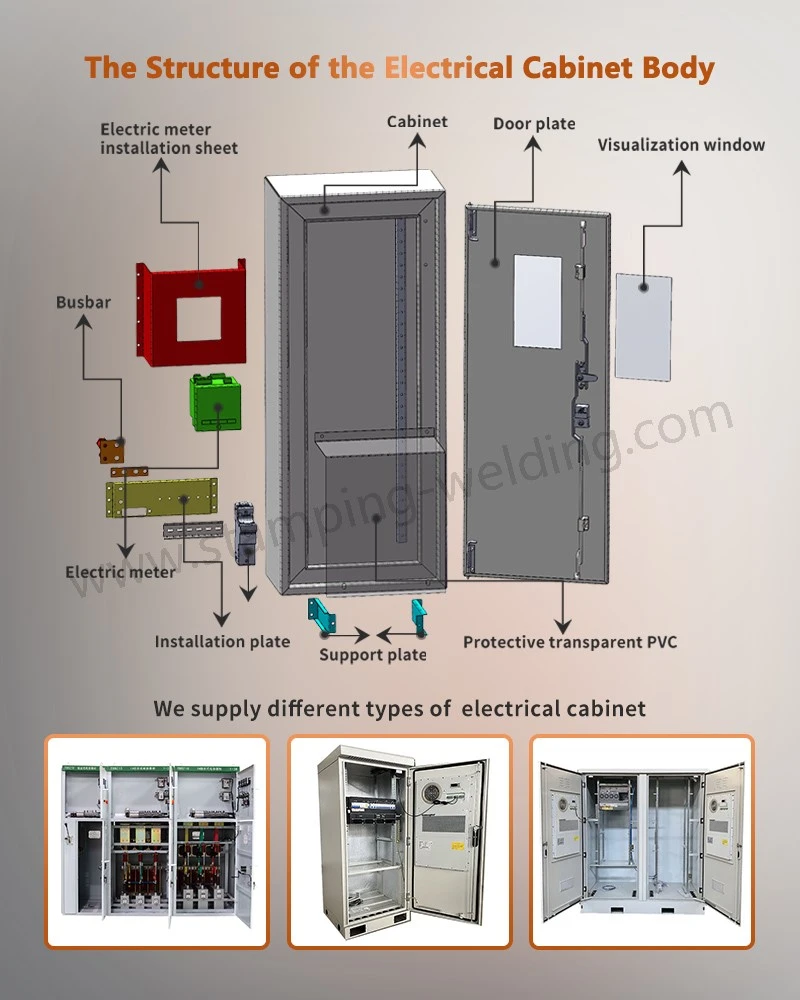
In what situations is natural cooling suitable?
For an enclosed PLC cabinet with low heat loads, natural heat dissipation through the cabinet surface is often sufficient. This method features a simple design and requires no additional fans or air conditioning units. However, when the cabinet houses a large number of variable frequency drives (VFDs), servo drives, or other high-power electronic devices, relying solely on natural cooling may not be enough.
Therefore, the need for active cooling should be determined based on calculations involving equipment power ratings, ambient temperature, cabinet dimensions, and internal heat load.
Fan-based cooling is a common solution.
Filter fans and exhaust units facilitate airflow within the enclosure. Cool air enters the cabinet, absorbs heat generated by electronic components, and is then expelled through the exhaust vents. This approach features a simple design and is suitable for certain standard industrial environments. However, in environments with high levels of dust, oil mist, or other contaminants, standard filter fans may require frequent maintenance.
Recent data on industrial control cabinet cooling also highlights that in dusty industrial environments, clogging of the filtration system directly impacts the cabinet's cooling performance.
Cabinet Air Conditioners Are Suitable for High-Temperature Environments
If a control cabinet is installed in a high-temperature workshop or houses equipment that generates significant heat, a cabinet air conditioner is a viable option. These units regulate the internal temperature within a relatively enclosed space, preventing the intake of dusty external air directly into the cabinet.
This solution is particularly well-suited for industrial environments characterized by high temperatures, dust, or humidity.
However, as cabinet air conditioners increase system costs and maintenance requirements, the choice should be based on actual operating conditions.
Heat Exchangers Suitable for Sealed Control Cabinets
Heat exchangers facilitate heat transfer without directly exchanging air between the inside and outside of the cabinet. This solution offers distinct advantages for wall-mounted PLC cabinets that require a high degree of protection, as it helps lower internal temperatures while keeping the cabinet relatively sealed. The specific cooling method chosen depends on a combination of factors, including ambient temperature, heat load, and the required protection rating.
Floor-standing PLC cabinets require dust and moisture protection.
Industrial environments differ significantly from standard office settings. Production workshops may contain dust, oil mist, water vapor, and other contaminants.
If these substances penetrate the stainless steel PLC cabinet, they can compromise the long-term operation of terminals, connectors, and electronic components. Consequently, the cabinet's door panels, sealing strips, cable entries, and ventilation structures must be designed to meet specific environmental requirements.
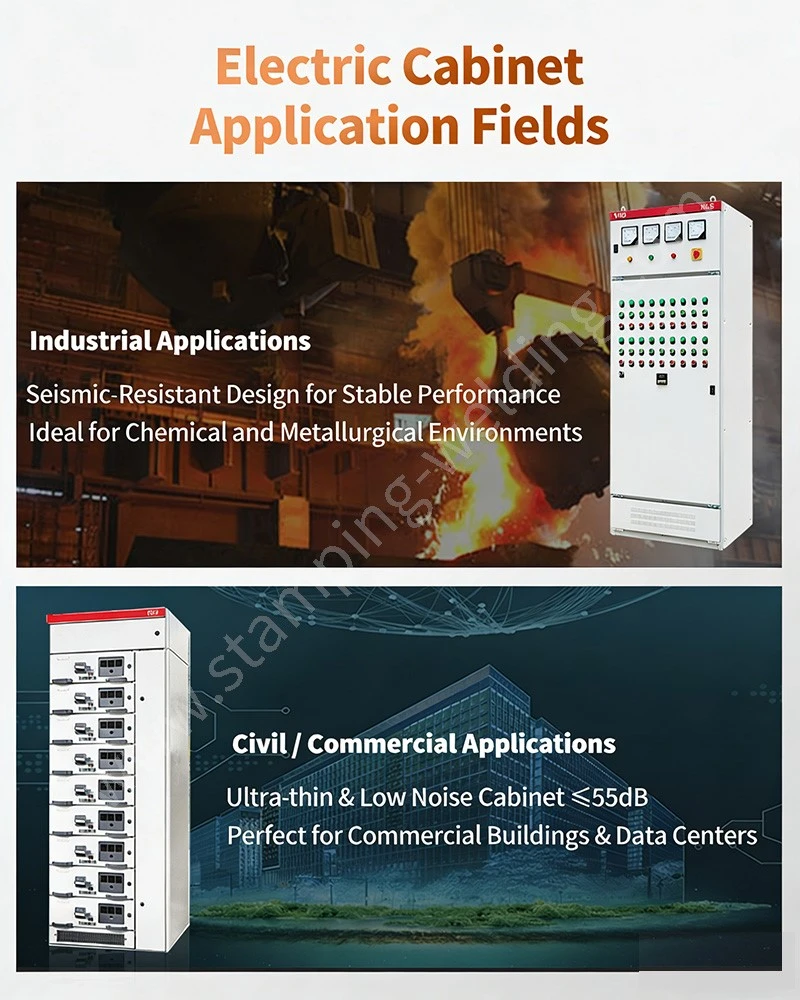
Different industrial sectors have varying requirements for PLC cabinets.
Powder-coated PLC cabinets are widely used in industrial automation. For instance, manufacturing production lines rely on PLCs to control conveying systems, assembly processes, inspection stations, and mechanical actuators.
In water treatment systems, PLCs are used to control pumps, valves, and monitor liquid levels and flow rates.
HVAC systems utilize PLCs to coordinate the operation of fans, pumps, valves, and other equipment.
Energy systems employ PLCs for equipment status monitoring, data acquisition, and interlocking control.
Industry literature cites typical applications for modular PLC cabinets, including water pumps, air compressors, fans, central air conditioning systems, machine tools, boilers, papermaking machinery, and food processing equipment.

Dustproof PLC cabinet in the Water Treatment Industry
Water treatment facilities typically require the control of numerous pumps, valves, sensors, and instruments. Custom PLC cabinets connect field sensors and actuating devices, enabling automated control and status monitoring.
Given the high humidity often found in water treatment environments, the cabinet materials, sealing structures, and protection ratings must be selected based on actual operating conditions.
Waterproof PLC cabinet in Manufacturing Production Lines
On automated production lines, explosion-proof PLC cabinets interface with sensors, robots, conveyor systems, variable frequency drives (VFDs), and servo systems. These cabinets must ensure stable data and control signal exchange between the various pieces of equipment.
With the advancement of smart manufacturing, industrial Ethernet, remote I/O, and data acquisition devices are increasingly being integrated into control cabinets. Consequently, the modern PLC cabinet serves not only as a mounting platform for control systems but also as a critical node within the industrial network.
Control System Cabinet with PLC in HVAC Systems
In large-scale HVAC systems, PLCs coordinate fans, pumps, cooling systems, and valves. The control cabinet must adjust equipment operating states based on field data such as temperature, pressure, and flow rate.
For cabinets installed in mechanical rooms or equipment spaces, heat dissipation methods must be designed by taking into account ambient temperatures and equipment runtimes.
Standard PLC Cabinet in Energy and New Energy Systems
PLC panels are also applicable to solar, wind, and other energy systems. In these applications, PLCs handle equipment control, status monitoring, alarming, and communication functions.
In addition to PLCs and I/O modules, these cabinets may require industrial switches, communication modules, and data acquisition devices.
Compact PLC Cabinet and Smart Factories
Smart factories require extensive equipment interconnection. As control nodes for automation equipment, electrical system cabinets must exchange data with HMIs, SCADA systems, MES platforms, and industrial networks.
Consequently, the function of modern PLC system enclosure has evolved from a traditional "relay control center" into an integrated automation platform combining control, communication, data acquisition, and equipment management.
Why do communication devices influence cabinet design?
Although industrial switches, communication modules, and remote I/O devices may have lower power ratings than variable frequency drives (VFDs), they are sensitive to environmental factors and electromagnetic interference.
Therefore, the communication section within a standard PLC cabinet must be strategically planned based on device functionality.
The routing of communication cables relative to power cables must also comply with system design specifications and equipment manufacturer requirements.
Maintainability Determines the Long-Term User Experience of Control Cabinets
PLC panel control logic program stainless steel automatic cabinets are typically designed for years of continuous operation. Consequently, ease of maintenance must be considered from the outset, rather than only after a malfunction occurs. Features such as logical component layout, clear wire labeling, easily removable mounting structures, ample working space, and precise electrical schematics all assist maintenance personnel in rapidly diagnosing and resolving issues.
An excellent application cabinet design anticipates future maintenance and expansion needs during the initial design phase.
Why does an industrial PLC cabinet need to reserve space for expansion?
After several years of operation, industrial automation systems often require the addition of new sensors, actuators, communication devices, or I/O modules. If no space is reserved within the cabinet, future modifications might necessitate replacing the entire unit.
Therefore, appropriately reserving mounting locations, terminal space, and wire duct capacity during the initial design phase enhances the system's expandability.
Future Development Trends of Modular PLC cabinet
Driven by the continuous advancement of industrial automation, intelligent manufacturing, and the Industrial Internet, programmable logic controller cabinets will increasingly evolve towards modularity, network connectivity, and intelligence. These cabinets are likely to integrate a wider range of components, such as industrial communication devices, remote I/O, edge computing modules, and condition monitoring systems.
At the same time, the use of high-performance variable frequency drives (VFDs) and servo drives will continue to drive advancements in thermal management technologies for control cabinets.
Consequently, future control cabinet industrial PC must not only feature reliable mechanical structures and electrical connections but also offer superior thermal management, network communication capabilities, and ease of maintenance.
Control panel enclosures are vital infrastructure within industrial automation systems; their performance depends not only on the PLC itself but also on factors such as enclosure materials, internal layout, heat dissipation methods, environmental protection, wiring, and communication architecture.
For standard automation equipment, natural cooling or fans may be employed based on the thermal load; however, high-temperature or high-dust environments may require more robust, enclosed cooling solutions.
From manufacturing to end-use application, PLC control cabinets are evolving from traditional electrical enclosures into integrated industrial automation platforms that combine control, communication, data acquisition, and equipment protection.
Contact Us