Tinned Copper BusBar industry knowledge analysis
Apr 10, 2026
Tinned Copper BusBar refers to a composite wire that is covered with a thin layer of metallic tin on the surface of high-quality copper wire through a hot-dip process. Compared with traditional bare copper wires, this material not only maintains the physical properties of soft copper and good electrical conductivity, but also significantly improves corrosion resistance and oxidation resistance. In practical applications, the tin plating layer can effectively isolate the air and prevent the copper surface from forming a "patina" (basic copper carbonate) with poor conductivity due to oxidation-reduction reactions, thereby avoiding an increase in resistance and extending the service life of weak current cables. In addition, tin plating can also prevent the insulating rubber from becoming sticky, and the wire core from becoming black and brittle, and greatly improve the solderability of the wire.
The difference between tinned copper BusBar and environmentally friendly copper BusBar
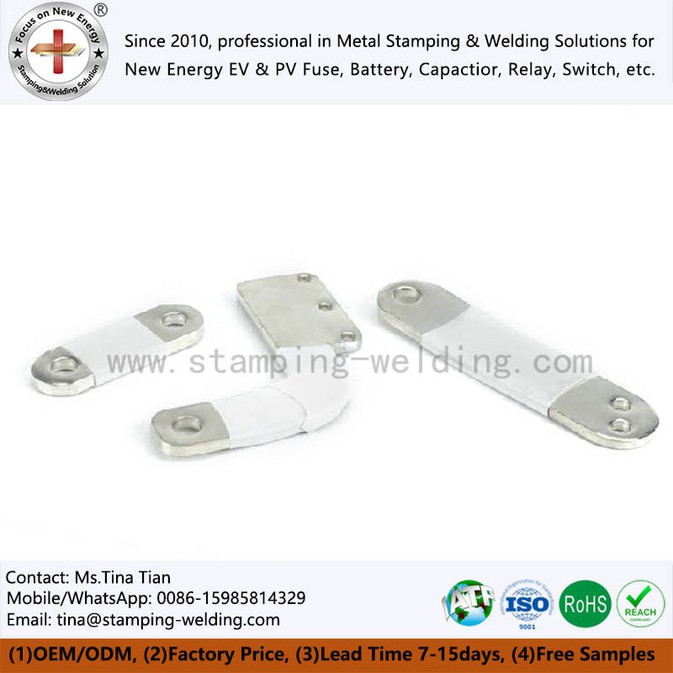
Environmentally friendly bare copper wire is usually made of pure copper rods directly drawn. The material is single and the appearance is yellow, like metallic copper. The color depth depends on the purity of the copper. Its physical properties are famous for their softness and high conductivity. The tin-plated copper busbar process of tinned copper wire is relatively complicated. After the pure copper rod is drawn into wire, a layer of silver-white tin film is plated on the surface through a hot tin plating process. Therefore, the appearance can be intuitively distinguished by color (yellow vs. silver). Due to its special surface characteristics, tinned copper wire is more suitable for scenarios that have strict requirements on oxidation resistance and welding performance.
Detailed explanation of the production process flow
The production of hot-dip tinned thin copper wire is a precision-controlled process, which mainly includes key links such as pay-off, annealing, pickling, tin plating, cooling, pulling and take-up:
Wire laying: This is the basis of production. It is required that the surface of Flat Copper BusBar for plating must be smooth and round and comply with national standards to ensure the uniformity of subsequent plating. Annealing: The annealing temperature directly determines the elongation of the finished wire. Considering that there will be secondary heating after entering the tin furnace, the annealing temperature is usually set slightly lower than the normal standard to prevent overburning. Pickling: The copper wire must be cleaned with a pickling solution before entering the tin furnace. The purpose is to remove surface oxides and ensure good adhesion between the tin layer and the copper wire matrix. Tin plating (tin furnace): The performance and temperature control of tin furnace equipment are the core of product quality and directly affect the thickness and quality of the coating. Tin-blocking mold: It is recommended to install a tin-blocking mold device in the take-up part of the tin plating machine to control the shape and thickness of the plating. Cooling: For thin wires with a wire diameter less than 0.2mm, air cooling should be used, and the pulling speed and exit distance need to be accurately controlled. Add guide shaft oil: A small amount of tin ash will inevitably be produced during Tin Plated Copper Bar. During the stranding process (such as the twisting of multiple thin wires), tin ash may cause wire breakage, so it is important to add guide shaft oil to reduce the impact of tin ash. Take-up and traction: The speed needs to be dynamically adjusted according to the wire diameter. If the speed is too fast, it will lead to insufficient annealing, reduced elongation and wire breakage; if the speed is too slow, the copper wire will stay in the furnace for too long and the texture will become hard.

Applications and features
Tinned copper wire is widely used in: due to its excellent conductivity, oxidation resistance and solderability. Electronic wires and flexible cables,Cable shield,Mining and marine cable guides,Brush wires and industrial power distribution systems. Tin-coated copper busbar stability and durability make it an indispensable material in modern electrical equipment and industrial control systems.
Contact us
As a reliable Tinned Copper BusBar supplier, we are committed to providing Tin Plated Copper Bar, Tinned Copper Flat bar and HDHC Tinned Copper Busbar products to meet your stringent requirements for copper tinned busbar and busbar tinned copper.