Understanding Carbon steel pressed parts in one article: forming process, structural design, and surface treatment
Apr 24, 2026
Core forming process and principle of Carbon steel pressed parts
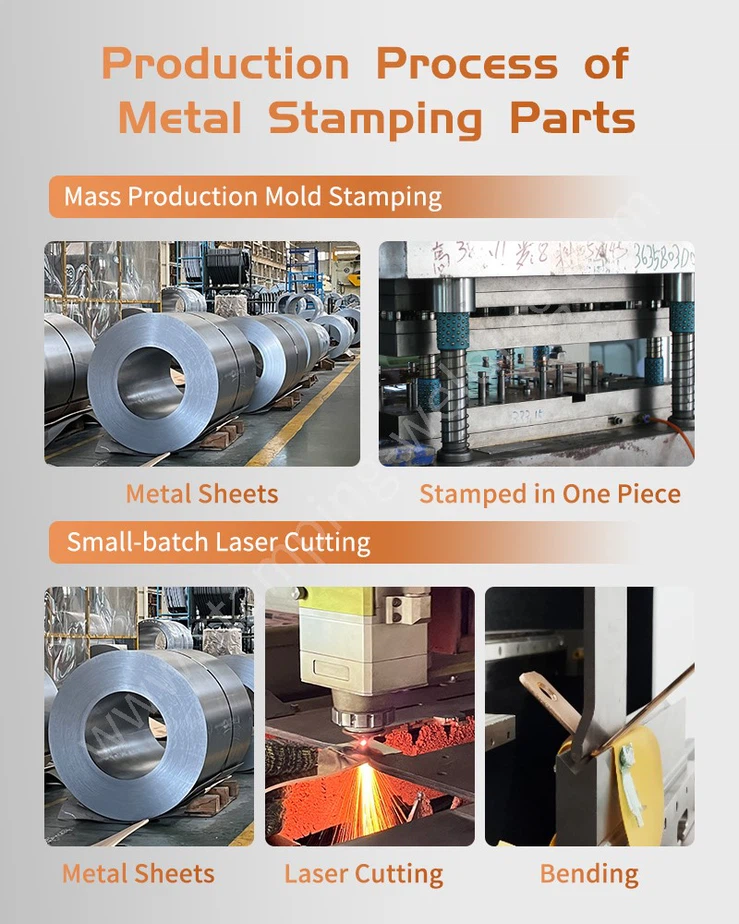
The processing of Custom metal stamping parts is centered on stamping technology, which uses a press and specialized molds to apply external forces to metal sheets, strips, pipes, and other blanks, causing plastic deformation or separation of the materials, ultimately obtaining shapes, sizes, and properties that meet design requirements.
According to different processing objectives of Sheet metal stamping, stamping processes can be divided into two categories: separation processes and forming processes. Among them, the separation process is represented by punching, which also includes specific methods such as cutting, shearing, and edge cutting. The core is to achieve material separation along the preset contour to ensure the processing quality of the separated cross-section.
The forming process includes various methods such as bending, deep drawing, flanging, necking, bulging, spinning, etc. The core feature is to cause plastic deformation of the material without damaging the material itself, thereby completing the processing of hollow, curved, and various complex structural Precision metal stamping.
The entire stamping process is usually divided into three stages: elastic deformation, plastic deformation, and fracture separation. The setting of mold clearance, material properties, and stamping parameters directly affects the machining quality and forming stability of the cross-section of the part.

Key points and process requirements for structural design
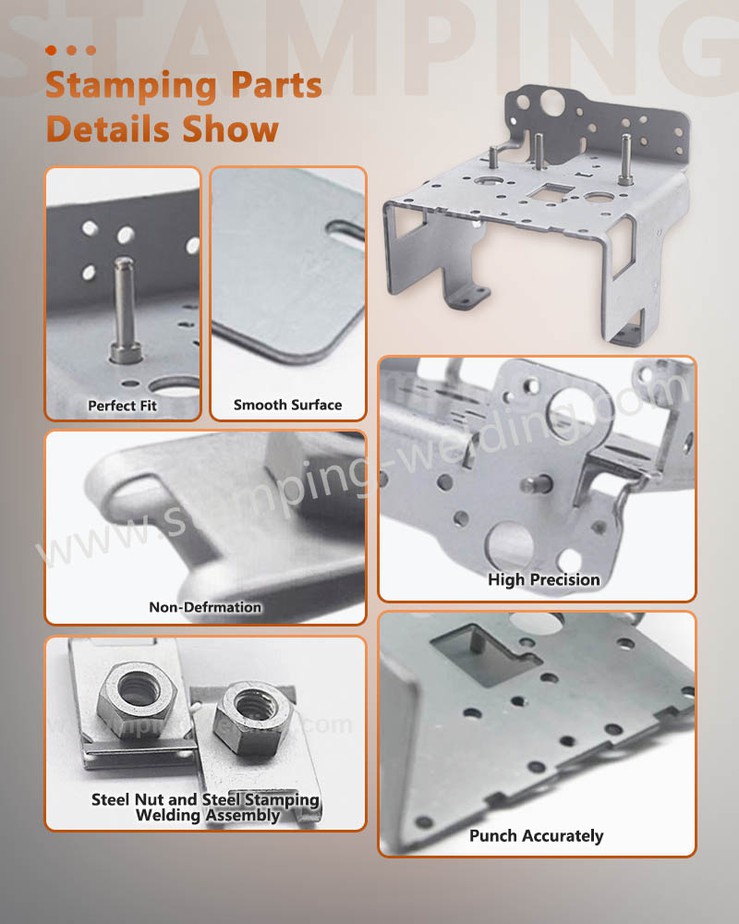
The structural design of Carbon steel pressed parts is directly related to forming quality, production efficiency, and manufacturing costs. The design process must follow the core principles of stability, reliability, and ease of processing. In terms of exterior design, parts should adopt simple and symmetrical structures as much as possible to reduce material waste, avoid setting sharp corners, prioritize using rounded transitions, and reduce the risk of cracking, deformation, and mold damage during the forming process.
In the detailed design of Precision metal stamping, the dimensions such as punching diameter, hole spacing, hole edge distance, cantilever length, and groove width should be set reasonably and should not be too small; The design of deep drawing parts should follow the material flow law, and choose one or multiple deep drawing processes reasonably according to the structural complexity, distinguish between ordinary deep drawing and thinning deep drawing, and effectively prevent forming defects such as wrinkling and tearing.
In the overall structural planning, priority should be given to using curved transition design to ensure sufficient hole spacing and bending height; For progressive die stamping of thin plates, the structural stiffness and strength can be improved by adding reinforcing ribs, while fully considering the influence of material fiber direction on the forming effect to ensure stable performance of the parts after forming.
Mainstream surface treatment processes and characteristics
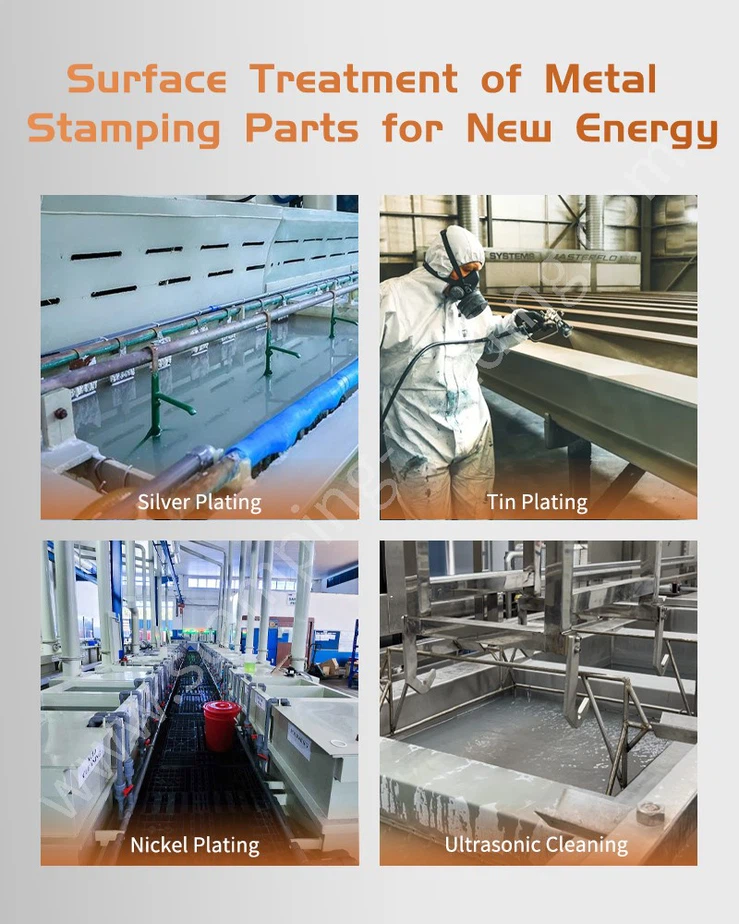
Carbon steel galvanized deep draw metal stamping usually requires surface treatment after forming processing, with the core purpose of enhancing the rust resistance, wear resistance, and aesthetics of the parts, and extending their service life. At present, the mainstream surface treatment processes in the industry include electroplating, electrophoresis, blackening, galvanizing, phosphating, spraying, baking paint, passivation, etc. Each process has its own characteristics and is suitable for different scenarios.
The electroplating process can deposit metals such as zinc, copper, chromium, and nickel on the surface of Progressive die heavy metal stamping, effectively improving the corrosion resistance, hardness, conductivity, and appearance texture of the parts; The electrophoretic coating is uniform and dense, and compared to traditional coatings, it has stronger adhesion, corrosion resistance, and impact resistance.
Blackening, also known as bluing, forms a dense protective film on the surface of steel through oxidation reaction, mainly used for Customized sheet metal stamping and bending parts rust prevention treatment; Galvanizing and tin plating processes are widely used, balancing protective and decorative functions. The phosphating process is mainly used to improve the anti-corrosion performance and coating adhesion of parts, and can also play a role in reducing friction and lubrication during cold processing; Spraying and baking paint with the core purpose of protection and appearance decoration; The passivation process achieves long-term corrosion protection of parts by forming a dense oxide film.
The engineering value of billet design and surface treatment
Reasonable China metal steel stamping for automotive stamping process planning and structural design can not only effectively improve material utilization and reduce manufacturing costs, but also improve the stability of mass production and reduce forming defects while ensuring part accuracy and structural strength. The scientifically adapted surface treatment process can significantly extend the service life of Custom carbon steel stamping for metal forming, enabling it to adapt to different working conditions such as humidity, corrosion, high temperature, and high friction, and broaden the application range of parts.
contact us
If you have customized requirements for Carbon steel pressed parts, we can provide detailed drawings and performance parameters. We will develop an exclusive processing plan for you, accurately match your production scenario, and ensure the dual improvement of product quality and production efficiency.