Aluminum Li-ion Cells: Unlocking The Efficient Energy Storage Code For New Energy Scenarios
Dec 14, 2025
Amid the rapid development of the new energy industry, Aluminum Li-ion cells have emerged as the "energy core" in fields such as industrial energy storage, new energy transportation, and smart devices, thanks to their core advantages of balancing safety, performance, and cost. Different from the heaviness of traditional steel-shell batteries and the vulnerability of soft-pack batteries, panasonic li ion cells Aluminum shell, with their lightweight structure, stable chemical compatibility, and flexible customization capabilities, have gradually become the first choice for mid-to-high-end energy storage scenarios. Gaining an in-depth understanding of their technical characteristics and application logic not only helps enterprises optimize equipment power supply solutions but also enables them to grasp the development trajectory of the new energy industry.

Core Technical Advantages
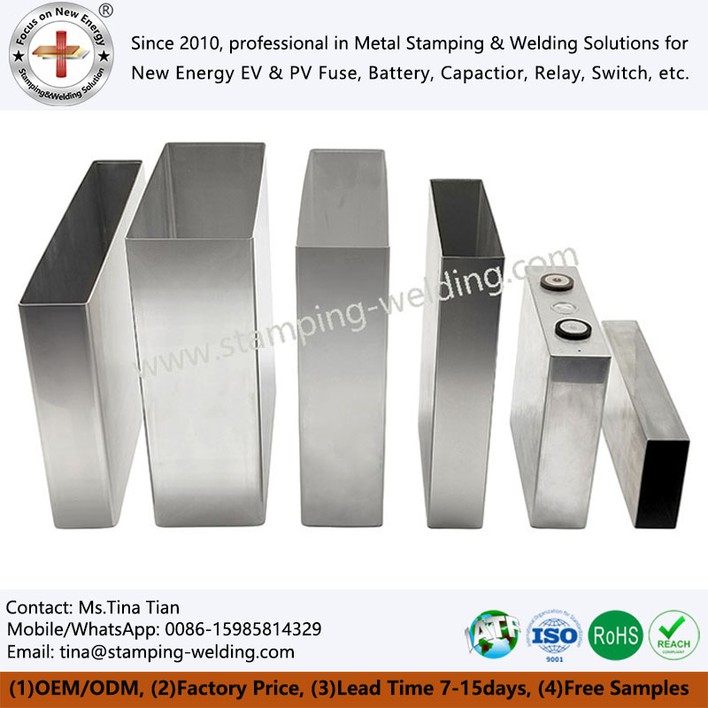
Dual Safety Guarantee from Structure and Material: The aluminum shell of Aluminum LTO Prismatic Battery Cell For EV is made of high-purity aluminum alloy, formed through precision stretching technology. Its compressive strength can reach over 200MPa, effectively withstanding external impacts and pressure caused by internal cell expansion. Meanwhile, the anodizing treatment on the aluminum shell surface forms a dense protective film, improving its electrolyte corrosion resistance by 3 times compared to ordinary aluminum materials and avoiding the risk of liquid leakage.
Balanced Design of Energy Density and Heat Dissipation: The thermal conductivity of aluminum is about 3 times that of steel. The aluminum shell of Prismatic Aluminum Case Power Battery can quickly conduct heat generated during cell operation. Combined with the heat dissipation groove design on the shell, it can control the temperature of the battery module within 45℃, preventing capacity attenuation caused by high temperatures. Additionally, the lightweight feature of the aluminum shell (reducing weight by 40% compared to steel-shell batteries of the same capacity) can also improve the battery life or portability of end devices.
Strong Customization Adaptability: LiFePo4 Prismatic Battery Aluminum Cells support adjusting the aluminum shell size (thickness 0.8-2.0mm, capacity 10-100Ah) according to different scenario requirements. The number and position of poles can be flexibly designed to adapt to various battery pack schemes such as series and parallel connections, meeting the diverse needs from micro portable devices to large-scale energy storage power stations.

Typical Application Scenarios
Industrial Energy Storage Field: In photovoltaic and wind power supporting energy storage systems, lithium prismatic battery Aluminum shell can stably store intermittent new energy power and alleviate grid load fluctuations, relying on their long cycle life (over 5,000 cycles under standard working conditions) and wide temperature operating range (-30℃ to 70℃). Currently, they have been widely used in industrial and commercial distributed energy storage projects.
New Energy Transportation Field: For scenarios such as electric forklifts and low-speed electric vehicles, the high-rate discharge performance of lithium dry cell battery Aluminum shell (supporting 5C instantaneous discharge) can provide strong power. At the same time, their anti-vibration design (meeting IP67 protection level) can adapt to complex road conditions and reduce the risk of failures during long-term use.
Smart Device Field: In scenarios such as portable medical equipment and outdoor testing instruments, the miniaturization and low self-discharge characteristics (monthly self-discharge rate ≤3%) of Aluminum shell for lithium ion phosphate cell become key advantages. They can ensure long-term standby of equipment and reduce the impact of frequent charging on work efficiency.

Selection and Usage Precautions
Focus on Core Performance Parameters: When selecting li on cell Aluminum shell, it is necessary to focus on indicators such as cycle life, rate discharge capacity, and temperature resistance range. For example, in industrial energy storage scenarios, products with more than 5,000 cycles and wide temperature operation should be preferred; in transportation scenarios, emphasis should be placed on high-rate discharge and anti-vibration performance.
Attach Importance to Production Process Standards: Priority should be given to Aluminum LTO Prismatic Battery Cell For EV produced using automated production lines (such as laser welding and AI visual inspection). These products have higher dimensional accuracy (error ≤±0.03mm) and consistency, which can reduce the matching risk during battery pack assembly and improve the stability of the overall system.
Standardize Usage and Maintenance: During the use of panasonic li ion cells Aluminum shell, overcharging and over-discharging should be avoided (charging voltage not exceeding 4.2V, discharging voltage not lower than 2.5V). Regularly check whether the shell is deformed or leaking. At the same time, adjust the charging and discharging strategy according to the ambient temperature; for example, in low-temperature environments, the battery can be preheated to above 10℃ before charging.
summary
With the continuous iteration of new energy technologies, the performance of LiFePo4 Prismatic Battery Aluminum Cells will continue to be upgraded. In the future, through material innovation (such as new aluminum alloys) and intelligent design (integrating temperature and voltage monitoring chips), their application scenarios will be further expanded. For enterprises, the reasonable selection and application of Aluminum Li-ion cells can not only improve equipment performance but also help them seize opportunities in the green transformation, achieving a win-win situation of economic benefits and environmental protection value.
contact us