Aluminum Stamping: A Key Process In The New Energy Photovoltaic Industry
May 29, 2025
Understanding Aluminum Stamping
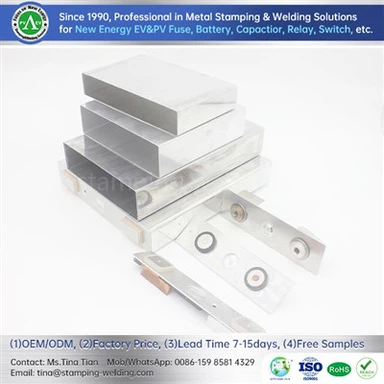
Aluminum stamping is a metal-forming process that uses press machines and dies to shape aluminum alloy sheets into desired forms. This process is crucial in the new energy photovoltaic industry, where Aluminum Photovoltaic Bracket Accessories refer to components made from aluminum alloys through the stamping process. These parts are integral to various aspects of photovoltaic systems, including structural support and electrical connectivity.

Properties of Aluminum Alloys in Photovoltaic Applications
Aluminum alloys are preferred in the photovoltaic industry due to their unique combination of properties. They offer a good balance between strength and weight, which is essential for applications where reducing the overall weight of the system is important. Additionally, aluminum has excellent corrosion-resistance properties, making it suitable for outdoor use in photovoltaic systems.
Advantages of Aluminum Stamping Parts
Lightweight
Aluminum alloys have a much lower density compared to other metals like steel. This is crucial in photovoltaic systems, especially those installed on rooftops, as it reduces the stress on the building structure.
Corrosion Resistance
Aluminum naturally forms a protective oxide layer on its surface when exposed to air, providing excellent corrosion resistance. This property is essential for components exposed to various weather conditions.
Electrical Conductivity
Although not as conductive as copper, aluminum still has good electrical conductivity. This is beneficial in photovoltaic systems for electrical connections.
Formability
Aluminum alloys have excellent formability, allowing for the production of custom-designed parts that meet the specific requirements of photovoltaic systems.
Manufacturing Process of Aluminum Stamping Parts
The process begins with selecting the appropriate aluminum alloy. The aluminum sheet is then cut to the required size and thickness. Die design is critical, as it shapes the aluminum sheet into the desired part. The stamping operation involves placing the aluminum sheet between the punch and die block in the press machine. After the stamping operation, some parts may require secondary operations such as trimming, deburring, and surface finishing.
Applications in the Photovoltaic Industry
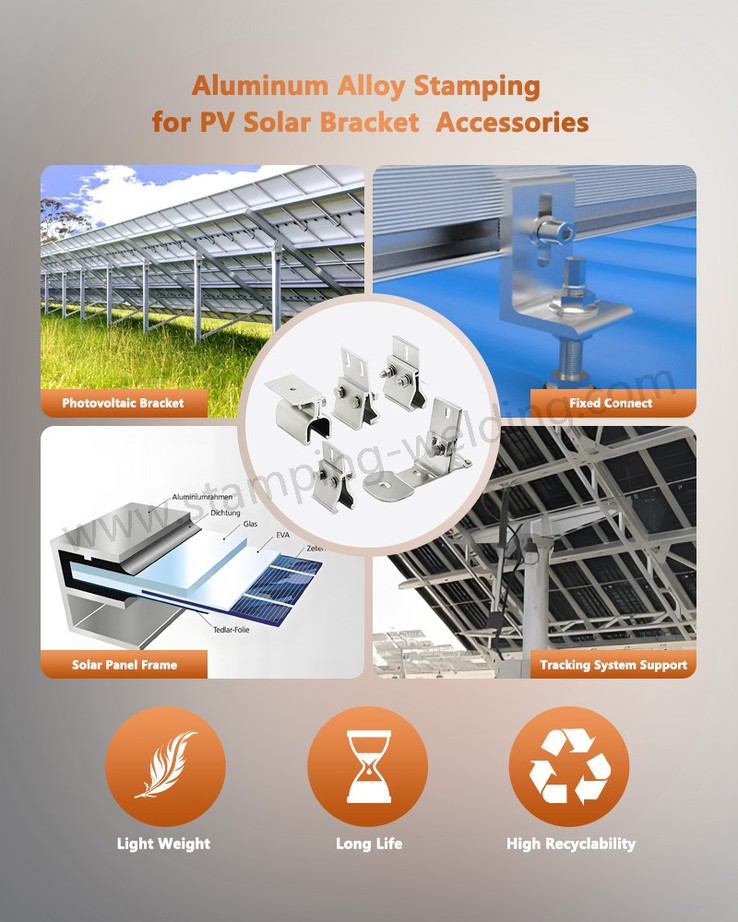
Aluminum stamping parts are widely used in the construction of mounting structures for solar panels. They are also used to create enclosures and housings for protecting sensitive electrical components. Additionally, aluminum's electrical conductivity makes it suitable for use in electrical connectors and busbars. Some solar panels also use metal-stamped aluminum as frame components.
Future Trends
The future of aluminum stamping parts in the photovoltaic industry will involve integration with advanced manufacturing technologies. Sustainability is becoming an increasingly important aspect in the photovoltaic industry. There will be an increasing demand for lighter and stronger metal stamping aluminum.
In conclusion, metal stamping aluminum plays a significant role in the new energy photovoltaic industry, providing lightweight, corrosion-resistant, and electrically conductive components that are essential for the efficient and reliable operation of photovoltaic systems.
contact us