Analysis Of Automotive Power Busbar Technology: Core Components Empower Industrial Upgrading
Feb 28, 2026
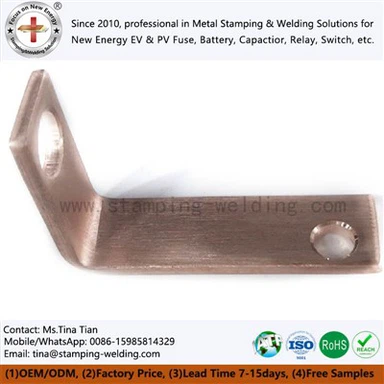
With the rapid rise of the new energy vehicle industry, the demand for on-board high-voltage interconnection systems has surged. As a core conductive component of the electrical system, the automotive power busbar is becoming a crucial link in supporting high-power transmission and improving system reliability. The automotive power bar is a core component in the vehicle's electrical system used to collect, distribute, and transmit large currents. It is usually made of highly conductive metals such as copper and aluminum into flat strips or solid bars, acting like a "power highway" connecting the power source and high-power loads, playing an irreplaceable role in the architecture of new energy vehicles.

Technological advantages
As new energy vehicles evolve towards higher voltage, lighter weight, and greater intelligence, BusBar Automotive's related technologies continue to iterate, and its functional advantages are becoming increasingly prominent. Compared to traditional cables, EV Bus Bars have a more compact structure, allowing for precise bending and perfectly adapting to the space-constrained architecture of electric vehicles. Furthermore, thanks to their higher surface area and cross-sectional area ratio, their heat dissipation efficiency is significantly better than cables, effectively reducing voltage drop and improving system reliability. Inside the electric vehicle battery pack, the automotive battery terminal bus bar also bears the crucial responsibility of connecting individual battery cells, serving both mechanical support and electrical connection functions, further ensuring the stable operation of the battery system.

Product Features
From a product characteristics perspective, automotive power busbars are primarily made of copper and aluminum, and their surfaces are typically treated with nickel plating or powder coating to prevent oxidation and corrosion. Copper busbars for electric vehicle capacitors, in particular, are widely used in high-end models due to their excellent conductivity. In electric vehicle applications, the DC bus connects the battery pack to the inverter and frequency converter. The EV capacitor bar in the system effectively filters ripple and smooths transient voltage fluctuations, while the film capacitor bar for HEV/EV Motor Control Unit further adapts to the needs of motor control units in hybrid and pure electric vehicles, improving the stability of the powertrain.

Key distinction
Industry professionals need to be aware of the fundamental differences between power buses and communication buses to avoid confusion in applications. Automotive power buses focus on transmitting high-current, high-voltage "energy," and their physical form is typically a thick metal busbar; while communication buses (such as CAN buses) are responsible for transmitting control data "signals," and their physical form is typically a thin twisted pair of wires. With the popularization of high-voltage fast charging technology for new energy vehicles and the expansion of the market, new products such as Insulated Bus Bars are gradually being promoted, ensuring the safety of high-voltage transmission and injecting new vitality into the diversified development of bus technology.

Market Outlook
Currently, the global electric vehicle busbar market is maintaining steady growth, with continuous technological innovation. The performance optimization and application expansion of automotive power busbar are becoming an important support for promoting the high-quality development of the new energy vehicle industry. In the future, with the deep integration of materials technology and high-voltage platforms, its core position in on-board high-voltage interconnection systems will be further highlighted.
contact us
If you would like to learn more about automotive power busbar products and solutions, please feel free to contact us for details.