


Detailed Explanation Of Carbon Steel Metal Stamping Process: Key Technologies And Industry Applications
Mar 01, 2026
In the field of metal forming in manufacturing, Carbon Steel Metal Stamping has become one of the most widely used processing technologies due to its high efficiency and economy, serving a wide range of industries including automotive, home appliances, and construction. This article, from a technical perspective, breaks down the core elements, processing steps, advantages and disadvantages, and typical applications of metal stamping, providing practical technical reference for industry practitioners, clarifying its differences from stainless steel stamped, and helping them accurately grasp the logic of its application.

Core Logic of the Process
As a mainstream metal forming technology, Carbon Steel Stamping's core logic involves applying pressure to carbon steel sheets at room temperature using a punch press and specialized dies, causing the sheets to undergo plastic deformation or separation, ultimately yielding parts that meet specific shape, size, and performance requirements. Compared to stainless steel stamping, carbon steel metal stamped offers greater cost control, making it a highly cost-effective choice for mass production. Furthermore, compared to Custom Steel Metal Stamped Parts, it is more specifically tailored to carbon steel materials, fully utilizing the material properties of carbon steel.
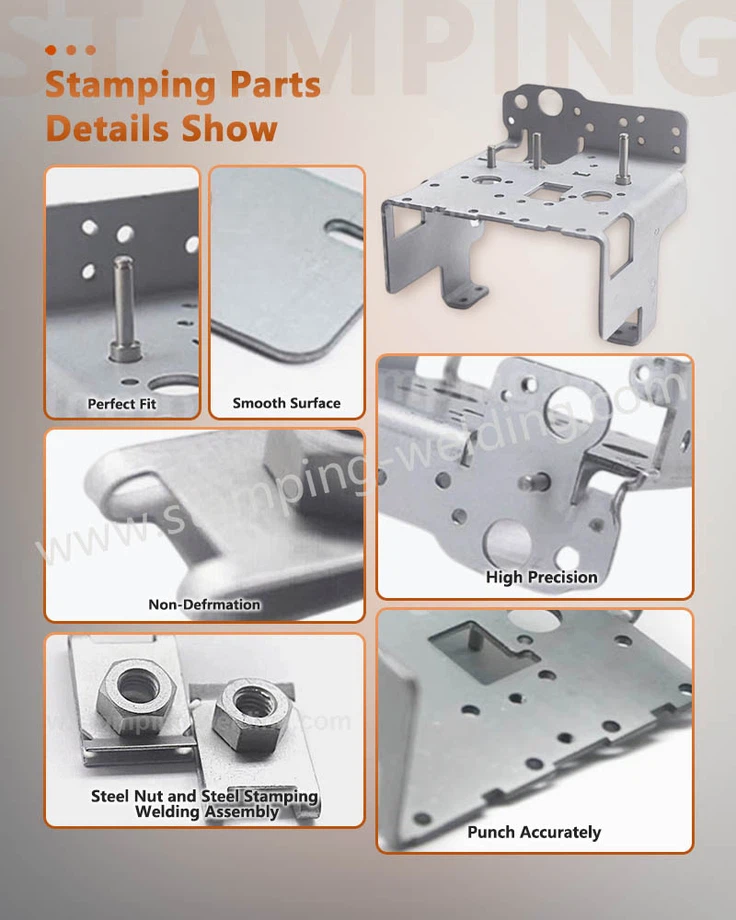
Core: Classification of material properties
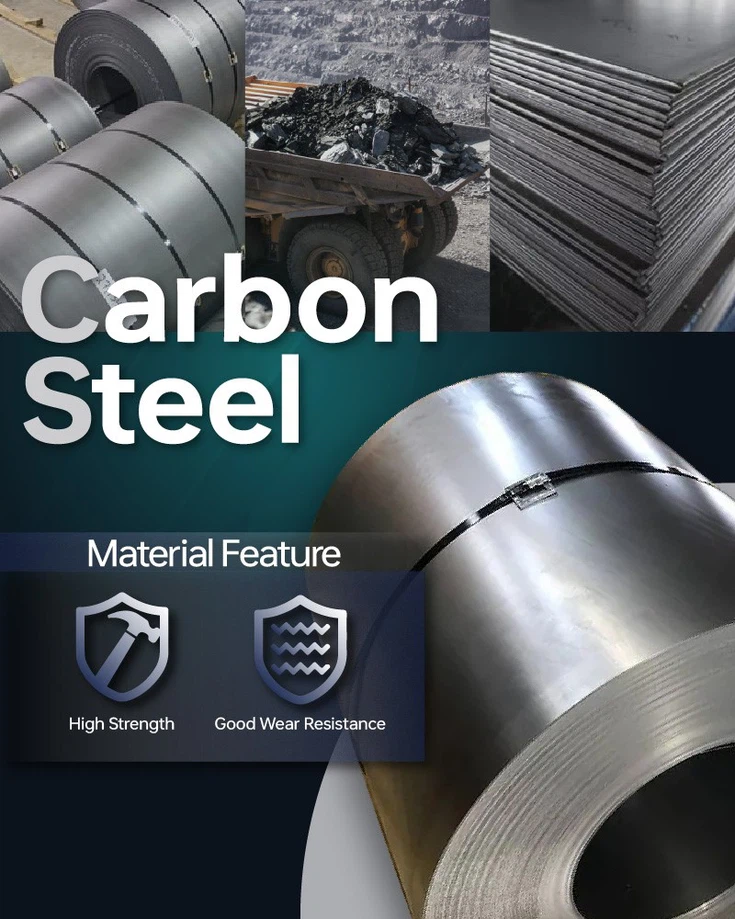
Material properties are the foundation for the successful implementation of carbon steel metal stamping processes and a core factor determining the performance of stamped parts. Carbon steel, as the most cost-effective base material in this process, can be divided into three categories based on its carbon content, adapting to different application scenarios: Low-carbon steel (mild steel) with a carbon content below 0.25% exhibits excellent plasticity and toughness, making it the first choice for deep drawing and complex shape stamping, commonly used in automotive body parts and other products requiring high formability; Medium-carbon and high-carbon steels have higher carbon content, resulting in greater hardness and strength, but relatively lower plasticity, and are mostly used to manufacture strong metal stamped parts requiring high strength and wear resistance, such as spring sheets and fasteners. It is worth noting that, unlike stainless steel stamped parts, carbon steel stamping parts require a primary focus on rust prevention, which is also a core focus of subsequent processing.
Applications: Multi-industry implementation scenarios
Thanks to their superior overall performance, carbon steel stampings have penetrated the core areas of many industries, becoming key components supporting production across various sectors. In the automotive industry, they are widely used in core components such as body panels, chassis brackets, and engine mounts, providing efficient and economical solutions for automobile manufacturing. In the home appliance hardware sector, products such as washing machine shells, microwave oven liners, and air conditioner brackets are mostly manufactured using stamping processes. In the electronics/electrical sector, steel electrical parts such as distribution boxes, power switch boxes, and heat sink brackets also rely heavily on this process. In the construction and heavy industry, fasteners and structural connectors, thanks to the high strength of carbon steel stamped, ensure structural stability and safety.

Summary: Process Upgrades and Future Prospects
As the manufacturing industry moves towards refinement and efficiency, carbon steel metal stamping processes are constantly being upgraded, and their synergistic application with related processes such as OEM Custom Stainless Steel Sheet Metal Stamping Parts is becoming increasingly widespread. Understanding its material properties, processing steps, and advantages and disadvantages helps industry professionals more accurately match production needs, optimize production processes, and control production costs. In the future, with advancements in surface treatment technology, the limitations of metal stamped will be further overcome, and its application scenarios across various industries will continue to expand, providing strong support for the high-quality development of the manufacturing industry.
contact us
If you have any technical consultation, process adaptation or customization needs related to Carbon Steel Metal Stamping, please feel free to contact us. We will provide you with professional technical support and solutions.


