Analysis Of The User Guide For The Key Protective Component Of Photovoltaic Systems—The Copper End Caps Round
Apr 11, 2026
In the safe and stable operation of photovoltaic systems, fuses are core protective components, and the performance of their supporting components directly affects the overall protection effect of the system. Among them, Copper End Caps Round are key supporting structural components of fuses, and their excellent performance has made them an essential component in photovoltaic combiner boxes, inverters, and DC power distribution systems.
Materials and Surface Treatment
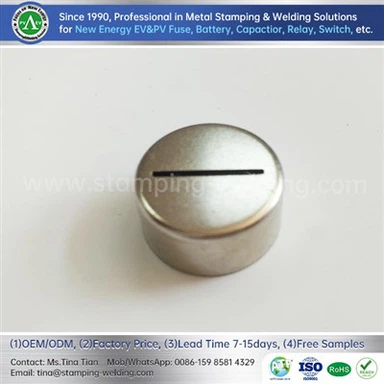
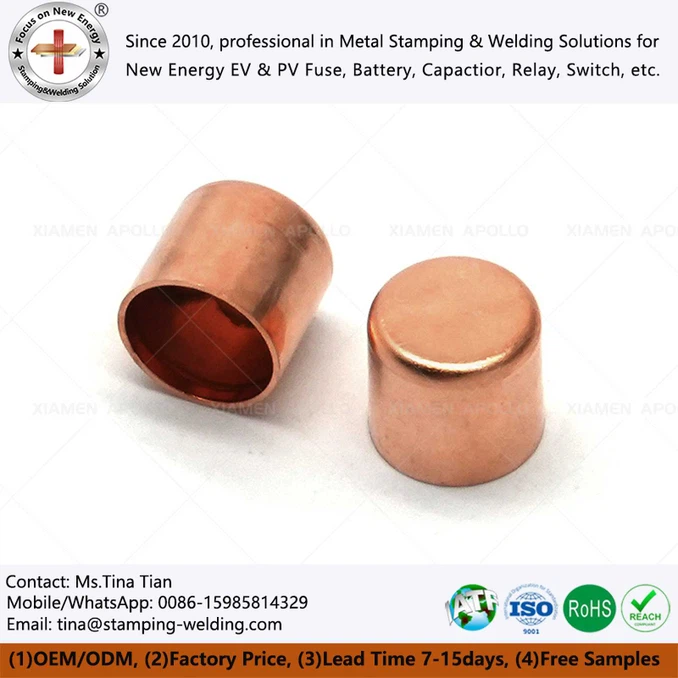
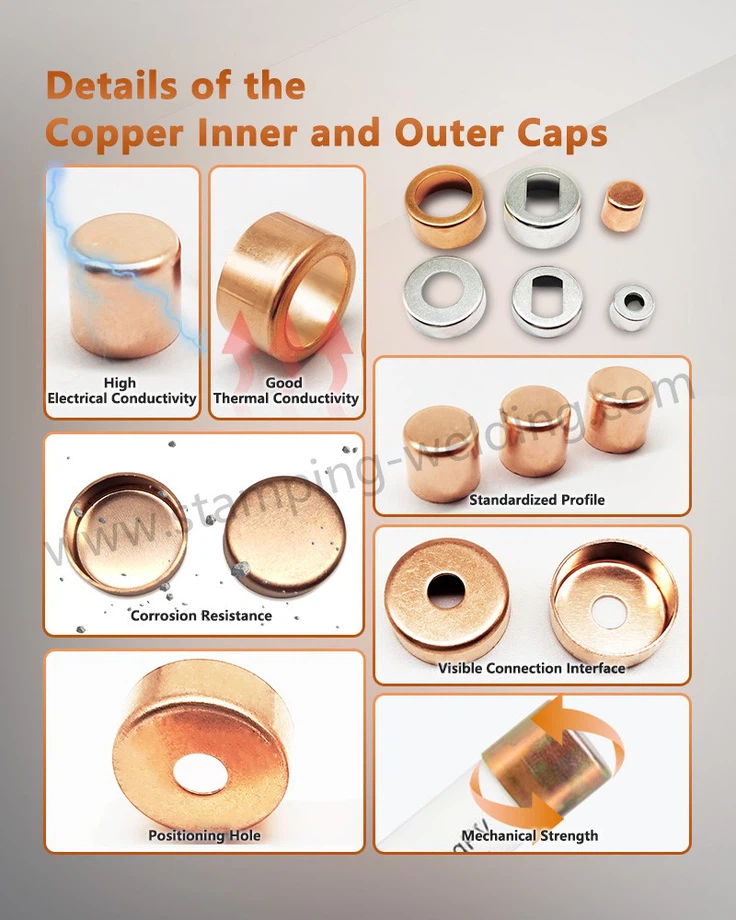
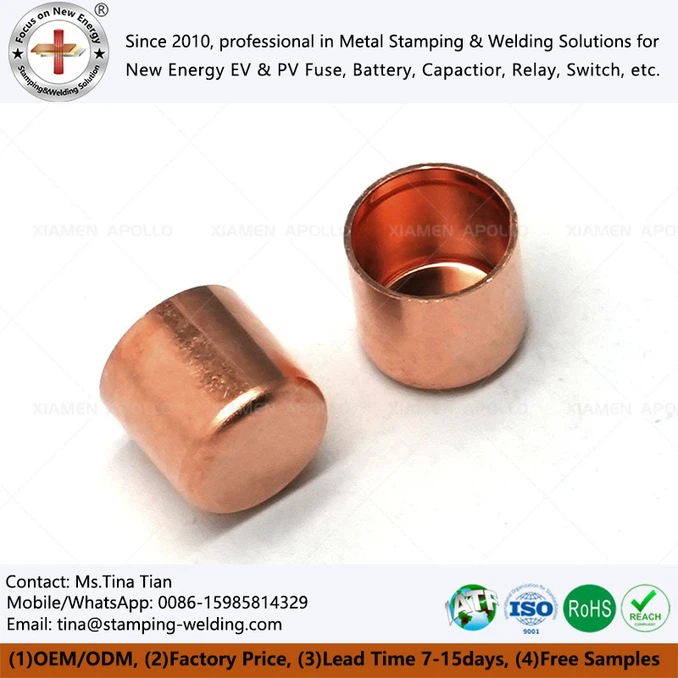
Copper Outer Caps, also known as copper caps, are metal caps fitted onto both ends of the ceramic fuse tube in a fuse. Their core material is high-purity copper (also known as red copper or electrolytic copper), which possesses excellent electrical conductivity, thermal conductivity, and machinability, perfectly meeting the electrical connection and physical support requirements of fuses. To further enhance their corrosion resistance and reduce contact resistance, most commercially available copper outer caps employ a Tin Plated Copper End Caps process. In some special applications, silver plating is also used to ensure long-term stability in harsh environments.
Core Functions
- Electrical Connection: Ensuring Smooth Current Conduction. As the connection point between the fuse element and the external circuit, it must ensure tight contact to avoid overheating due to poor contact, meeting the requirements for fuse copper components.
- Heat Dissipation: Maintaining Stable Component Operation. Utilizing the excellent thermal conductivity of copper, it quickly conducts heat from the fuse element, maintaining fuse stability and making it suitable for high-temperature outdoor environments.
- Sealing Protection: Eliminating Safety Hazards. Precisely fitting the fuse tube to seal internal components prevents arcing and high-temperature material splashing during high-voltage fuse breaking. Installation requires checking for proper fit.
- Weather Resistance: Suitable for Harsh Outdoor Environments. The copper material combined with a surface plating resists high temperatures, salt spray, and other corrosive substances, ensuring long-term stable operation, superior to caps made of other materials.
Usage Guidelines and Precautions
In practical applications, copper outer caps are widely compatible with common tubular photovoltaic fuses. Besides photovoltaic systems, some Copper Outer End Caps for High Voltage Low Current EV Fuse can also be used in low-voltage, high-current electric vehicle fuse scenarios, provided they comply with basic specifications. During installation, a copper outer cap matching the fuse model must be selected to avoid size mismatches affecting sealing and connection. Simultaneously, care must be taken to avoid external impacts to prevent deformation of the copper outer cap, which could compromise its protective performance. Furthermore, the surface plating of the copper outer cap should be regularly inspected for integrity. If plating peeling or corrosion is observed, it must be replaced promptly to ensure its electrical performance and protective function remain unaffected.
Summary and Industry Outlook
As a key structural component in the protection system of photovoltaic systems, the proper use and maintenance of Copper End Caps Round are crucial for ensuring the normal operation of fuses and extending the service life of photovoltaic systems. The functional advantages of its material properties make it an indispensable component in the photovoltaic and new energy fields. With future technological advancements in the industry, the surface treatment processes and compatibility of copper caps will be further optimized, providing more reliable protection for the safe operation of new energy systems.
Contact Us
If you have any questions regarding the selection, use, or cooperation of Copper End Caps Round, please feel free to contact us for professional support.