Fuse End Caps Brass: Technical Analysis And Application Expansion Of The Core Conductive Component Of Electric Fuses
Apr 11, 2026
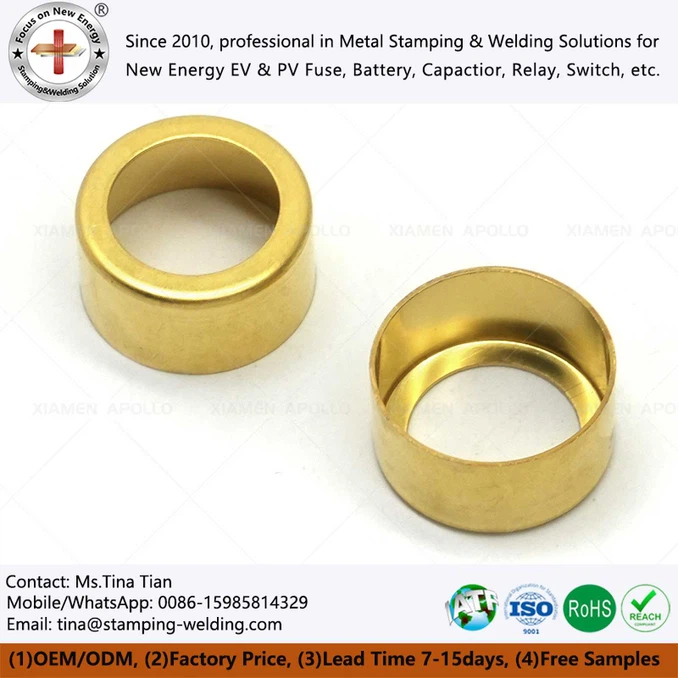
In power protection systems, fuses are critical safety components, and the stability of their internal structure directly determines the safety and reliability of power transmission. The Fuse End Caps Brass is an indispensable core conductive connection component. As the mainstream type of fuse end caps, the brass inner cap is typically installed inside both ends of the fuse insulation tube, undertaking the crucial task of connecting the fusible element to the external end caps and contacts, serving as an important bridge for smooth current conduction.
Core function: Covering the entire operation process of the fuse
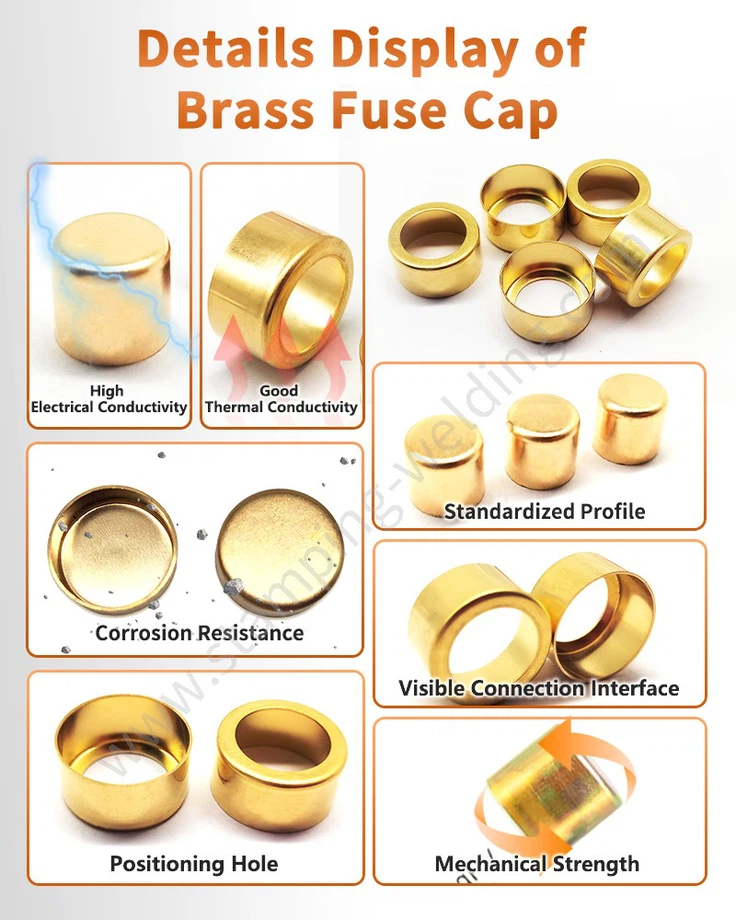
From a functional perspective, the brass inner cap plays a crucial role throughout the entire operation of the fuse. One of its core functions is electrical connection, securing the fusible element through welding or mechanical clamping to ensure smooth current flow under normal operating conditions. Simultaneously, leveraging brass's excellent thermal conductivity, it achieves efficient thermal management-dissipating heat from the fusible element during normal operation or minor overload, and accelerating heat conduction to trigger the fuse during severe overload, ensuring timely circuit disconnection. Furthermore, the brass inner cap also secures and supports the fusible element, preventing displacement and damage due to vibration, impact, or installation stress. In conjunction with external components, it provides a sealed protection, isolating the internal fusible element and filler from moisture, dust, and other external environmental factors, thus extending the fuse's lifespan.
Material advantages: Performance support suitable for multiple scenarios
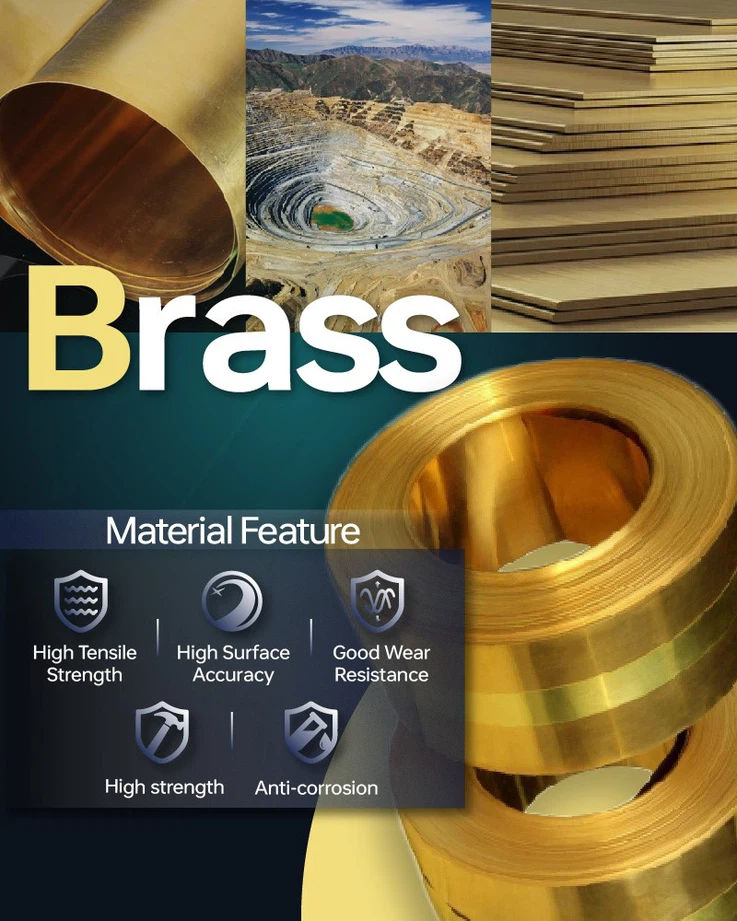
In terms of material selection, brass inner caps are mostly made of high-quality brass alloys such as H62 and H65. Some products undergo surface treatments such as nickel plating, tin plating, or silver plating, which is inseparable from their excellent performance advantages. Brass has high conductivity, which can effectively reduce contact resistance and power loss, and avoid the generation of extra heat due to poor contact; at the same time, it has outstanding corrosion resistance, and is not easy to rust or oxidize in humid, harsh industrial or outdoor environments, ensuring long-term operational reliability; its moderate hardness balances connection firmness and processing convenience, making it easy to mass-produce through stamping, forming and other processes to meet the needs of different specifications of fuses.
Application scenarios: Widely applicable to power protection in multiple fields
With the rapid development of new energy, industrial power distribution and other fields, the application scenarios of Fuse End Caps Brass are also continuously expanding. As an important type of brass end cap, it is widely used in power protection systems with high reliability requirements. In the field of new energy vehicles, it is used to protect the safe operation of power batteries, motor controllers and charging piles; in photovoltaic systems, it is compatible with high-voltage fuses in outdoor combiner boxes and inverters; in the field of industrial power distribution, it is the core internal connector in high-voltage, high-current fuses (such as the RN series).

Product Categories and Trends: Diverse Derivatives and Continuous Upgrades
It's worth noting that brass inner caps come in a wide variety of derivatives, including Brass Fuse Caps, Brass Terminal Caps, and Brass Pipe End Caps. These different types vary in structure, size, and manufacturing processes depending on the application scenario, but their core functions all revolve around conductivity, fixation, and protection. Industry experts indicate that as the safety requirements of power systems continue to increase, material upgrades and process optimizations for brass inner caps will become a future development trend, further adapting to more complex application environments and providing more reliable guarantees for the safe and stable operation of power systems.
Contact Us
In practical engineering applications, the above technical principles ultimately need to be realized through specific product design. Different structural and material combinations will directly affect the long-term stability of the system. Please contact us to provide you with customized Fuse End Caps Brass solutions suitable for your specific scenarios.