Core Components Of Industrial Electrical Connections And Protection: Analysis And Industry Applications Of Fuse Terminal Technology
Mar 08, 2026
Against the backdrop of continuous upgrades in low-voltage power distribution, industrial automation, and new energy power systems, integrated components that combine electrical connection and circuit protection functions have become a key choice for optimizing wiring structures and improving equipment safety in the industry. Fuse Terminal are a typical example of such core components. With their integrated, high-safety, and easy-to-maintain characteristics, they are widely adaptable to the stable operation requirements of various electrical circuits and have become an indispensable basic accessory inside control cabinets and distribution boxes.

Core structure: Standardized design and dedicated conductive components
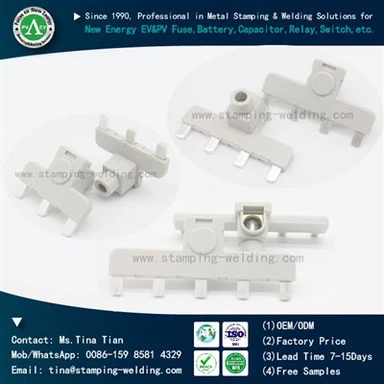
Delving into the core structure of the product, the terminal design balances practicality and standardization, with an overall structure tailored to the installation and maintenance demands of industrial working sites. The main mounting base and outer housing are made of high-strength insulating materials, enabling direct mounting on industrial standard rails like DIN rails, with flexible layout and strong compatibility. Inside, a special carrier acts as a plug-and-pull holder for the tubular protection component, making it easy to replace consumables quickly after a fault without disrupting the whole circuit wiring. Some high-end models are fitted with status indicator lights to give intuitive feedback on the working state and help maintenance staff locate faulty circuits rapidly. Additionally, the product is equipped with a full range of core conductive parts, including dedicated contact accessories and matched copper conductive assemblies, ensuring stable electrical connection and conductivity. Selected premium versions adopt silver-plated copper contacts and silver-plated brass contacts, further boosting conductive performance and corrosion resistance, making them ideal for long-term high-load operation. This specialized terminal integrates connection and protection functions, with the first fuse focusing on circuit overload defense and the second fuse supporting quick fault reset for industrial control loops.

Core Advantages: Three Highlights Facilitate Widespread Adoption in Industrial Scenarios
Compared to traditional separate configurations, fuse offer significant advantages, which are key reasons for their rapid adoption in the industrial sector. Firstly, they greatly improve space utilization, combining the independent fuse holder and terminal block into one unit. This effectively simplifies the wiring structure within distribution boxes and control cabinets, freeing up more installation space and aligning with the current trend towards compact equipment design. Secondly, they enhance safety performance. Most products feature a touch-safe design, eliminating the need for direct contact with live parts when replacing fuses, reducing the risk of electric shock and ensuring the safety of maintenance personnel. Finally, they optimize maintenance efficiency. In complex multi-circuit control systems, they enable independent protection and disconnection of each circuit without interference, significantly shortening troubleshooting and repair time and improving the overall system's maintenance efficiency.
Application scenarios: Protection of electrical circuits covering multiple fields
Leveraging its multiple performance advantages, fuse terminals are used in various core fields such as industrial electrical systems, new energy, and power distribution, with market demand continuing to grow steadily. In industrial automation, they are commonly used to protect PLC outputs, various sensors, and actuator circuits, ensuring the stable operation of automated production lines. In photovoltaic power generation, they are widely used inside photovoltaic combiner boxes to protect photovoltaic module circuits and prevent faults caused by excessive return current. In conventional low-voltage power distribution networks, as a basic short-circuit and overload protection component, they contribute to the safe and stable operation of the power distribution system, becoming a standardized selection for the protection of various electrical circuits.

Development trend: Continuous iteration towards high-precision and cutting-edge technologies
With the rapid development of industrial intelligence and the new energy industry, electrical systems are increasingly demanding higher reliability, integration, and precision in their connection and protection components. Fuse terminals will also continue to iterate towards miniaturization, intelligence, and high conductivity to further adapt to industry upgrade needs and provide more reliable support for the safe and efficient operation of various electrical systems.
contact us
For detailed technical parameters, specifications, and industry-specific solutions for Fuse Terminal and related conductive components, please feel free to contact us to explore efficient solutions in the field of electrical connection and protection.