
Demystifying Fuse Cap Contacts: An In-Depth Exploration
May 20, 2025
Introduction to Fuse Cap Contacts
Fuse cap contacts are essential components in electrical systems, particularly in applications involving fuses. They play a crucial role in ensuring the safe and reliable operation of electrical circuits by providing a secure connection between the fuse and the electrical system. This article will delve into the basics of Fuse Contact Knife Cap, its functions, types, and importance in electrical safety.
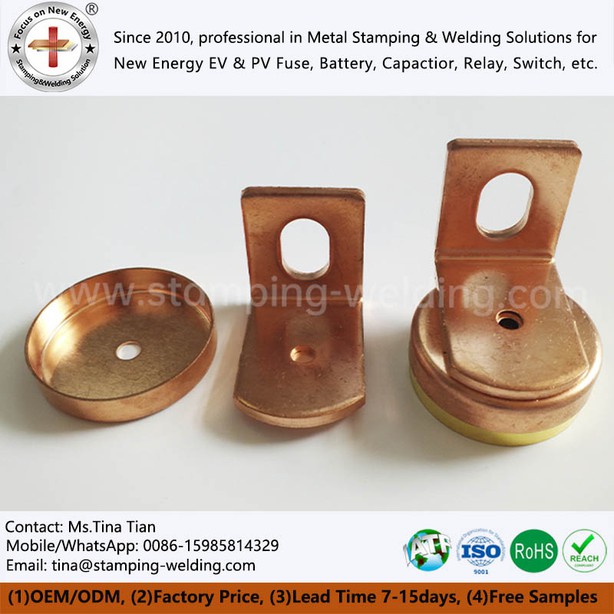
What Are Fuse Cap Contacts?
Fuse Contact Knife Caps are specialized connectors designed to hold and secure a fuse within an electrical circuit. They are typically made from durable materials such as metal alloys, which provide both electrical conductivity and mechanical strength. The primary purpose of Fuse Cap and Contacts is to ensure a stable and reliable connection between the fuse and the electrical system, allowing the current to flow smoothly while also providing a means to safely disconnect or replace the fuse when necessary.
Functions of Fuse Cap Contacts
Secure Connection
The primary function of Fuse Contact Knife Cap is to provide a secure and stable connection for the fuse. This ensures that the electrical circuit remains intact and functional, allowing current to flow through the fuse without interruption. A well-designed fuse cap contact prevents the fuse from loosening or falling out due to vibrations or other external factors.
01
Current Flow
It facilitates the flow of electrical current through the fuse. They are designed to handle the rated current capacity of the fuse without causing excessive resistance or heat generation. This ensures that the electrical system operates efficiently and safely.
02
Safety and Protection
In the event of an overcurrent condition, the fuse will blow (or melt) to interrupt the flow of electricity, protecting the electrical system from potential damage. It plays a critical role in this process by ensuring that the fuse is properly seated and can function as intended. They also provide a means to safely disconnect the fuse from the circuit, allowing for easy replacement without the need for tools.
03
Ease of Replacement
Fuse Cap and Contacts are designed to make the replacement of fuses quick and easy. They typically feature a simple push-and-click mechanism that allows users to insert or remove the fuse without the need for complex procedures. This ensures that the electrical system can be restored to normal operation quickly in the event of a blown fuse.
04
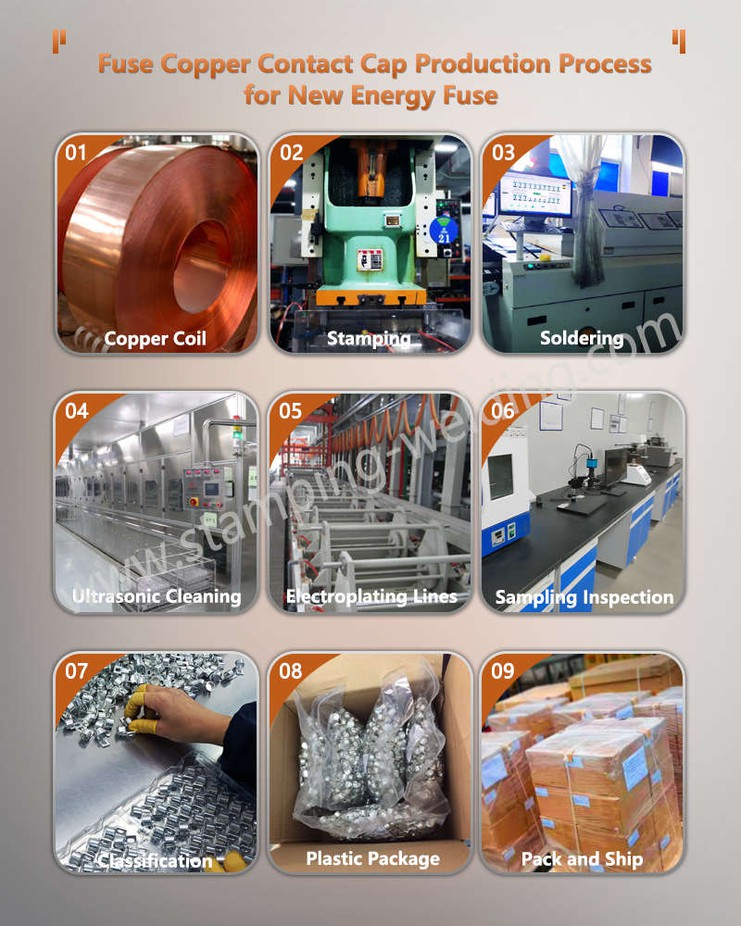
production process
1. Copper Coil:
The process begins with the preparation of copper coils, which serve as the foundational material for manufacturing fuse contact caps.
2. Stamping:
The copper material is then processed using stamping presses to form the preliminary shape of the contact caps. This step is crucial for achieving the desired dimensions and form of the caps.
3. Soldering:
Following the stamping, the various parts are joined together through a soldering process. Soldering ensures a strong and secure connection between the components, forming a complete fuse contact cap assembly.
4. Ultrasonic Cleaning:
The contact caps are then subjected to ultrasonic cleaning to remove any oils, dust, and other contaminants. This step is essential for maintaining the cleanliness of the product, which is vital for its performance and reliability.
5. Electroplating Lines:
The contact caps proceed to the electroplating lines where they undergo electroplating treatment. This process enhances the corrosion resistance and electrical conductivity of the caps, which are important characteristics for fuse contact caps.
6. Sampling Inspection:
During the production process, samples of the contact caps are taken and inspected to ensure they meet the required quality standards. This inspection helps to maintain consistency and reliability in the product.
7. Classification:
Once the inspection is complete, the qualified contact caps are sorted and classified. This organization is necessary for the subsequent packaging process.
8. Plastic Package:
The contact caps are then packaged in plastic to protect them from damage during transportation and storage. Proper packaging is crucial for preserving the quality of the product until it reaches the customer.
9. Pack and Ship:
The final step involves packing the packaged contact caps into boxes and preparing them for shipment. This step ensures that the products are delivered to customers safely and efficiently.
production technology and application
Production Technology
The production process of fuse contact caps includes several key steps:
Stamping and Drawing:
This step involves shaping metal sheets into the required form using stamping presses and drawing equipment. This process can efficiently produce a large number of metal parts with consistent shapes, suitable for the initial forming of fuse contact caps.
Welding:
After the stamping and drawing steps, a welding process may be involved. Welding is used to join different metal parts together to form a complete fuse contact cap assembly. Welding techniques ensure a strong connection between parts while maintaining the stability of the electrical connection.
Material Selection:
Fuse contact caps are typically made of copper or copper alloys because these materials have good electrical conductivity and mechanical strength. Copper's high conductivity helps ensure smooth current flow, while its mechanical strength ensures the durability of the contact cap during use.
Applications
The application of fuse contact caps is very broad, mainly in the following areas:
Electric Vehicles (EV Fuse):
In electric vehicles, fuse contact caps are used to protect circuits from damage due to overcurrent. They play a crucial role in the power systems of electric vehicles, ensuring the safe operation of key components such as batteries and motors.
New Energy (NH Fuse):
In the field of new energy, such as photovoltaic (PV), energy storage systems (ESS), uninterruptible power supplies (UPS), etc., fuse contact caps also play an important role. They help manage the current in the system and prevent equipment damage caused by overloads or short circuits.
Industrial Fuse Links:
In industrial applications, fuse contact caps are used for power protection in various industrial equipment. They can withstand larger current loads and quickly cut off the power in case of faults, protecting the equipment from damage.

Importance of Fuse Cap Contacts in Electrical Safety
Preventing Electrical Overloads
Fuse Cap and Contacts play a critical role in preventing electrical overloads by ensuring that the fuse can function properly. When an overcurrent condition occurs, the fuse will blow, interrupting the flow of electricity and protecting the electrical system from potential damage. Without a reliable Fuse Cap and Contacts, the fuse may not be able to function as intended, leading to unsafe operating conditions.
Protecting Equipment and Personnel
By ensuring a stable and secure connection for the fuse, Fuse Cap and Contacts help protect electrical equipment and personnel from the hazards of electrical overloads and short circuits. Properly functioning fuse cap contacts can prevent electrical fires, equipment damage, and personal injury.
Compliance with Safety Standards
Fuse caps and Contacts are designed to meet various safety standards and regulations, ensuring that they provide a reliable and safe connection for fuses. Compliance with these standards is essential for maintaining the overall safety and reliability of electrical systems.
Conclusion
Fuse cap contacts are essential components in electrical systems, providing a secure and reliable connection for fuses. They play a crucial role in ensuring the safe and efficient operation of electrical circuits by facilitating the flow of current, protecting against overloads, and making fuse replacement easy. Understanding the functions, types, and importance of Fuse Cap and Contacts is essential for anyone involved in the design, installation, or maintenance of electrical systems.
contact us