Discussion On The Application Of New Energy Vehicle Fuse
Jun 10, 2022
In new energy vehicles, including pure electric and hybrid power, circuit protection components or fuses are more important than ever. Require.
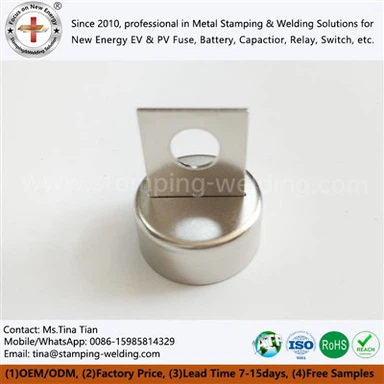
The characteristics of traditional electronic power fuses which have Copper End Plate are covered by UL248 series North American standards or IEC60127/60269 series, and there is no requirement for the reliability of fuses; traditional automotive fuses which made of Copper End Caps Round, defined by ISO8820 series standards, define the matching and Reliability requirements, but its rated voltage only covers 32VDC and below (the new ISO8820-7/8 defines fuses for fuel cells and hybrid vehicles, and only to 450VDC and I.R.2000A).
At present, the working voltage of passenger cars is generally above 370V, and that of buses is above 576V, which is much higher than the 12V/24V of traditional automotive electrical components. Such a high working platform voltage requires EV/HEV fuses to have both the high breaking capacity of low-voltage fuses (which assemblied with Copper End Cap Solder Fittings ) and the high reliability of automotive fuses. The following article will analyze the fuses for new energy vehicles and explore their design concepts and technology development trends.
Compared with other circuit protection components, such as PTC (complex chemical composition), circuit breakers (containing complex moving parts), etc., fuses can be said to be quite simple components: For low-voltage fuses which assemblied by Welding Fuse Copper Pipe End Cap, only the melt (fused core components), insulating tube body, energized terminals and quartz sand for arc extinguishing. It is precisely because of its simple structure that the fuse can achieve both high reliability and low cost.