Accelerated Development Of Integrated Solar-Storage-Charging Systems: Energy Storage System Integration And Multi-Scenario Applications Enter A Phase Of Deepened Implementation
Sep 26, 2026
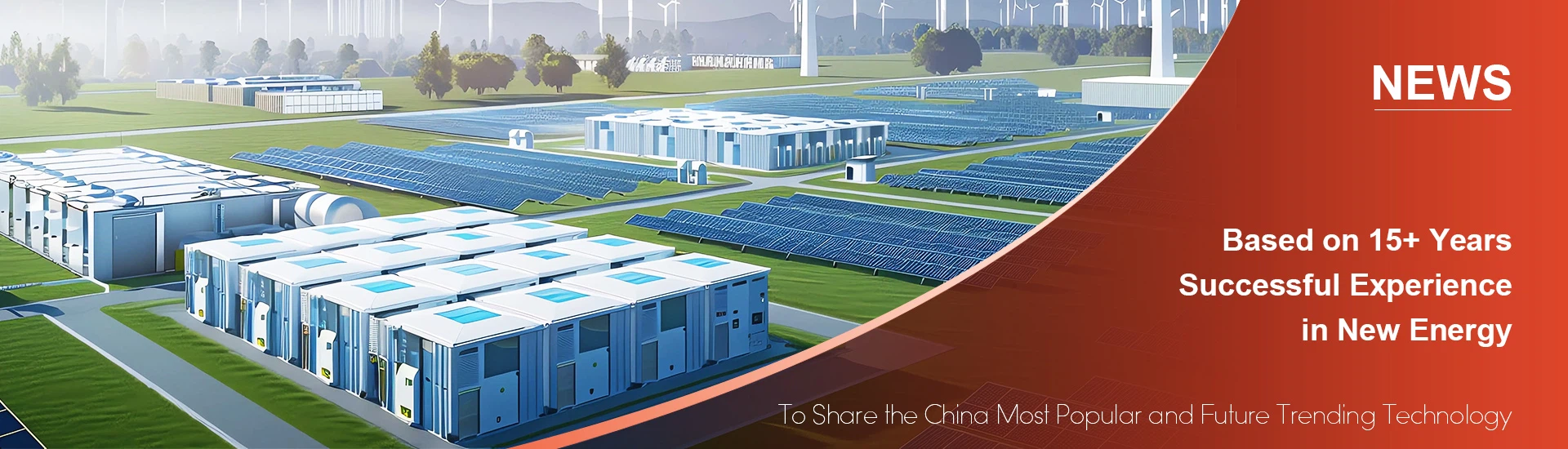
Driven by the rising demand for electric vehicle (EV) charging, the increasing penetration of distributed photovoltaics (PV), and the continued expansion of industrial and commercial energy storage applications, the synergy among PV, energy storage, and charging infrastructure is strengthening. In recent years, PV-storage-charging systems have evolved from simple combinations of individual devices into integrated energy systems; their application scenarios have expanded beyond traditional charging stations to include industrial parks, commercial complexes, transportation hubs, logistics centers, and off-grid areas.
Technologically, the core of a PV-storage-charging system lies not merely in co-locating PV modules, energy storage batteries, and charging equipment at a single site, but in achieving coordinated operation among these diverse energy assets via DC buses, energy storage converters, energy management systems, and power control units.
The system dynamically adjusts energy flows based on factors such as PV generation output, energy storage state-of-charge (SoC), charging load, grid capacity, and real-time electricity prices. This optimizes renewable energy utilization and mitigates the instantaneous impact of high-power charging on the power distribution system.
Evolution from Individual Device Combinations to Integrated Systems
Early EV charging infrastructure relied primarily on direct grid power, with charging equipment operating independently of PV and energy storage systems. As charging power levels rose, traditional power distribution models faced constraints related to transformer capacity, distribution lines, and peak load demands. Consequently, integrating energy storage to buffer power-combined with PV generation to supply green electricity-has emerged as a vital system architecture, particularly in scenarios with limited existing distribution capacity.
In this setup, the energy storage system acts as an energy buffer and power regulator. It can meet instantaneous power demands when charging loads spike and store surplus energy during periods of low load or high PV generation. In regions with time-of-use (ToU) electricity pricing, energy storage systems can also coordinate charging and discharging schedules based on energy management strategies.
In terms of product structure, PV-storage-charging systems currently on the market generally fall into two categories: highly integrated "all-in-one" products and solutions comprising separate, modular components. Integrated solutions typically feature a high level of integration among energy storage batteries, power conversion units, power distribution, charging infrastructure, and control modules, thereby reducing the number of on-site components and connection points.
In contrast, split-system solutions involve configuring photovoltaic, energy storage, charging, and power distribution equipment separately based on project scale and site conditions, relying on an energy management platform to coordinate system operations.
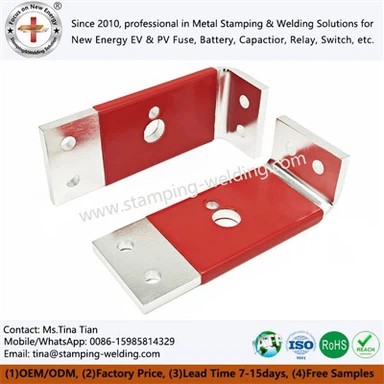
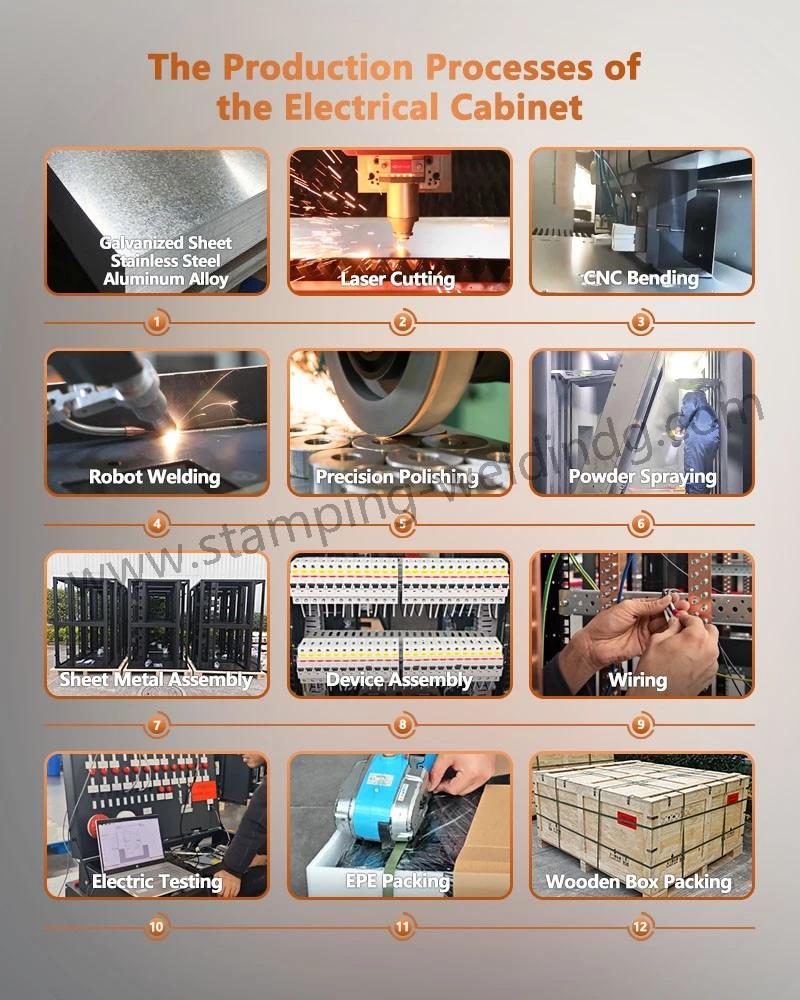
This evolution in product form has driven the development of ancillary components-such as storage cabinets, power connectors, busbar systems, insulation structures, and thermal management assemblies-toward modularity, standardization, and higher integration.
Energy storage systems serve as a crucial foundation for the coordinated operation of solar-plus-storage-plus-charging systems.
In solar-plus-storage-plus-charging systems, energy storage equipment not only stores electrical energy but also directly influences the system's power response capabilities and operational stability. As energy storage capacity and power ratings increase, these systems are evolving from simple battery cabinets into comprehensive units that coordinate multiple subsystems, including batteries, PCS (Power Conversion Systems), power distribution, fire suppression, thermal management, and EMS (Energy Management Systems).
Typical LiFePO4 battery energy storage systems utilize modular battery units, connecting multiple modules in series and parallel to achieve the required system voltage and capacity. This modular structure facilitates transportation, installation, and maintenance, while also allowing for system capacity expansion based on project requirements.
For applications in equipment rooms, industrial parks, and industrial facilities, modular battery energy storage systems can be flexibly configured to suit available space and load demands. System design must account for factors such as battery capacity, peak charge/discharge power, cycle life, ambient temperature, and maintenance clearance, rather than determining equipment specifications based solely on battery capacity.
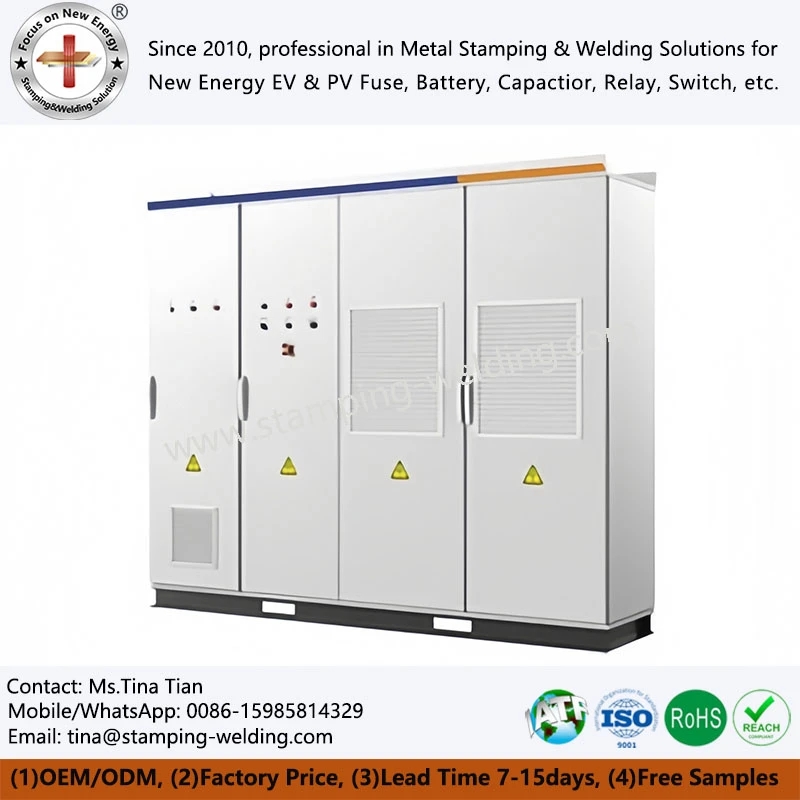
With further advancements in system integration, some units house batteries, PCS, power distribution systems, thermal management, and fire suppression systems within a single cabinet. These integrated commercial and industrial energy storage cabinets are suitable for industrial parks, commercial buildings, and small-to-medium-sized new energy sites, as they reduce on-site installation work and shorten deployment timelines.
The structural design of the energy storage cabinet impacts system safety and operational reliability
As the power and capacity of energy storage systems increase, the storage cabinet has evolved from a simple mounting structure for batteries into a comprehensive assembly that supports electrical connections, thermal management, and safety protection functions.
The interior of an energy storage cabinet typically accommodates battery modules, busbars, circuit breakers, fuses, contactors, data acquisition systems, and high/low-voltage connection components. Adequate insulation and creepage distances must be maintained between various electrical modules; additionally, factors such as wiring harness routing, maintenance clearance, and heat transfer paths must be considered.
For outdoor applications, the enclosure must withstand environmental factors such as rain, dust, salt spray, solar radiation, and temperature fluctuations. Consequently, outdoor cabinet-type energy storage systems typically require designs that incorporate sealing structures, anti-corrosion treatments, thermal management systems, and specific ingress protection (IP) ratings.
In coastal, high-humidity, or heavily polluted industrial environments, the choice of enclosure materials and surface treatments is critical.
Stainless steel outdoor energy storage enclosures leverage the material's inherent corrosion resistance to mitigate structural risks associated with long-term environmental exposure; however, the specific material selection still requires a comprehensive evaluation based on strength, cost, weight, manufacturing processes, and site conditions.

Air cooling and liquid cooling have emerged as key technical approaches for various energy storage scenarios
During the operation of energy storage systems, heat is generated by battery cells, the Power Conversion System (PCS), and other power components. As system energy density increases, thermal management has become a crucial factor influencing the long-term operation of energy storage equipment.
Small-to-medium-sized energy storage units often utilize air-cooling solutions, dissipating heat via air ducts, fans, and heat exchange structures. This approach offers a relatively simple structure and ease of maintenance, making it well-suited for certain commercial and industrial energy storage applications. For instance, a custom 215 kWh integrated air-cooled energy storage cabinet allows for the integrated design of battery modules, air ducts, and power distribution components tailored to specific project capacities and site constraints.
For high-energy-density and high-power energy storage systems, liquid cooling solutions offer advantages in temperature uniformity and thermal management efficiency by using coolant to directly remove heat generated by battery cells and power components. Products such as liquid-cooled integrated energy storage cabinets for wind power applications are primarily designed for wind, solar, and large-scale new energy storage scenarios.
Regardless of whether air cooling or liquid cooling is employed, thermal management design must be considered in conjunction with battery layout, electrical connections, and the enclosure structure. Localized hotspots can impair battery performance and accelerate material degradation; therefore, temperature monitoring, thermal balancing, and fault warning mechanisms must be integrated into the overall system design.
Solar-plus-storage and DC coupling drive system integration
Another significant trend in the development of solar-storage-charging systems is DC-side coupling. In traditional systems, photovoltaic (PV) power must pass through an inverter to connect to the AC grid before undergoing further energy conversion via charging equipment or energy storage systems; this process often entails multiple stages of power conversion.
In contrast, DC-coupled architectures enable energy coordination among PV generation, energy storage, and charging loads directly on the DC side, thereby eliminating certain conversion steps. For high-power DC charging and energy storage applications, this architecture helps shorten energy transmission paths and enhances the system's overall power management efficiency.
"All-in-One" PV-storage-charging system cabinets typically feature an integrated design that combines PV inputs, energy storage units, power conversion, and energy management functions, allowing the equipment to dynamically dispatch energy between different sources based on on-site requirements.
At the same time, the power connections between the PV and energy storage sides place higher demands on components such as busbars, connectors, and insulation materials. Under high-current operating conditions, factors such as conductor cross-sectional area, contact resistance, temperature rise, and insulation clearance directly impact the system's long-term operational stability.
Outdoor energy storage applications demand superior environmental adaptability from equipment
As energy storage systems expand from indoor equipment rooms to outdoor sites, environmental adaptability has become a critical metric in product design. Outdoor energy storage equipment must withstand long-term exposure to factors such as high and low temperatures, humidity, rain, dust, salt spray, and ultraviolet (UV) radiation.
The structural design of outdoor energy storage cabinets requires a comprehensive approach that balances ingress protection ratings, heat dissipation capabilities, electrical safety, and maintenance requirements. The cabinet must not only protect internal battery and electrical components but also provide adequate space for fire suppression, thermal management, and maintenance systems.
For projects paired with wind or solar power, energy storage equipment is often installed in remote areas far from urban infrastructure, making equipment reliability and remote operation and maintenance (O&M) capabilities particularly important. Systems must utilize sensors, Battery Management Systems (BMS), and Energy Management Systems (EMS) to continuously monitor battery status, temperature, voltage, current, and operational anomalies, while transmitting operational data to a central monitoring platform via communication systems.
This evolution is transforming energy storage equipment from simple "battery cabinets" into intelligent energy nodes capable of sensing, control, communication, and energy management.
PV-storage-charging systems are evolving toward intelligent dispatch capabilities
As the scale of energy storage systems grows, the importance of system control strategies continues to rise. While traditional energy storage systems primarily charge and discharge based on fixed schedules or preset power levels, next-generation energy management systems must simultaneously account for weather forecasts, photovoltaic (PV) output, load profiles, electricity price fluctuations, and battery status.
When charging demand is low and PV output is high, the system can prioritize using solar energy while storing the surplus; when charging demand surges, the storage system can supply supplemental power to reduce instantaneous load on the grid; and during periods of low electricity prices, the system can recharge based on operational strategies.
This dynamic scheduling approach signifies that the value of energy storage systems has evolved from simple electricity storage to encompass power management and energy optimization.
Concurrently, the internal power interconnection architecture of energy storage equipment must align with these dynamic operating modes. High-frequency charge/discharge cycles and high-current operation increase thermal cycling stress on busbars, connectors, and terminals; therefore, structural design must not only meet rated current requirements but also account for long-term thermal cycling, mechanical vibration, and connection reliability.
Modular design is emerging as a key trend in energy storage equipment development
Energy storage projects vary significantly by application scenario, with different customers having distinct requirements regarding capacity, power, voltage levels, installation space, and cooling methods. Consequently, modular design is becoming a crucial direction for product development in this sector.
Modular battery systems allow for the scaling of battery units based on project capacity; modular Power Conversion Systems (PCS) can be configured according to load power requirements; and modular cabinet designs reduce production and installation complexity through standardized structures.
For large-scale energy storage systems, modular design also facilitates equipment transport and on-site maintenance. If a specific battery module or electrical unit malfunctions, module-level servicing can minimize the impact on the system's overall operation.
From a structural perspective, modular design necessitates high interface consistency across cabinets, busbars, wiring harnesses, connectors, and insulation components. Standardized interfaces reduce assembly tolerances between modules and simplify operational procedures during subsequent maintenance.
Expansion of PV-storage-charging application scenarios
The application of integrated PV-storage-charging systems is currently expanding beyond traditional public charging stations into a wider range of scenarios. In commercial complexes, systems can utilize rooftop solar power combined with energy storage to reduce grid load during peak hours; in industrial parks, energy storage can balance peak and off-peak demand relative to production loads; and in logistics parks and heavy-duty truck charging stations-where high-power charging places heavy demands on distribution capacity-energy storage serves as a power buffer.
In remote areas or regions with insufficient grid coverage, energy storage can be combined with renewable sources like solar and wind to form relatively independent energy systems. Photovoltaic energy storage cabinets are well-suited for such integrated applications, using storage units to smooth out solar power output and enhance the flexibility of renewable energy utilization.
Meanwhile, high-voltage connection technology within new energy vehicle (NEV) electrical systems is also evolving. As electric vehicle platform voltages rise and charging power increases, high-voltage power distribution systems demand higher standards for busbars, insulation structures, terminals, and connection components. Consequently, the technological boundaries between energy storage and NEVs are blurring, allowing certain high-voltage electrical connection technologies to be applied across different types of energy equipment.
Industry competition is shifting from individual products to system-level capabilities
Looking at the recent evolution of solar-storage-charging products, market competition is no longer limited to metrics like storage capacity, charging power, or individual equipment specifications; instead, the focus has shifted toward system integration capabilities, energy management, operational reliability, and total lifecycle costs.
Integrated products reduce on-site installation requirements but increase the complexity of internal system design; split systems offer greater flexibility but require more sophisticated energy management and system-level coordination. Therefore, there is no single "best" approach; the choice depends on factors such as project scale, power distribution conditions, site environment, and operational modes.
In the future, solar-storage-charging systems may further integrate with virtual power plants, demand-side response mechanisms, microgrids, and electricity trading markets. This transformation will evolve energy storage units from simple storage devices into distributed energy nodes capable of participating in grid regulation.
Concurrently, internal components of energy storage cabinets-including high-voltage distribution, busbar systems, insulation, thermal management structures, and safety protection designs-will continue to undergo upgrades. For high-capacity energy storage units, balancing power density, thermal performance, electrical safety, ease of maintenance, and manufacturing consistency within limited cabinet space will be a key focus of structural engineering design.
The Solar-Storage-Charging Industry Enters a Phase of Systematic Deepening
Overall, the solar-storage-charging industry is evolving from simple equipment combinations to integrated systems, from single-function operations to intelligent dispatch, and from grid-tied applications to coordinated on-grid and off-grid operations. Energy storage systems play multiple roles-including power buffering, energy regulation, and ensuring system safety-while energy storage cabinets are transforming from simple battery enclosures into comprehensive units that integrate electrical systems, thermal management, fire protection, control mechanisms, and communication capabilities.
Future solar-storage-charging projects will require more than just a focus on battery capacity and charging power; they will demand collaborative design across multiple dimensions-such as system architecture, cabinet structure, electrical connections, thermal management, insulation, control strategies, and O&M systems-to meet the ever-increasing demands for power density and operational reliability in diverse application scenarios.
Regarding engineering procurement, the selection of energy storage cabinets and their internal electrical components should be based on a comprehensive assessment of voltage levels, rated current, capacity, cooling methods, environmental conditions, installation structures, and maintenance requirements, with priority given to verifying interface compatibility between key components and the overall system.
contact us