EV Busbar Industry Dynamics And Technology Trends: The Road To Innovation Of Core Components Of New Energy Vehicles
May 16, 2025
Products Description
The global electric vehicle busbar (EV BusBar) market is undergoing structural expansion, with a market size of US$1.724 billion in 2024, and is expected to increase to US$6.367 billion at a compound annual growth rate of 20.8% by 2031. This growth is mainly driven by the explosive growth in the production and sales of new energy vehicles. In 2022, global new energy vehicle sales exceeded 10 million, with China accounting for more than 60% of the market. The demand for upgrading battery systems, fast charging interfaces, and intelligent driving modules has become the core engine of the Automotive BusBar PET Insulation market.
In the regional market, the Asia-Pacific region has become the main growth force with a share of 69%. With the support of new energy infrastructure and policies, China's market size will account for 38% of the world in 2024, and it is expected to exceed US$780 million in 2030. The European and American markets dominate high-end applications. For example, in the precision power distribution system of aerospace, the conductive stability and anti-electromagnetic interference performance of Automotive BusBars are irreplaceable.

Technological innovation and process breakthroughs
1. Material and structure optimization
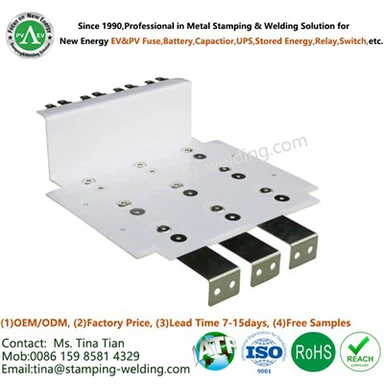
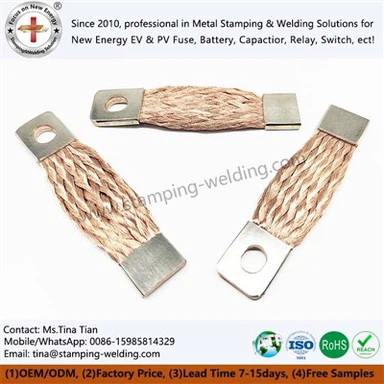
The copper-aluminum composite busbar uses metallurgical bonding technology to reduce the weight by 18% while maintaining the conductivity of copper. It has replaced some pure copper components in the high-voltage wiring harness of electric vehicles, reducing costs by 12%-15%. The all-aluminum busbar system adopts an innovative design, which can reduce weight by 40% while carrying a current of 1000A, and the charging current is increased to more than 1000A, meeting the fast charging demand of "charging for 5 minutes and driving 500 kilometers".
2. Plating technology innovation
The industry is accelerating its transformation to environmentally friendly processes. The application ratio of cyanide-free nickel plating technology (such as pulse electroplating) has increased from 25% in 2020 to 45% in 2024. While the uniformity of the plating layer has increased by 30%, the cost of wastewater treatment has been reduced by 20%. The research and development of nano-composite plating technology (such as nickel-phosphorus alloy + PTFE) has improved the wear resistance of the busbar by 50% in high temperature (above 150°C) environments, which is suitable for harsh scenarios such as industrial robot joint connections.
3. Intelligent integrated design
The intelligent busbar system integrates temperature sensors and IoT modules, which can monitor the busbar temperature (accuracy ±1℃) and current load (accuracy ±2%) in real-time, and transmit the data to the vehicle ECU via the CAN bus. When the temperature exceeds the threshold (such as 85℃), the system automatically triggers load reduction protection, and the fault response time is shortened to 1/5 of the traditional system, significantly improving the safety of the high-voltage system.

Industry challenges and response strategies
1. Fluctuation of raw material prices
Driven by the demand for new energy batteries, nickel prices continue to rise. In 2024, LME nickel prices rose by 22% year-on-year. Enterprises alleviate cost pressure by signing long-term procurement agreements (covering more than 60% of raw material demand) and developing recycled nickel applications (currently recycled nickel accounts for about 35%, and it is expected to exceed 50% in 2030).
2. Environmental regulations pressure
The EU "Battery and Waste Battery Regulation" requires that the lithium recovery rate reach 80% by 2031, and the recovery rate of cobalt, copper, and other materials exceed 95%, which encourages enterprises to adopt cyanide-free electrolytes and closed-loop electroplating systems. A process improvement case shows that the energy consumption per unit product is reduced by 25%, and the wastewater recycling rate is increased to more than 90%.
3. Competition in alternative materials
Although aluminum-based busbars have cost advantages in some scenarios, BusBar automotives have significant performance barriers in high-frequency transmission (such as 5G vehicle communications) and high-temperature stability (such as engine compartments). The industry has consolidated its market position by developing high-conductivity nickel-plated alloys (such as nickel-cobalt alloys), and its current density is 15% higher than that of traditional nickel-plated products.
Application field expansion and future trends
1. New energy and high-end manufacturing
Battery system: The application of Auto Bus Bars in battery module connections has increased by an average of 28% per year, and a single GWh battery production capacity requires about 1,000 tons of pre-nickel-plated materials for key components such as battery housings and connectors.
Fast charging interface: The 800V high-voltage fast charging system promotes the popularization of double-layer nickel-plated busbars (bottom nickel barrier layer + upper pure nickel layer), and the salt spray test time is extended from 720 hours in traditional processes to more than 1200 hours, meeting the requirements of safe operation in extreme environments.
Intelligent driving: The New Energy Vehicle Film Capacitor BusBars in millimeter-wave radar and lidar modules use nano-composite coating technology (nickel-phosphorus alloy + PTFE), which maintains low loss in high-frequency signal transmission (signal attenuation ≤3dB) while withstanding high-frequency vibrations during vehicle driving (vibration frequency 50-2000Hz).
2. Intelligence and sustainable development
In terms of the circular economy, the recycling rate of recycled nickel has increased from 30% in 2020 to 42% in 2024. Some companies have established a closed-loop industrial chain from waste recycling, and refining to remanufacturing, reducing production energy consumption by 30%. The integration of intelligent technology has upgraded the Tin-plate Busbar Automotive from a simple conductive component to an intelligent node with real-time monitoring and early warning functions, and the response time has been shortened to 1/5 of that of the traditional system.

Regional policies and market impact
1. Asia-Pacific region
China's "dual carbon" policy promotes new energy infrastructure. In 2024, the newly added wind power and photovoltaic installed capacity will reach 65GW and 216GW respectively, directly driving the demand for EV battery busbars in inverters and energy storage systems. India's "Smart City" plan and the transfer of the Southeast Asian electronic manufacturing industry are expected to exceed US$120 million in the Southeast Asian market in 2025.
2. European and American markets
The subsidies for clean energy projects in the US "Inflation Reduction Act" have stimulated the application of BusBar Automotives in energy storage systems, and the number of related orders in 2024 increased by 30% year-on-year. The EU's "Green New Deal" requires that renewable energy account for 45% by 2030, which will promote the penetration rate of Busbar Connectors in offshore wind power converters to more than 60%.
Conclusion
As the core component of power transmission for new energy vehicles, EV busbars have shown strong vitality in the wave of lightweight, intelligent, and sustainable development. Despite raw material fluctuations and environmental challenges, the industry continues to make breakthroughs through technological innovation (such as copper-aluminum composite busbars, and nano-plating) and market expansion (new energy infrastructure, smart driving). In the future, with the popularization of 800V high-voltage platforms and the upgrading of flash charging technology, the application of Automotive Bus Bars in battery systems, fast charging interfaces and smart modules will be further deepened, becoming a key support for the new energy vehicle industry chain.
contact us