Hot Punching
Aug 11, 2023
Introduction
——
Hot punching, a thermal forming technique, involves the controlled application of heat to a material followed by the precise application of force to create holes, shapes, or patterns. The material is heated to a specific temperature, rendering it more pliable and malleable. Once heated, a punch or die is brought into contact with the material, applying pressure to create the desired cut or shape. The elevated temperature softens the material's structure, allowing for clean, accurate, and efficient hole-punching or forming without excessive force. Hot punching finds applications across industries such as leather crafting, textiles, plastic fabrication, and metalworking, offering a versatile and effective method for creating intricate designs, perforations, and patterns in materials that might be challenging to work with using traditional cold-punching methods.

Process
——
- Thermal Preparation: The process begins by heating the material to a specific temperature, making it more pliable and easier to manipulate.
- Precision Tooling: A specialized punch or die, designed to create the desired hole or shape, is brought into contact with the heated material.
- Controlled Force: Pressure is applied to the material using the punch or die, which is precisely guided to create the intended cut, hole, or shape.
- Material Softening: The elevated temperature of the material enables it to be deformed with less resistance, resulting in cleaner cuts and shapes without requiring excessive force.
- Intricate Designs: Hot punching allows for intricate and detailed designs, perforations, or patterns that might be challenging to achieve using traditional cold-punching methods.
- Materials Suitability: Hot punching is particularly effective for materials that are difficult to work with using cold-punching techniques, such as thick leather, textiles, plastics, and certain metals.
- Applications Across Industries: This technique finds applications in diverse industries like leather crafting, textiles, plastic fabrication, and metalworking, offering a versatile solution for creating precise and intricate cutouts and patterns.
- Enhanced Efficiency: The softened material and controlled force contribute to greater efficiency, reduced material waste, and improved final product quality.
- Consistency and Accuracy: Hot punching ensures consistent and accurate results, enabling manufacturers to create high-quality products with intricate designs.
- Adaptability: The process can be tailored to suit various materials and design requirements, making it a versatile method for achieving specific aesthetic or functional outcomes.
Advantages
——
- Enhanced Material Formability: Heating the material prior to punching improves its malleability, allowing for easier deformation and intricate shaping, even in thicker or tougher materials.
- Cleaner and Precise Cuts: The softened material allows for cleaner and more precise cuts, resulting in sharp edges and well-defined shapes, which may be challenging to achieve with cold-punching methods.
- Intricate Design Possibilities: Hot punching enables the creation of intricate and detailed designs, patterns, and perforations that add aesthetic value and uniqueness to the final product.
- Reduced Material Resistance: The elevated temperature reduces the resistance encountered during the punching process, minimizing the risk of material cracking, tearing, or warping.
- Minimized Fracture Risk: The controlled application of force at an elevated temperature helps prevent fractures or splintering along the edges of the punched holes or shapes.
- Broad Material Compatibility: Hot punching is suitable for a wide range of materials, including leather, textiles, plastics, and certain metals, making it a versatile option across industries.
- Efficient Production: The process increases production efficiency by reducing the force needed for punching, resulting in faster cycle times and higher output rates.
- Lower Energy Consumption: Compared to traditional cold-punching techniques, hot punching can require less energy to achieve the desired results due to the reduced force needed.
- Less Tool Wear: The softened material places less stress on the punch and die tools, contributing to their prolonged lifespan and reducing the frequency of tool replacements.
- Consistent Results: Hot punching consistently produces accurate and uniform results, ensuring that each piece maintains the same high quality and design precision.
- Customization and Versatility: Manufacturers can easily adapt the process for different materials, shapes, and designs, offering a high degree of customization and versatility.
- Reduced Post-Processing: The improved quality of the punched holes or shapes often reduces the need for extensive post-processing, saving time and resources.
- Creative Innovation: Hot punching encourages creative innovation in product design and manufacturing by enabling unique and intricate features that set products apart in the market.
Applications
——
- Leather Crafting: In the fashion and accessories industry, hot punching is used to create intricate designs, patterns, and perforations in leather products such as belts, bags, and shoes, enhancing their aesthetic appeal and value.
- Textile Industry: Hot punching is employed in textiles to create decorative patterns, shapes, or holes in fabrics, adding unique textures to garments, home furnishings, and upholstery.
- Automotive Interiors: In the automotive sector, hot punching is used to create intricate designs and perforations in vehicle interiors, such as leather seats and steering wheel covers, elevating comfort and luxury.
- Plastic Fabrication: Hot punching is utilized in plastics manufacturing to create openings, holes, and precise shapes in plastic components used in electronics, packaging, and consumer goods.
- Stationery and Packaging: In the stationery and packaging industries, hot punching is used to create unique die-cut designs in notebooks, folders, and packaging materials, enhancing brand identity and visual appeal.
- Medical Devices: Hot punching is employed to create precise holes and shapes in medical device components, ensuring optimal functionality while adhering to stringent quality standards.
- Aerospace and Defense: In the aerospace sector, hot punching is used to create accurately aligned holes and fastener patterns in aircraft components, contributing to structural integrity and assembly efficiency.
- Footwear Manufacturing: Hot punching is integral to footwear production, creating ventilation holes, intricate patterns, and decorative elements in shoe uppers and soles.
- Crafts and DIY: In creative crafts and do-it-yourself projects, hot punching allows enthusiasts to personalize designs and add artistic elements to various materials like paper, fabric, and leather.
- Furniture and Upholstery: Hot punching is utilized in furniture manufacturing to create decorative patterns and perforations in upholstery materials, contributing to a refined and distinctive look.
- Home Décor: In home decor items such as lampshades, wall panels, and room dividers, hot punching adds artistic flair and texture through precisely punched designs.
- Outdoor Gear: In the production of outdoor equipment like tents and backpacks, hot punching helps create ventilation holes, attachment points, and reinforcing features.
- Construction Industry: In construction, hot punching is used to create openings and holes in materials such as metal sheets, roofing materials, and insulation.
- Customization and Branding: Hot punching can be employed to add branding elements, logos, and personalized designs to products, enhancing brand recognition and customer engagement.
- Environmental and Agricultural Applications: Hot punching is used in applications like mulch films and protective coverings for plants to create openings for controlled irrigation and ventilation.
- Electronics Industry: Hot punching contributes to precision hole formation in electronic components, casings, and circuit boards.
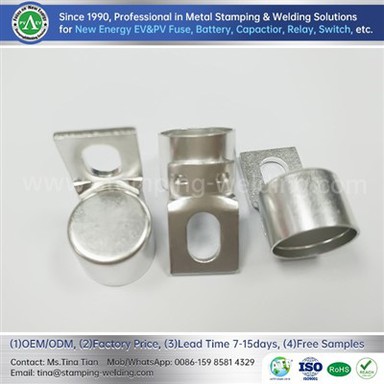
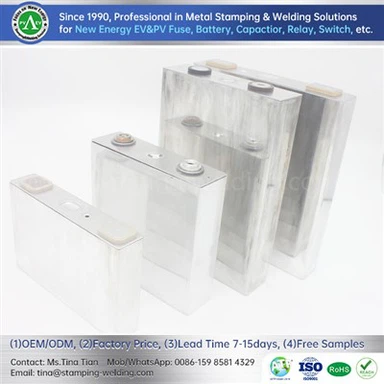
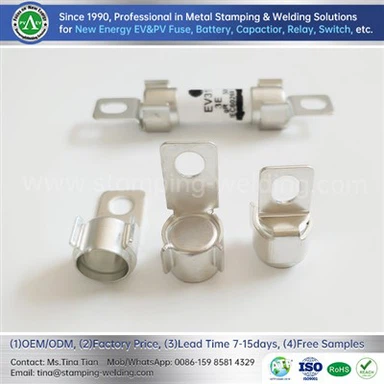
Our company is focused on top quality Copper End Cap, Fuse Terminal Contacts, (ELECTRICAL VEHICLE) EV Film Capacitor BusBar, (SOLAR POWER) PV Inverter BusBar, Laminated BusBar, Aluminum Cases for new energy batteries, Copper/Brass/Aluminum/Stainless Steel Stamping Parts, and other electrical products Metal Stamping and Welding Assembly for over 18 years in China. We started as a small operation, but now have become one of the leading suppliers in the EV and PV industry in China.
If you have any needs, please feel free to contact us and we will reply as soon as possible!