Introduction To The Composition And Functions Of Solar Cell Modules
Jul 19, 2024
Solar cells are devices that directly convert light energy into electrical energy through photoelectric or photochemical effects, often referred to as "solar chips" or "photocells". Under certain lighting conditions, they can output voltage instantly and generate current in the presence of a circuit.
Main composition and functions of solar cell modules
- Tempered glass: protects the power generation body (such as cells) and provides high light transmittance (generally above 91%). Ultra-white tempering treatment is used to ensure photoelectric conversion efficiency.
- EVA (ethylene-vinyl acetate copolymer): used to bond and fix tempered glass and cells. The quality of transparent EVA material directly affects the life and light transmittance of the module. Excellent EVA lamination process and high-quality materials can prevent early aging and yellowing.
- Cells: mainly responsible for power generation. The mainstream on the market are crystalline silicon solar cells and thin-film solar cells. Crystalline silicon cells have high photoelectric conversion efficiency and are suitable for outdoor sunlight power generation; thin-film cells work well in weak light and are suitable for indoor light sources, but the conversion efficiency is low.
- Backplane: provides sealing, insulation, and waterproof functions. Common materials include TPT, TPE, etc., which must have aging resistance to ensure the long-term reliability of the components.
- Aluminum alloy protective laminate: Provides a certain sealing and support function to protect the internal structure of the component.
- Junction box: Protects the entire power generation system and acts as a current transfer station. The key component is the diode. The corresponding diode is selected according to the type of battery in the component.
- Silicone: Used to seal the junction between the component and the aluminum alloy frame and the junction box. Silicone is widely used in China due to its simple process, convenient operation and low cost.
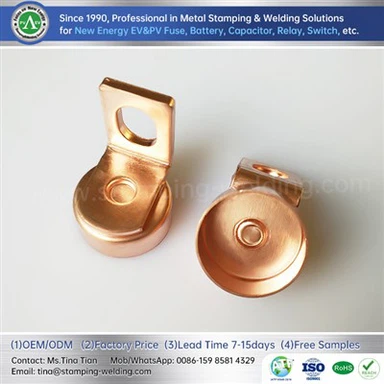
The role of the copper cap of the solar photovoltaic fuse
In the solar photovoltaic system, the reliability of the protection device is crucial. As a current protection element, the fuse can effectively prevent the system from overload or short circuit, thereby protecting the safety and stability of the entire power generation system. The copper cap in the fuse is one of the key components.
The copper cap of the solar photovoltaic fuse has the following characteristics:
- High conductivity: Ensure the smooth passage of current and improve system efficiency.
- Corrosion resistance: Copper has excellent corrosion resistance and is suitable for various harsh environments.
- Precision processing: Advanced processing technology is used to ensure the precise size and stable quality of each copper cap.
By introducing high-quality copper caps for fuses, the reliability and safety of solar photovoltaic systems can be significantly improved, ensuring long-term stable operation of the system.
The various parts of the solar cell module work together to achieve efficient power generation in the photoelectric conversion process. In order to ensure the safety and reliability of the system, high-quality copper caps for solar photovoltaic fuses are an indispensable and important component. If you are interested in our products or need more information, please feel free to visit our website for more product information:

For more information about nickel-plated solar photovoltaic fuse copper cap or to make purchases, please contact us. We are committed to providing customers with high-quality products and professional services. Welcome to inquire and negotiate.