How To Select Laminated Inverter Busbars? A Guide To Procurement And Application
Sep 11, 2026
Inside a power converter, electrical energy transmission, power component interconnection, and insulation isolation must all be achieved within a limited space; therefore, the selection of a Laminated Inverter Busbars cannot be based solely on physical dimensions or materials. For procurement professionals, selecting the appropriate laminated busbar requires a comprehensive evaluation of operating current, voltage rating, switching frequency, insulation requirements, installation space, and the actual operating environment, while also determining the conductor material, insulation layer, and connection method based on the equipment's structural design.

What is a Laminated Inverter Busbars?
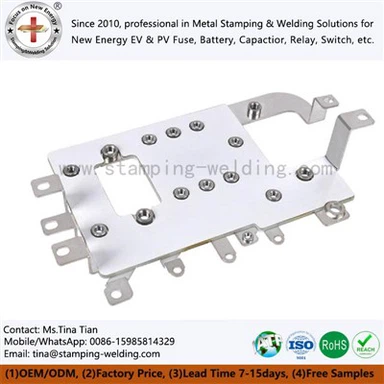
A laminated busbar is an electrical connection component formed by combining multiple layers of conductors and insulating materials into a specific structure; it is primarily used for power transmission within converters, inverters, motor drives, capacitor modules, and other power electronics equipment. Compared to traditional point-to-point wiring, laminated busbars integrate multiple electrical connections into a compact assembly, thereby simplifying internal wiring and installation.
Laminated copper busbars are a common product type, with specifications selectable based on current ratings, spatial constraints, and connection methods. For procurement professionals, the product name alone is not the sole criterion for selection; it is crucial to verify compatibility with the equipment's power modules, capacitors, terminals, and mounting structures.
How do you select laminated busbars for converters?
The selection of laminated busbars requires simultaneous consideration of both electrical parameters and mechanical requirements. Since these parameters are directly interrelated, it is recommended that procurement personnel compile comprehensive equipment specifications prior to requesting a quote, rather than simply providing a single figure for busbar length or current rating.
| Key Parameters | Points to Confirm During Procurement | Impact on Busbar Selection |
| Operating Current | Rated current, peak current | Determines conductor specifications and current-carrying capacity |
| Operating Voltage | Rated voltage, insulation class | Influences insulation materials and interlayer structure |
| Switching Frequency | Operating frequency, mode of operation | Affects current path and structural design |
| Installation Space | Dimensions (L/W/H), hole locations, terminal positions | Determines product form factor and connection structure |
| Operating Environment | Temperature, humidity, and installation setting | Influences material and surface treatment choices |
| Procurement Quantity | Sample and mass production requirements | Affects manufacturing methods and production planning |
For high-current converters, laminated flexible busbars can accommodate certain installation misalignments and equipment vibrations through their flexible connection zones; meanwhile, high-current applications require a careful assessment of conductor cross-sectional area, temperature rise, and connection structure. The specific dimensions of a laminated busbar for a high-current inverter cannot be determined solely based on the product name but must be confirmed in light of actual operating conditions.
Voltage ratings directly dictate the insulation structure. For equipment requiring specific inter-layer insulation and protection, appropriate insulation solutions-such as Varnished Insulated Busbar (VIB)-can be selected based on actual operating conditions. When requesting a quote, it is essential to specify the rated voltage, insulation requirements, and operating environment so that the supplier can determine the suitable materials and structure.
Need help matching current, voltage, insulation, and installation requirements?
Request Custom Busbar Design & Quote

The switching frequency is just as important as the power device connections
For converters utilizing power devices such as IGBTs, busbars not only facilitate current transmission but must also maintain proper connections with components like power modules and capacitors. Laminated busbars for IGBT-based motor drives typically require customization based on factors such as power module placement, DC terminal connections, and internal equipment space.
When the product is intended to connect capacitors and power modules, key considerations include terminal locations, mounting hole positions, and overall dimensions. For instance, when procuring laminated busbars for this application, it is essential to verify capacitor specifications and IGBT mounting positions, as well as check for potential physical interference between the busbar and other components.
For high-frequency or fast-switching applications, the design of laminated busbars for motor drives must also account for current paths and structural layout. While procurement personnel do not need to perform complex electrical calculations themselves, providing suppliers with basic data-such as operating frequency, rated current, and product structure-can significantly improve the efficiency of the selection process.
What information needs to be provided for a procurement inquiry?
To enable suppliers to quickly assess product structure and manufacturing feasibility, it is recommended that procurement personnel provide at least the following information during the inquiry stage:
First, electrical parameters, including rated voltage, operating current, peak current, and necessary insulation requirements; second, structural parameters, including product dimensions, mounting hole locations, terminal positions, and 3D spatial constraints; third, operating conditions, including operating temperature, environmental conditions, and equipment type; and fourth, procurement requirements, including sample quantities, projected production volumes, and delivery schedules.
For instance, regarding a laminated busbar for high-frequency welding power IGBTs, in addition to standard dimensional and current specifications, the operating frequency and running conditions should also be provided. For specialized applications-such as laminated busbars for spacecraft power inverters-requirements concerning weight, space, and reliability must be further clarified.
In the case of rail transit equipment, the selection of a busbar for an electric locomotive requires consideration of the equipment's internal space, long-term operating conditions, and installation method. Therefore, a single busbar design cannot simply be replicated across all types of equipment; the actual application scenario serves as a crucial basis for procurement selection.
How do you choose a supplier for laminated busbars?
When selecting a supplier for Laminated Inverter Busbars, procurement professionals should look beyond price quotes and focus on the supplier's capabilities in product design, manufacturing, and quality control. This is particularly critical for custom products; a supplier's ability to provide end-to-end support-from drawing verification and prototyping to mass production-directly impacts the project's development timeline.
Busbars for power electronics equipment typically involve multiple processes, including conductor fabrication, insulation, stamping, bending, CNC machining, and assembly. Consequently, a supplier with comprehensive manufacturing capabilities can reduce coordination costs between different production stages and better ensure dimensional accuracy and batch-to-batch consistency.
For projects involving new energy, power distribution, or specialized structural applications, it is also essential to verify whether the supplier can provide complete customization solutions. For instance, busbar solutions for power distribution must not only meet electrical conductivity requirements but also align with the equipment's internal mechanical mounting and electrical connection structures.
When evaluating potential suppliers, consider focusing on the following areas:
- Custom design capabilities: Ability to optimize the busbar structure based on equipment drawings and specific operational parameters.
- Manufacturing capabilities: Proficiency in insulation, stamping, bending, CNC machining, and relevant assembly processes.
- Prototyping and mass production capabilities: Ability to transition smoothly from sample validation to volume delivery.
- Quality control capabilities: Implementation of robust inspection procedures covering dimensions, electrical performance, and visual quality.
Looking for a supplier capable of engineering, prototyping, and volume production?
Get a Custom Busbar Engineering Evaluation

Why are power converters better suited for custom laminated busbars?
The internal structure of power converters is typically highly customized, with the layout of power modules, capacitors, and connection terminals varying by equipment model. Consequently, the design of laminated busbars focuses not merely on altering dimensions, but on achieving comprehensive alignment with the equipment's internal electrical connections and mechanical mounting requirements.
In the new energy sector, laminated busbars for PV inverters and DC-link power capacitor applications must be designed based on specific current, voltage, spatial, and interface parameters. For capacitor connections-specifically those involving polypropylene film dielectric DC support capacitors-insulation structure and mounting methods are critical design considerations.
Regarding the integrated connection between IGBTs and capacitor banks, laminated busbars eliminate the need for the discrete components found in traditional connection methods, resulting in a more compact internal structure. For procurement decision-makers, the value of custom laminated busbars lies in their ability to align with equipment architecture, enhance assembly efficiency, and minimize the need for subsequent modifications-offering benefits that extend far beyond mere changes to product appearance.
Contact Us
Selecting a Laminated Inverter Busbars for a power converter is essentially a matter of balancing electrical parameters, mechanical space constraints, insulation structure, and manufacturing capabilities. By clarifying key specifications-such as voltage, current, frequency, dimensions, interfaces, and operating environment-at the outset, procurement teams can more efficiently identify suitable products and suppliers while minimizing the risk of future design changes.
If you are seeking a custom laminated busbar solution, please provide your product drawings, electrical parameters, and installation requirements; we can then assist in determining the optimal structure, materials, and manufacturing approach based on your specific application.