

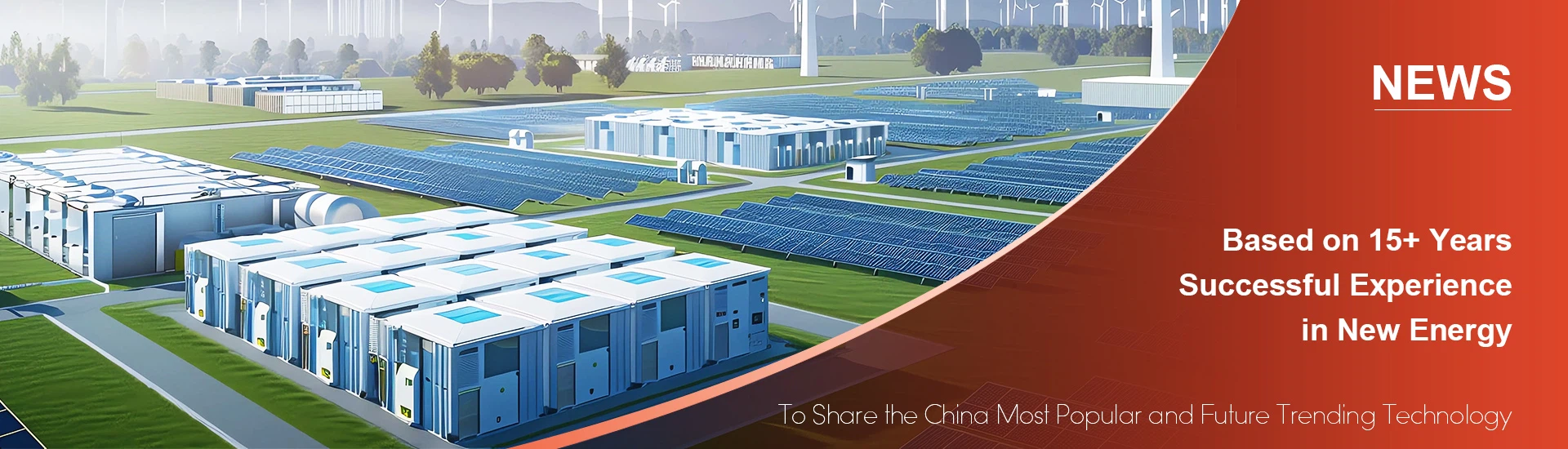
The Demand For Dual Carbon Drives The High Increase in The Installed Capacity Of Wind And Solar Power
May 08, 2022
The Demand for Dual Carbon Drives the High Increase in the Installed Capacity of Wind and Solar Power, and the Power Fuse Welcomes the Historical Development Opportunity.
Photovoltaic wind power: It is estimated that the global photovoltaic fuse market will have a CAGR of more than 20% in 2020-2025, and my country's wind power installed capacity center is expected to reach 50-65GW
In terms of photovoltaics, with the support of the "dual carbon" policy goal, my country's newly installed photovoltaic capacity in 2020 will reach 48.2GW, and the global newly installed capacity will be about 126.7GW, which has increased compared with 2019. We believe that with the cost of photovoltaic billing gradually entering the cost range of thermal power, the advent of the era of parity and the promotion of the global "carbon neutrality" goal, the installed capacity of photovoltaics worldwide is expected to maintain a high growth trend in the future.
In terms of wind power generation, as the abundance of onshore wind power tends to gradually become saturated, the global wind power construction center has begun to migrate to offshore wind power. Offshore wind power construction has maintained rapid growth since 2015. My country has a vast marine territory. According to the assessment of the China Wind Energy Association, my country has a potential of more than 3,500GW of offshore wind resource development. As of 2020, my country's cumulative offshore wind power installed capacity is only about 10GW (3.1GW will be added in 2020), and there is still a huge follow-up. development space. It is estimated that during the "14th Five-Year Plan" period, the newly installed capacity of wind power in my country will be 50-65GW. In 2021, it is expected to add 40GW of installed capacity. By 2025, the newly installed capacity of wind power is expected to reach 80-90GW, and the CAGR is expected to exceed 20%.

Estimated market size:
The voltage levels used by photovoltaic power generation systems are mainly 1500VDC and 1000VDC. According to the statistics of China Melting Electric, a 1500VDC photovoltaic power generation system needs to be equipped with 150-180 sets of bus-side fuses and 4-8 high-current fuses for the inverter side for every 1MW of newly installed capacity. Among them, the unit price of each set of bus-side fuses is about 20 RMB, the unit price of each inverter-side fuse is about 250 RMB; a 1000VDC photovoltaic power generation system needs to be equipped with 320-400 sets of bus-side fuses and 8-12 inverter-side fuses for every 1MW installed capacity. The unit price of each set of bus-side fuses is about 10-12 RMB, and the unit price of each inverter-side fuse is about 150 RMB. In 2020, the newly installed capacity of photovoltaics in the world was 126.73GW, and the newly installed capacity in my country was 48.2GW. According to IHS data, the market share of photovoltaic power generation 1500VDC in 2019 is 74%. We assume that this ratio will remain unchanged in 2020. The global photovoltaic fuse market space is about 530 million to 750 million RMB, and the Chinese photovoltaic fuse market space is about 200 million to 280 million RMB.
With the rapid expansion of global photovoltaic and wind power installations, the reliability and efficiency of electrical connection systems within renewable energy equipment are becoming increasingly critical. In photovoltaic systems in particular, stable current transmission, lightweight structural design, and long-term corrosion resistance are essential for ensuring safe and efficient operation.
Against this backdrop, aluminum alloy components for solar panels have become an important structural and conductive solution widely used in photovoltaic modules and supporting electrical systems. Our company specializes in the manufacturing of high-precision solar panel aluminum alloy components, offering an excellent strength-to-weight ratio, corrosion resistance, and stable electrical performance. These components are designed to support the long-term reliability of photovoltaic installations, helping system integrators and equipment manufacturers improve durability, reduce maintenance costs, and enhance overall energy generation efficiency.
By combining advanced manufacturing processes with strict quality control, we provide customized aluminum alloy solutions tailored to the demanding requirements of modern photovoltaic and renewable energy applications.

contact us


