The Indispensable Edge Of Nickel-Plated Bus Bars in Power Distribution
May 23, 2025
A nickel-plated bus bar is a vital electrical component extensively utilized in numerous power distribution and electrical systems. At its essence, a bus bar is a conductive strip or bar, commonly fabricated from materials like copper or aluminum, tasked with the distribution of electrical power within a system. The nickel-plating process entails applying a thin layer of nickel onto the surface of the base bus bar material. This seemingly simple addition brings about significant enhancements to the bus bar's performance in multiple aspects, positioning it as a favored option for a wide array of electrical applications where reliability, conductivity, and durability are of utmost importance.

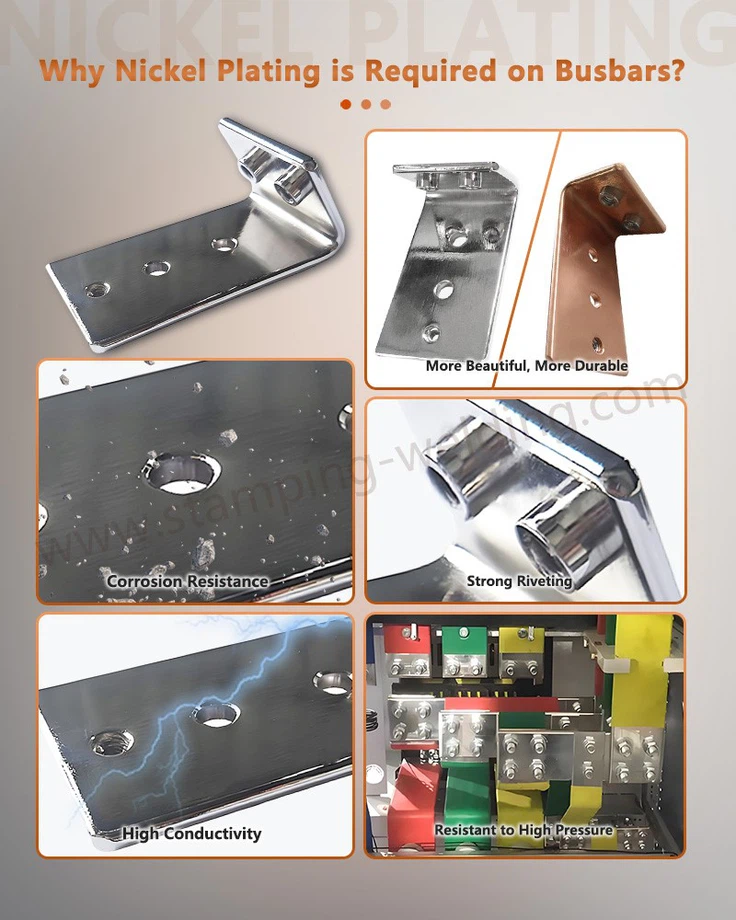
Why nickel plating is required on busbars
Aesthetic and Durability
Nickel plating makes busbars more beautiful and enhances their durability, allowing them to maintain good performance over an extended period.
01
Corrosion Resistance
It forms a protective layer that isolates the base metal from moisture, oxygen, and corrosive substances, preventing corrosion and extending the lifespan of busbars.
02
Strong Riveting
Improves the connection quality between busbars and other components, ensuring a more robust and reliable mechanical connection, reducing the risk of loosening or detachment.
03
High Conductivity
Optimizes the electrical contact surface, reduces electrical contact resistance, enables more efficient current flow, and minimizes power loss during transmission.
04
Resistance to High Pressure
Enhances the mechanical properties of busbars, enabling them to withstand mechanical stress such as pressure and maintain structural integrity and electrical performance under high - pressure conditions.
05
Performance Advantages
Exceptional Corrosion Resistance
One of the most significant benefits of nickel-plating on bus bars is the remarkable improvement in corrosion resistance. Nickel forms a dense and adherent oxide layer on its surface when exposed to air, which acts as an effective barrier against moisture, oxygen, and various corrosive substances in the environment. This protection is crucial for bus bars, as they are often installed in environments where exposure to humidity, chemicals, or salt-laden air (such as in coastal areas or industrial settings) can cause the base metal to corrode. Corrosion can lead to an increase in electrical resistance, a decrease in conductivity, and ultimately, system failures. By preventing corrosion, Nickel-plated Copper Bus Bar can maintain their electrical and mechanical integrity over an extended period, reducing the frequency of replacements and maintenance requirements.
Improved Electrical and Thermal Properties
Nickel has good electrical conductivity, and when plated on a bus bar, it provides a stable and reliable surface for electrical connections. The nickel layer helps to reduce electrical contact resistance between the bus bar and other electrical components, such as connectors or terminals. Lower contact resistance results in less heat generation during current flow, thereby improving the overall efficiency and safety of the electrical system. Additionally, nickel has good thermal conductivity, which aids in the dissipation of heat generated during operation. This property is especially important in high-power applications where effective heat management is essential to prevent overheating and ensure the reliable operation of the electrical system.
Enhanced Hardness and Wear Resistance
Nickel-plating increases the hardness of the bus bar surface, making it more resistant to wear and abrasion. In applications where the bus bar may be subject to mechanical stress, such as in moving parts or areas with frequent handling, the increased hardness provided by the nickel layer helps to protect the base metal from damage. This not only extends the lifespan of the bus bar but also ensures consistent electrical performance over time, as damage to the surface can potentially lead to electrical issues.
Aesthetic Appeal and Ease of Identification
Nickel-plated Copper Bus Bar have an attractive, uniform, and shiny appearance, which not only enhances the visual appeal of electrical systems but also facilitates visual inspection. The consistent appearance makes it easier to identify any damage, wear, or irregularities on the surface of the bus bar during routine maintenance checks. In some cases, different colors or markings can be applied over the nickel - plated surface to indicate voltage levels, current ratings, or other important information, further improving the usability and safety of the electrical system.
Applications in Different Industries
Electrical Power Distribution
In electrical power distribution systems, including substations, power plants, and industrial facilities, Nickel Plated Bus Bars play a crucial role. They are used to distribute electrical power from transformers, circuit breakers, and other power - generating or - regulating equipment to various parts of the system. Their high conductivity, excellent corrosion resistance, and ability to withstand high temperatures and electrical surges ensure stable power transmission, even in the demanding environments of power stations.
Electronics and Telecommunications
In the electronics and telecommunications industries, nickel-plated Copper Bus Bar are widely used in printed circuit boards (PCBs), server racks, and communication equipment. Their ability to provide reliable electrical connections with low contact resistance is essential for the proper functioning of sensitive electronic components. In data centers, for example, nickel-plated bus bars are used to distribute power efficiently to servers and other networking equipment, ensuring stable operation and minimizing the risk of electrical failures that could disrupt data storage and transmission.
Automotive Industry
The automotive industry relies on Nickel Plated Copper Busbars, particularly in modern electric and hybrid vehicles. These bus bars are used in battery management systems, power distribution within the vehicle's electrical system, and in the connection of various electrical components. Their lightweight (when made from aluminum) or high-conductivity (when made from copper) properties, combined with the enhanced corrosion resistance and durability provided by nickel-plating, make them suitable for the harsh operating conditions inside a vehicle, including exposure to vibrations, temperature fluctuations, and moisture.
5.4 Aerospace Industry
Aerospace Industry
In the aerospace industry, where reliability, lightweight, and high - performance are of critical importance, Nickel-plated Copper Bus Bar find extensive use. They are employed in aircraft electrical systems to distribute power, connect various components, and ensure the safe and efficient operation of the aircraft. The corrosion resistance and high - tehigh-performancemperature tolerance of Nickel Plated Copper Busbars make them well - suited for the challenging environments encountered in aerospace applications, such as high altitudes, rapid temperature changes, and exposure to harsh atmospheric conditions.
Renewable Energy Systems
In renewable energy applications such as solar power plants and wind farms, nickel - plated bus bars are essential for collecting and distributing the electrical power generated. In solar panel arrays, they connect individual solar panels to the inverter systems, while in wind turbines, they are part of the electrical infrastructure within the nacelle and the connection to the power grid. Their durability, reliable electrical performance, and ability to withstand outdoor environmental factors ensure the continuous and efficient operation of renewable energy systems.
Future Trends
Development of Advanced Plating Technologies
Ongoing research aims to develop more advanced nickel-plating technologies that can offer improved performance and efficiency. This includes the exploration of new electrolyte formulations for electroplating that can reduce the environmental impact, increase the plating speed, and enhance the quality of the nickel coating. New techniques may also be developed to achieve even thinner and more uniform coatings while maintaining or improving the corrosion resistance, electrical, and mechanical properties of the bus bars.
Integration with Smart Monitoring Systems
As the trend towards smart electrical systems continues to gain momentum, there is a growing potential for integrating sensors or monitoring devices directly into Nickel Plated Copper Busbars. These sensors could be used to monitor parameters such as temperature, electrical current, and the integrity of the nickel coating in real-time. The data collected could be utilized to predict potential failures, optimize system performance, and enable proactive maintenance, thereby further enhancing the reliability and safety of electrical systems.
Increased Focus on Sustainability
With the rising global emphasis on environmental sustainability, there will be an increased focus on making the production of nickel-plated bus bars more eco-friendly. This may involve using recycled materials for the base bus bars, developing more environmentally friendly plating processes that reduce the use of hazardous chemicals and minimize waste generation, and improving the recyclability of the bus bars at the end of their lifespan.

contact us