


The Technical Analysis Of Ceramic High-Voltage DC Contactors: Vacuum Arc Quenching, Ceramic Insulation, And Developments in 800V High-Voltage Applications
Oct 07, 2026
As new energy vehicles, energy storage systems, and high-power charging infrastructure evolve toward higher voltages and power densities, the safe switching of high-voltage DC circuits has become a critical aspect of electrical system design. Ceramic high-voltage DC contactors-which utilize technologies such as ceramic insulation structures, vacuum arc extinguishing, and electromagnetic actuation to connect and disconnect high-voltage DC circuits-offer significant value in applications ranging from power batteries and high-voltage power distribution to charging systems and energy storage equipment.
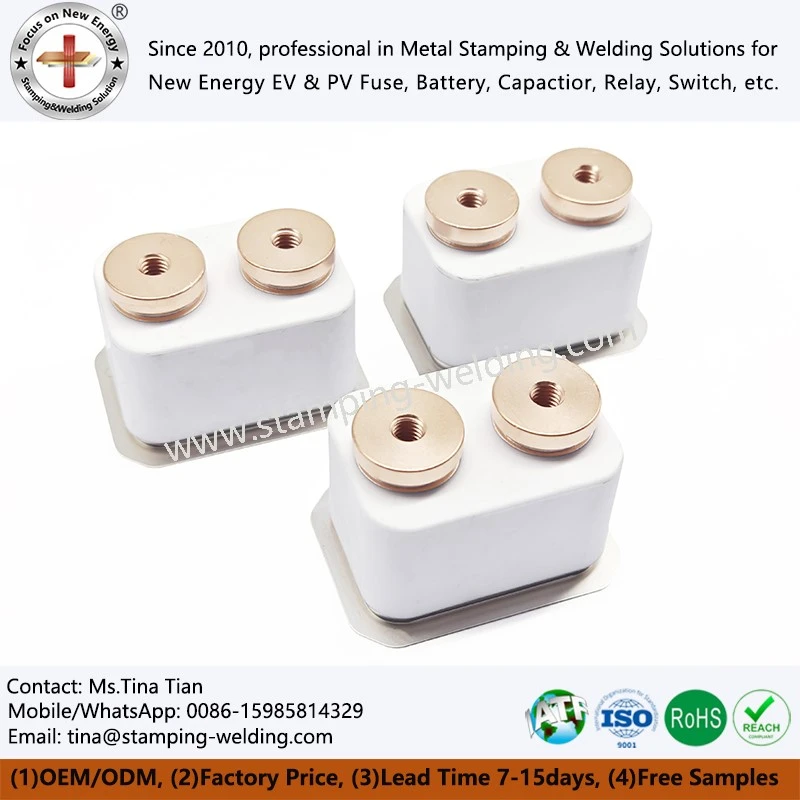
Structurally, ceramic high-voltage DC contactors typically consist of a ceramic housing, a contact system, an electromagnetic actuation mechanism, conductive terminals, and sealing components. The ceramic housing serves a dual purpose: providing internal insulation and establishing the structural foundation for the vacuum arc-extinguishing environment. When contacts separate under high-voltage DC conditions, an arc may form between them. Enclosing the contacts within a sealed vacuum chamber inhibits the conditions required for sustained arcing and mitigates the impact of contact erosion on long-term reliability.
Basic Operating Principle of Ceramic High-Voltage DC Contactors
The core function of a high-voltage DC contactor is to connect or disconnect the main circuit in response to control signals. When the control coil is energized, the electromagnetic system generates a driving force that moves the movable contact toward the fixed contact, establishing a stable conductive path; conversely, when the control signal is removed, the actuation mechanism separates the contacts, thereby interrupting the main circuit.
Unlike standard low-voltage relays, high-voltage DC contactors must simultaneously address challenges related to insulation, arc extinguishing, current-carrying capacity, and sealing. This is particularly critical in DC circuits, where the absence of a natural current zero-crossing point makes it difficult for arcs generated during contact separation to self-extinguish. Vacuum arc-extinguishing structures shorten arc duration; when combined with optimized contact materials, contact spacing, and magnetic circuit designs, they enhance high-voltage DC switching capabilities.
Ceramic materials play a vital role in providing both insulation and mechanical support within this structure. High-purity alumina is widely used for the insulating housings and structural components of high-voltage vacuum electrical devices due to its excellent insulation properties, heat resistance, and dimensional stability. Depending on the product structure and electrical requirements, certain components require additional metallization to ensure a reliable connection between the ceramic and the metal conductor.
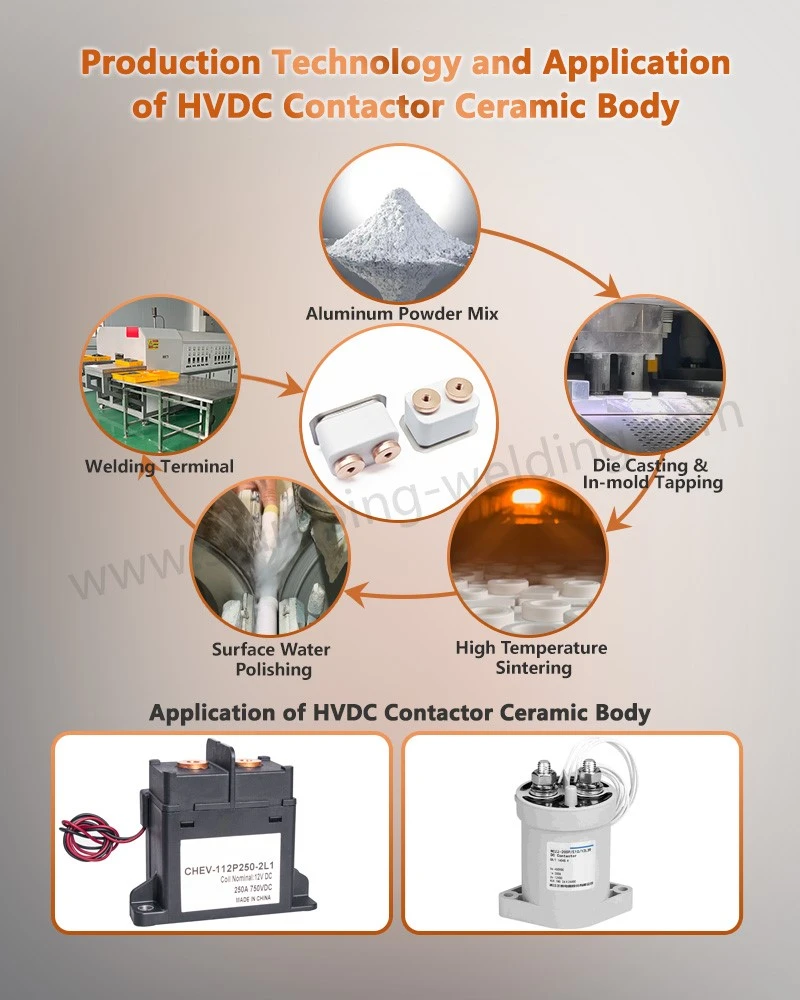
The manufacturing of high-voltage electrical components-such as those utilizing alumina metallized ceramics-typically involves processes including ceramic forming, sintering, surface treatment, metallization, and subsequent joining. The adhesion strength, hermeticity, and dimensional accuracy of the metallized layer directly impact the long-term operational stability of the contactor.
The Role of Ceramic Materials in High-Voltage DC Contactors
High-voltage DC contactors are subjected to multiple stresses during operation-including voltage, current, temperature fluctuations, and mechanical vibrations. Consequently, the ceramic materials used must not only possess excellent insulation properties but also maintain stable mechanical strength and thermal stability.
For high-voltage applications, the dimensional accuracy of ceramic insulation components is critical. Factors such as insulation clearance, creepage distance, end-structure design, and mounting position influence the product's voltage withstand capability. Localized dimensional deviations can lead to uneven electric field distribution, thereby increasing the risk of partial discharge or insulation failure.
In precision high-voltage devices, precision metallized ceramics provide a stable structural foundation for conductive terminals, sealing interfaces, and internal electrodes through the precise control of ceramic dimensions and metallization zones. Contactors requiring high assembly precision necessitate the use of processes such as precision grinding, CNC machining, and dimensional inspection to control critical mating dimensions.
While ceramic materials exhibit low thermal expansion and excellent high-temperature resistance, a mismatch in the coefficient of thermal expansion (CTE) exists between the ceramic and metal components. Therefore, structural design at the ceramic-metal interface must account for thermal stresses induced by temperature cycling. Appropriate material combinations, metallization layer structures, and brazing processes can mitigate risks such as interface cracking, delamination, and loss of hermeticity.
Ceramic Metallization and Ceramic-to-Metal Joining Technologies
Ceramic metallization is a pivotal process in the manufacture of high-voltage vacuum devices. Its primary objective is to form a metal layer on the ceramic surface that offers strong adhesion and good electrical conductivity, thereby enabling a reliable connection between the ceramic and metal terminals, flanges, or other metallic components.
Traditional ceramics lack the surface characteristics required for direct welding to metals; therefore, they typically undergo metallization before being joined via methods such as brazing. Different applications may employ various metallization systems and process routes; the actual choice depends on a comprehensive assessment of the ceramic and metal materials, operating temperature, hermeticity, and electrical performance.
The quality of ceramic metallization is typically evaluated based on factors such as metallization layer thickness, surface coverage integrity, adhesion strength, and suitability for subsequent welding. Localized defects in the metallization layer can compromise the integrity of the subsequent weld interface and adversely affect the hermeticity of the vacuum chamber.
In actual manufacturing, ceramic-to-metal joining requires strict control over interface cleanliness, braze alloy wettability, heating profiles, and cooling rates. Differences in thermal expansion between the ceramic and metal make the joint area susceptible to residual stress; consequently, process parameters cannot be determined based on the properties of a single material alone but must be optimized by considering the thermomechanical matching of the entire assembly.
800V High-Voltage Architectures Impose Stricter Requirements on Contactors
High-voltage platforms in new energy vehicles are gradually evolving from the traditional 400V class to the 800V class. Increasing the system voltage allows for lower operating currents at the same power level, thereby reducing the current load on high-voltage wiring harnesses and certain conductive components, as well as minimizing power transmission losses.
At the same time, higher system voltages mean that contactors, fuses, busbars, connectors, and insulation components must withstand greater voltage stress. High-voltage DC (HVDC) contactors must not only possess a sufficient rated operating voltage but also ensure reliable circuit interruption under conditions of abnormal overcurrent, short circuits, and emergency power-off.
For systems operating at 800V or higher, the ceramic enclosure of an HVDC contactor must meet requirements for insulation, hermetic sealing, mechanical strength, and environmental durability. Factors such as the ceramic housing's dimensions, wall thickness, internal structure, and the design of metallized areas all influence the final device's voltage withstand capability and reliability.
As system power continues to rise, contactors must also balance high-current conduction capabilities with effective temperature rise control. Electrical resistance at conductive terminals, contacts, and internal connection zones generates Joule heating; therefore, structural design must minimize unnecessary contact resistance and incorporate thermal path management to control temperature rise during long-term operation.
Precision Manufacturing Requirements for High-Voltage Contactor Ceramic Components
Ceramic components in high-voltage contactors typically serve as functional structural parts rather than simple insulating spacers. Their dimensions, surface quality, metallized areas, and connection interfaces all contribute to the component's final electrical performance.
For instance, during the manufacturing of ceramic insulating housings, molding shrinkage and sintering deformation must be strictly controlled. Dimensional changes post-sintering can impact subsequent metallization, sealing, and assembly processes, necessitating the establishment of a stable manufacturing process window.
For complex structural parts, precision machining of alumina ceramic components is employed to process mounting holes, sealing surfaces, locating surfaces, and other critical dimensions. The goal of precision machining is not merely to enhance surface finish but to ensure a stable assembly interface between the ceramic component and metal parts.
In certain high-voltage electrical assemblies, metallized ceramics must simultaneously meet requirements for electrical conduction and insulation isolation; consequently, metallized areas require clearly defined boundaries and precise dimensional control. Misalignment of the metal layer can alter effective insulation distances and affect the consistency of subsequent brazing operations.
Regarding electrical connection structures, metallized alumina ceramics for electrical components typically require further validation of interface reliability, covering aspects such as metallization layer adhesion, thermal cycling stability, withstand voltage performance, and hermeticity.
Vacuum Sealing and Reliability Control
A key feature of ceramic high-voltage DC contactors is their internal vacuum environment. The vacuum chamber provides controlled conditions for arc quenching during contact separation; thus, sealing quality directly impacts the contactor's long-term performance.
The ceramic-to-metal connection zone is a critical area of the sealing structure. Even minute interface leaks can lead to a gradual loss of vacuum during long-term operation, thereby altering arc characteristics during contact separation. Consequently, high-voltage vacuum devices typically require hermeticity testing of brazed and sealed areas.
High-strength metallized ceramic components place greater emphasis on the structural strength of the ceramic body, the bonding integrity of the metallization layer, and structural stability in complex operating environments. For new energy vehicles and energy storage equipment, components must withstand thermal cycling, mechanical vibration, and long-term electrical loads; consequently, passing individual performance tests does not fully guarantee the overall reliability of the final product.
In high-voltage systems, partial discharge is another critical concern. Surface defects on the ceramic, sharp edges, irregularities in metallized areas, and internal air gaps can all lead to localized electric field concentration. Optimizing electrode geometry, insulation spacing, ceramic surface quality, and sealing structures can reduce local electric field intensity and enhance long-term insulation reliability.
Key Application Areas for High-Voltage DC Contactors
New energy vehicles represent a major application area for high-voltage DC contactors. Within the traction battery system, contactors manage the connection between the battery pack and high-voltage loads based on the vehicle's control strategy, executing necessary circuit switching during startup, charging, fault protection, and emergency power-off scenarios.
Energy storage systems also require high-voltage DC contact and isolation capabilities. As the voltage levels of energy storage batteries rise, high-voltage DC contactors must adapt to higher system voltages, higher operating currents, and more demanding operating environments.
Charging infrastructure is another significant application scenario. High-power DC charging equipment operates continuously under high voltage and current conditions; therefore, the contactor's current-carrying capacity, breaking capacity, insulation performance, and thermal stability directly impact the equipment's operational reliability.
Additionally, high-voltage contactors are used in industrial power supplies, rail transportation, telecommunications power systems, and other power electronics applications requiring high-voltage DC switching and protection. With the development of high-power-density power equipment, the scope of application for metallized ceramics in electrical components continues to expand.
Development Trends in High-Purity Alumina and Precision Metallization Technology
Future technological advancements in high-voltage DC contactors will focus on higher voltages, higher currents, miniaturization, and extended service life. In the realm of ceramic component manufacturing, this necessitates simultaneous improvements in material purity, dimensional accuracy, metallization consistency, and the reliability of the ceramic-to-metal interface.
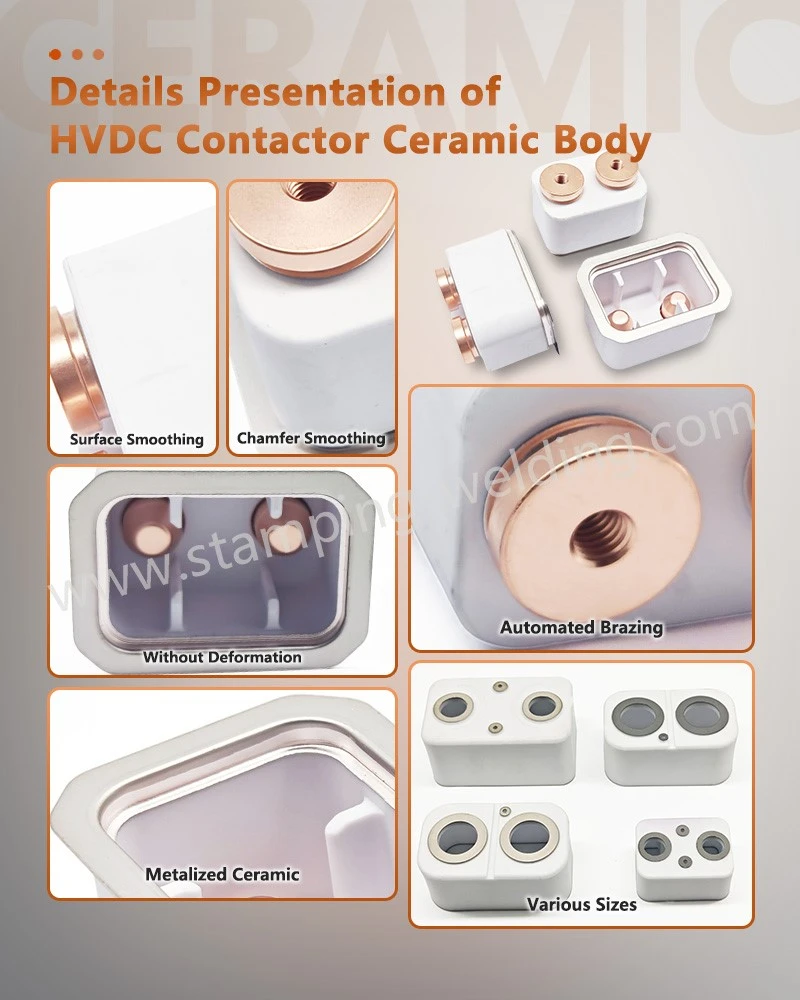
High-purity alumina offers stable insulation and mechanical properties, while precision machining capabilities further meet the requirements for complex geometries and high-precision assembly. The application of precision metallized alumina ceramic components in high-voltage vacuum devices increasingly demands dimensional consistency, stability of the metallization layer, and mass production capabilities.
For electrical systems operating at higher voltage levels, the selection of high-purity alumina precision metallized ceramic components requires a holistic assessment-considering material properties, metallization processes, sealing methods, and long-term environmental reliability-rather than relying on a single material specification to predict final performance.
From a manufacturing perspective, ceramic metallization processes are evolving toward greater stability, automation, and traceability. Process variations during mass production can be further minimized through in-line dimensional inspection, metallization quality checks, hermeticity testing, and electrical performance verification.
Overall, the development of ceramic high-voltage DC contactors represents more than just an upgrade in the electrical performance of the contactor unit itself; it is the result of simultaneous advancements across multiple technical domains, including ceramic materials, metallization, precision machining, vacuum sealing, contact systems, and electromagnetic actuation. As new energy vehicles, energy storage systems, and high-voltage power electronics continue to shift toward higher voltage platforms, the engineering value of ceramic insulation and metallization components in high-voltage DC devices will continue to rise.
For engineering procurement, selecting ceramic components for high-voltage DC contactors requires a thorough review of the ceramic material system, metallization process, critical dimensions, tolerances, voltage withstand capability, hermeticity, and the reliability of the ceramic-to-metal bond, with selections tailored to specific voltage ratings and operating environments.
contact us


