Upgraded Copper Busbar Dip Coating Process Enhances Insulation Protection Efficiency And Effectiveness in Electrical Equipment
Jul 04, 2026
In the field of electrical equipment manufacturing, copper busbars, as core conductive components, have their surface treatment processes directly determining the equipment's conductivity, operational stability, and service life. The optimization and upgrading of busbar isolation protection technology has become an important direction for technological innovation in the industry. Compared to traditional surface treatment methods, dip coating, with its superior protective performance and adaptability, has gradually become the mainstream technology for copper busbar insulation and corrosion protection. It can effectively solve industry pain points such as oxidation and corrosion of conductive components in electrical equipment, insufficient insulation performance, and poor adaptability to operating conditions, and is widely adaptable to the safe operation needs of electrical equipment in various fields.

Process Principle Analysis
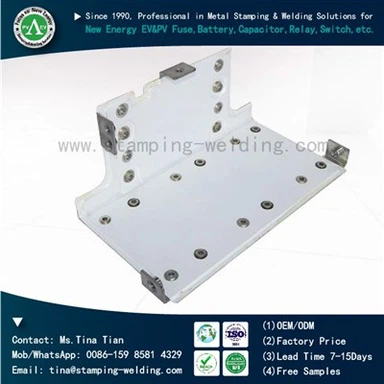
According to industry technical data, the plastic-dipping process for copper bars uses high-purity T2 copper bars as the base material, with a copper content of over 99.9%, ensuring excellent conductivity and ductility of the component itself. The core of the process involves immersing the pre-treated copper bar in molten powder material. A high-temperature hot-melt process allows the powder material to adhere evenly to the surface of the PVC Dipping Cover Copper Busbar, forming a uniform insulating protective layer of 0.1-0.5mm after curing. The Plastic Dipping Copper Bar achieves a balance between protective and conductive properties through this process. Currently, the industry mainstream uses PVC and PE as the two core coating materials. PVC focuses on enhancing insulation performance, while PE emphasizes corrosion resistance and protection. Through refined formula adjustments, the dual requirements of anti-oxidation and insulation protection for copper busbars can be met, creating PVC Insulated Copper Bar products suitable for different scenarios.

Application performance upgrade
The mature dip-coating process completely solves many technical problems in traditional copper busbar applications. In terms of protective performance, the complete protective coating isolates corrosive media such as air and moisture, significantly slowing down the oxidation and aging of the copper bar and effectively extending the service life of the core conductive components. In terms of structural adaptability, the coating can replace traditional insulating sleeves, simplifying the internal structure of electrical equipment and improving space utilization. The thin and uniform coating of the dip-insulated busbar makes it perfectly suited for common equipment scenarios such as distribution cabinets and electrical connection modules. Furthermore, the protective structure formed by this process has extremely high stability, withstanding a wide temperature range from -40℃ to 85℃, and can adapt to complex high and low temperature, and alternating dry and wet industrial conditions, solving problems such as poor weather resistance, easy detachment, and protective failure of traditional insulating components.

Strict control of quality parameters
Strict parameter control and standardized quality inspection system are the core guarantees for the stable quality of plastic-impregnated copper busbars. The industry's common process standards control the coating thickness error within a precise range, with a processing accuracy of up to ±0.1mm, and the overall weight deviation is strictly controlled within ±5%. This not only avoids the hidden danger of insulation failure caused by too thin a coating, but also eliminates the problem of too thick a coating affecting heat dissipation and equipment assembly. A full-dimensional testing mechanism is implemented in the production process, and professional testing equipment is used to complete multiple performance tests such as coating uniformity, adhesion, salt spray resistance, and temperature change resistance to ensure stable product quality in an all-round way. Custom Solid Power Bus Bar with Insulated Dipping Tube, built based on standardized technology, can accurately match the interface assembly requirements of various electrical equipment, ensuring the stability and safety of equipment operation.
Industry Development Outlook
Currently, electrical equipment is continuously upgrading towards miniaturization, high safety, and long lifespan, while the requirements for insulation protection, corrosion resistance, and high adaptability of conductive components are constantly increasing. Through continuous technological optimization and parameter iteration, the copper bar dip-coating process has consistently addressed the shortcomings of traditional conductive PVC Dipping Cover Copper Busbar in terms of insulation protection, operating condition adaptability, structural optimization, and service life. Various customized insulated dip-coated copper bar products have been widely used in core areas such as industrial electrical systems, new energy power batteries, and power transmission, providing solid technical support for the safe, efficient, and stable operation of electrical equipment, and also offering a new path for the refined manufacturing of power conductive components.
Contact Us
For customized PVC Dipping Cover Copper Busbar solutions suitable for various electrical and new energy equipment, please feel free to contact us to connect and obtain your exclusive process selection and customization services.