Aluminum mounting brackets: a comprehensive analysis of process, alloy selection, and cost control
Mar 23, 2026
Core analysis of stamping process for Aluminum mounting brackets
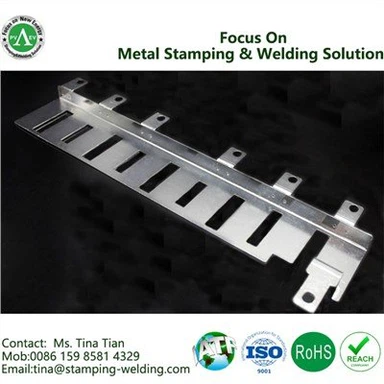
Aluminum stamping is a manufacturing process that applies pressure to an aluminum plate through a mold, causing it to undergo plastic deformation and obtain the desired shape of Aluminum photovoltaic bracket accessories. It is similar to the forging process, and the core is to use the shape of the mold to achieve precise forming of the plate. In its process, the aluminum plate is placed between a fixed mold and a movable mold that can move vertically. It is formed by the pressure of the mold closing.
After forming, additional processes such as grinding and polishing can be carried out according to precision requirements to meet strict tolerance requirements. Compared to other metal stamping methods, Metal stamping aluminum has significant advantages: it has good processability, a low melting point, and can be formed without the need for high temperature and high pressure. After cooling, its strength will be further improved; At the same time, aluminum is lightweight, high-strength, corrosion-resistant, and has excellent mechanical properties, especially its high ductility, which allows it to easily form complex structures and meet the manufacturing needs of various fields of components.

Common alloys and application adaptation
There are many types of aluminum alloys, among which 6063, 2024, and 5083 are commonly used alloys for manufacturing Aluminum mounting brackets. The performance differences of different alloys determine their different adaptation scenarios. Aluminum itself has the fundamental advantages of being lightweight, corrosion-resistant, and easy to process.
After alloying treatment, its core properties such as strength and ductility can be further optimized to meet the stringent requirements of different industries. For example, aluminum alloys commonly used in the aerospace industry can be used to manufacture wing panels and fuselage components due to their lightweight and high-strength properties.
The automotive industry utilizes the lightweight and corrosion resistance of aluminum materials, with Aluminum accessories for solar mounting used as body panels, engine parts, and more.
In the fields of electronic consumer goods, medical equipment, construction, etc., corresponding aluminum stamping alloys are also selected based on the performance requirements of components to achieve a balance between product functionality and cost-effectiveness.
Common challenges and coping methods in aluminum stamping production
During the stamping process of Aluminum alloy waterproof solar rail, it is susceptible to various production challenges due to the influence of aluminum material characteristics and process parameters, and targeted measures need to be taken. Occlusion and wear are the most common problems, and aluminum materials are prone to adhere to the surface of the mold, resulting in rough parts and shortened mold life. This can be alleviated by adding lubrication, preheating the mold, and other methods; The rebound phenomenon of Aluminum clamp hook for roof photovoltaic support is due to the lightweight nature of aluminum, which is easy to restore to its original shape after stamping and needs to be avoided by accurately adjusting the mold parameters; Wrinkles and tears are often caused by excessive compressive stress and edge pressure, and optimizing mold design and stamping speed can effectively avoid them; In addition, molds are prone to cracking in alternating cold and hot environments. Daily preheating and regular maintenance can reduce tool wear and ensure production continuity.
Summary of Industry Applications and Development
Aluminum stamping, with its efficient process, high precision of Aluminum solar panel end clamps for PV mounting, and excellent material cost-effectiveness, has deeply penetrated into multiple industries. The aerospace industry utilizes its lightweight and corrosion-resistant advantages to manufacture fuselage components, while the automotive industry relies on its lightweight characteristics to produce various components. Aluminum stamping parts are also widely used in electronic consumer goods, medical equipment, construction and other fields, covering connectors, surgical equipment, structural support and other products. Overall, the core of the development of aluminum stamping is to balance process accuracy, alloy adaptation, and cost control. By solving various challenges in production, optimizing the process and cost structure, the application scenarios of Aluminum solar middle clamp can be further expanded, helping various industries achieve lightweight, efficient, and low-cost development.

Contact us
If you have any related needs in aluminum stamping process optimization, alloy selection, cost control, or parts customization, please feel free to contact us for consultation at any time. We can rely on our professional technical team to provide Aluminum mounting brackets full process solutions that are suitable for multiple industries, helping your projects to be efficiently implemented, improve quality, and reduce costs.