


Application analysis and industry insights of busbars in new energy electric drive systems
May 15, 2026
In the electric drive system of new energy vehicles, the busbar plays a vital role as the core connection and conductive component that carries large currents. As vehicle high-voltage platforms evolve to 800V or even higher voltages, the voltage and current values of power electronic systems far exceed those of traditional fuel vehicles, which makes the application of busbars particularly critical. It not only ensures the stable transmission of current between key "organs" such as battery packs, motor controllers, and drive motors, but also effectively reduces internal resistance and power loss, thereby significantly improving the efficiency, endurance, and operational reliability of the entire power system.
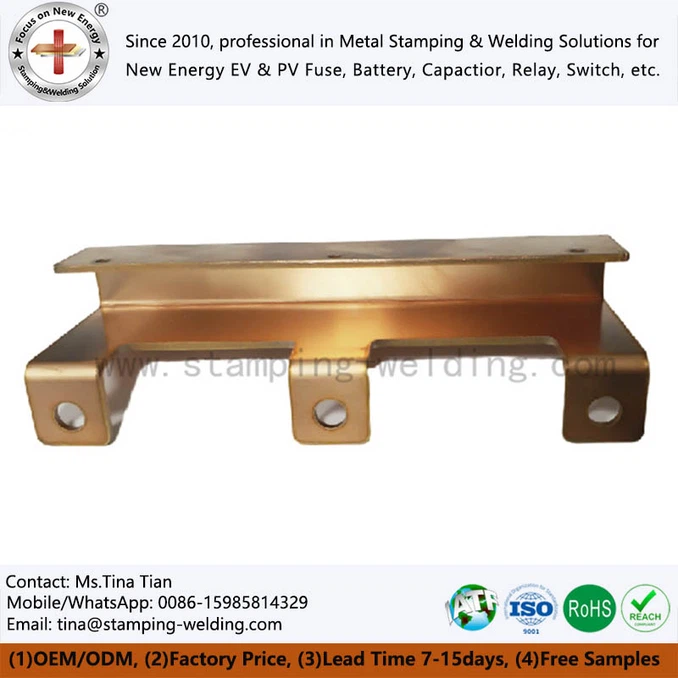
Main points of busbar design
Laminated busbar structure. The laminated busbar is a multi-layer composite structure with repeatable electrical performance, low distributed inductance, high voltage and high current resistance, low impedance, anti-interference, compact structure, etc. It is suitable for new energy vehicle systems with limited space and high performance requirements. Material selection. According to the material, it is divided into copper row and aluminum row. Copper busbars have excellent electrical conductivity and mechanical strength and are widely used; aluminum busbars contribute to lightweighting the vehicle due to their low density. Depending on the usage scenario, you can choose a soft busbar to relieve stress or a hard busbar to reduce costs.
Insulation material. PET is commonly used as the main insulation material for laminated busbars, which is cost-effective. Under special requirements, auxiliary insulation materials such as FR4 and GPO-3 can also be used. Commonly used structural forms. Including four types: resin potting, open edge, edge sealing and resin spraying edge sealing, which can be flexibly selected according to specific application scenarios. design standards. The design needs to be based on parameters such as rated operating voltage, equipment usage environment, pollution level, rated current, peak current and temperature rise. These parameters determine the conductor size and structure to ensure the safety and reliability of the busbar. For example, Tin-plate Busbar Automotive and Tin Plated Copper BusBar for EV are specifically optimized for corrosion resistance and electrical conductivity.
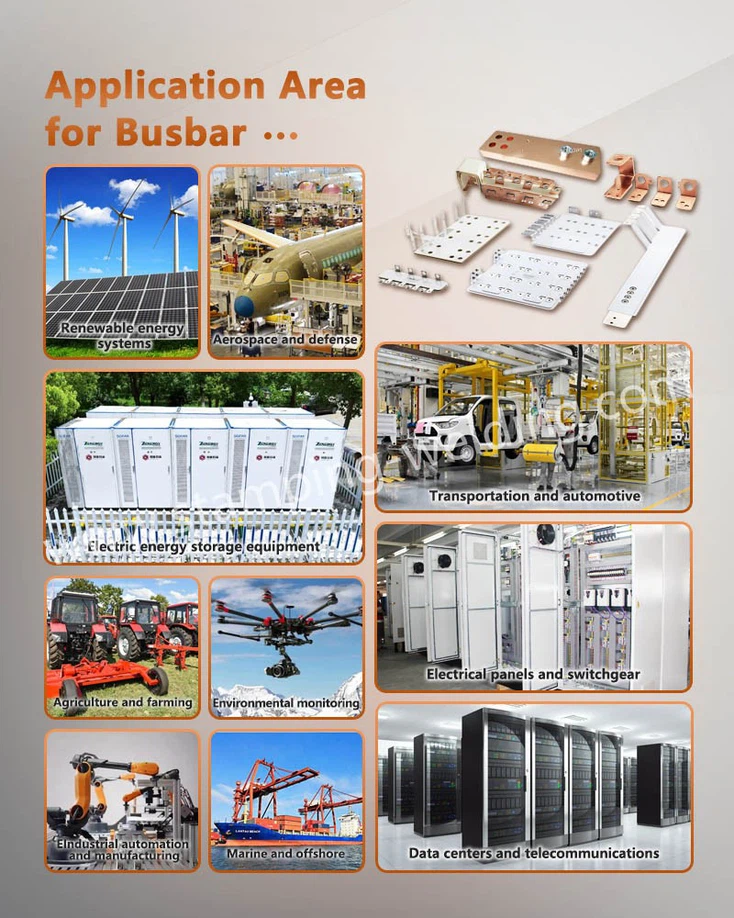
Application areas
With the rapid development of the new energy vehicle industry and the increasing electrification trend, power electronics are increasingly used in the automotive industry. As an important component in the power transmission system of new energy vehicles, laminated busbars will be used more and more widely. In the future, with the continuous advancement of technology and reduction of costs, laminated busbars are expected to play a greater role in the field of new energy vehicles and make greater contributions to the popularization and development of new energy vehicles. Capacitor Busbar's low impedance and high reliability characteristics in the connection between film capacitors and power modules will promote the development of electric drive systems towards higher power density.
Summary
With the rapid development of the new energy automobile industry and the deepening of electrification trends, power electronics technology is increasingly used in automobiles. As an important component in power transmission systems, laminated busbars have broad application prospects. In the future, with the advancement of manufacturing processes and cost optimization, busbars will play a greater role in the field of new energy vehicles, providing strong support for vehicle performance improvement and system integration.
contact us
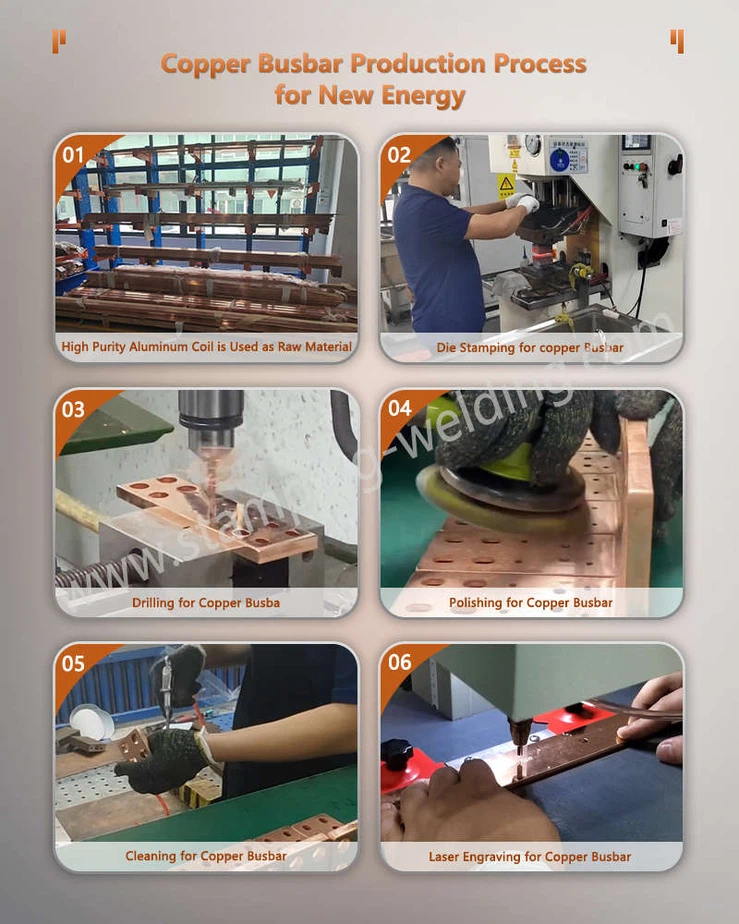
We have advanced stamping, bending, welding, surface treatment and Insulated Busbar for EV Capacitor, equipped with complete electrical performance testing, temperature rise testing and insulation withstand voltage testing equipment. New energy vehicle OEMs, Tier 1 suppliers and electric drive system R&D engineers are welcome to contact us to obtain professional technical support and product quotations.


