Core advantages and material selection process guidelines for Brass stamping small parts
Mar 27, 2026
Core performance advantages of Brass stamping small parts
Brass sheet metal stamping has demonstrated significant advantages in multiple industry applications by combining the characteristics of the material itself with stamping processes. As an efficient thermal conductor, brass can adapt to the manufacturing needs of various stamping parts related to thermal conditions; Simultaneously possessing excellent ductility and toughness, it can form high-strength and highly reliable structural components, meeting the mechanical requirements of different engineering scenarios.
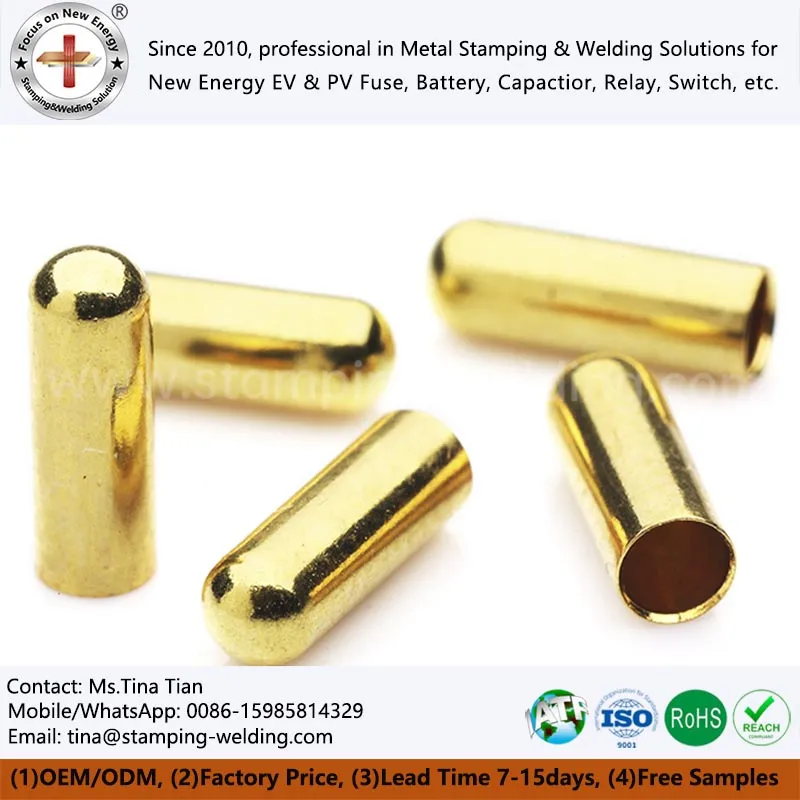
In terms of performance and appearance, the Electrical brass switch socket part can achieve outstanding corrosion resistance, combined with excellent surface flatness and polishing effect, which can meet the needs of functional components such as electrical and lighting, as well as create highly decorative parts, balancing practicality and aesthetics. In addition, brass stamping parts also have good recyclability, and can be reprocessed into new materials through recycling processes after the end of their service life, which is in line with the industry trend of green manufacturing.
Core considerations for selecting brass alloy materials
Brass alloys are mainly composed of copper and zinc, with some grades containing trace elements such as tin. Different ratios directly affect the processing and final performance of Brass stamping small parts. When selecting materials, eight core factors need to be comprehensively considered: cost needs to match the project budget to ensure that material investment is within a controllable range; Machinability determines the difficulty and efficiency of processing, and high machinability alloys can simplify production processes and reduce processing costs; The adaptability of surface treatment is related to subsequent functional upgrades, and different alloys need to be matched with corresponding processes to improve conductivity, corrosion resistance, and other properties; Weldability directly affects the reliability of multi-component connections, and high weldability alloys can avoid complex alternative processes.
Meanwhile, the bending grade determines the deformation control ability of the material in bending processing, which needs to be selected based on the bending process requirements; Tensile strength is a key indicator for high stress conditions, and sufficient strength can ensure that Electrical brass press parts for switch sockets are not easily broken under external forces; The actual application scenario is the core basis for material selection. If conductive properties are required, alloys with copper content higher than zinc content should be preferred; The formability and ductility directly affect the difficulty and cost of processing complex shapes. High formability alloys can reduce processing losses and improve production efficiency.

Core process and operating specifications for brass stamping
Brass stamping relies on multiple forming processes to achieve material conversion, and the core processes of Electrical brass metal stamping for socket switch include punching, perforation, deep drawing, and bending. Punching is the basic process for cutting brass sheet metal as the target blank, and the aperture and spacing between hole edges are key parameters that need to be strictly controlled to reduce burrs and avoid the cost and schedule increase caused by secondary processing; Perforation can be completed synchronously with material feeding, suitable for processing precision workpieces with small holes, cuts, or slots, ensuring regular hole positions and smooth edges.
Deep drawing is the core process of stamping Brass contact plug pin for electric switch socket parts. Brass sheets are drawn into structures of different depths through molds. Shallow and deep drawing can be flexibly selected according to the depth of the mold cavity, and are widely used in the manufacturing of three-dimensional parts such as cup-shaped and disc-shaped parts. The bending process needs to follow key specifications: the bending angle radius should not be less than half of the thickness of the sheet, reducing sharp angles and complex cuts to reduce the risk of burrs, avoiding bending near the hole to prevent deformation, and the width of the protruding part and the notch should be about 1.5 times the thickness of the material, usually bent after stretching to prevent reverse operation from causing deformation of the workpiece.

Industry application and process optimization direction
Relying on excellent thermal conductivity, electrical conductivity, corrosion resistance, and mechanical properties, Brass contacts crimp terminal block assembly for socket switch is widely used in energy, shipbuilding, telecommunications, medical and other fields, becoming an important raw material for electrical lighting components, ship hardware, medical equipment components, and various structural components. In the future, with the development trend of precision manufacturing and green manufacturing, the brass stamping process will be further optimized towards high precision and efficiency. By accurately matching alloy composition and process parameters, it can better adapt to the demanding needs of emerging fields such as high-end equipment and new energy, and continue to play an important role.

contact us
If you have any related requirements for material selection, process selection, or customization of Brass stamping small parts, please feel free to communicate with us at any time. We will provide professional solution matching and processing support to help you efficiently promote production projects.