Definition and core functions of NH fuse bases
Mar 31, 2026
NH fuse bases are essential base equipment in electrical systems and have been approved as standardized electrical engineering terms by the National Science and Technology Terminology Review Committee. As one of the core structural components of low-voltage fuses, it forms a complete fuse device together with the fuse link and supporting components. Its main function is to provide a stable installation platform and reliable electrical connection for fuses, while using insulation materials to achieve electrical isolation and prevent electrical contact risks.
Fuse copper holders not only protect fuses from physical damage and environmental factors, but also facilitate quick replacement after faults, which is a key link in ensuring the safe operation of circuits. With the advancement of technology, the application of new materials such as resins has significantly improved their high temperature resistance and arc resistance, making them suitable for the demanding requirements of smart grids and new energy technologies.
Structure composition and working principle
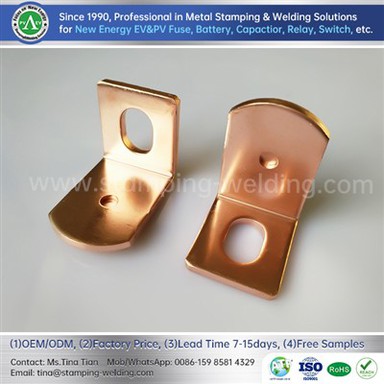
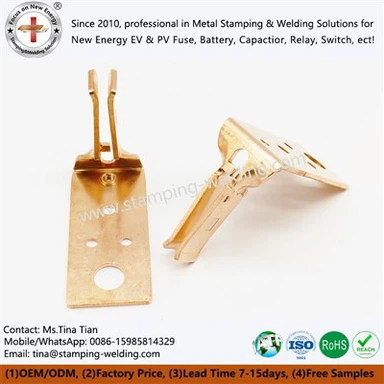
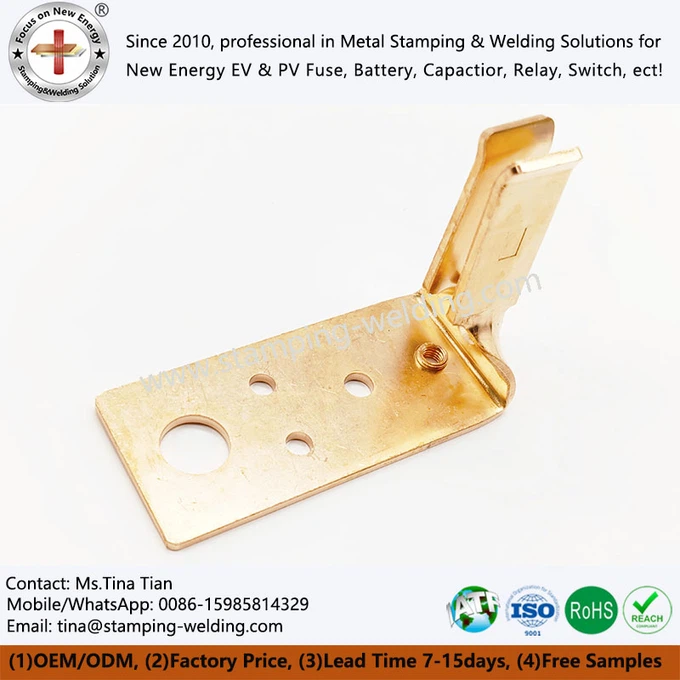
In terms of structure and working principle, NH fuse bases themselves do not directly cut off the circuit, but provide the necessary working platform for the melt. Its internal structure mainly consists of conductive sheets, insulating seats, connecting screws, and protective covers. Insulated seat supports and fixes conductive plates to achieve circuit isolation; The conductive sheet is responsible for connecting the power line and the load line to ensure the continuity of current conduction.
When the circuit is overloaded or short circuited, Fuse copper bases ensure that the fuse is firmly installed and reliably connected to the circuit, and cooperate with the melting action of the fuse to achieve circuit disconnection. In certain specific applications such as automotive circuits, the internal conductors of the base are specially designed to accurately respond to changes in current to protect subsequent equipment. After melting, the same specification fuse needs to be replaced to restore power supply.
Material selection and manufacturing process
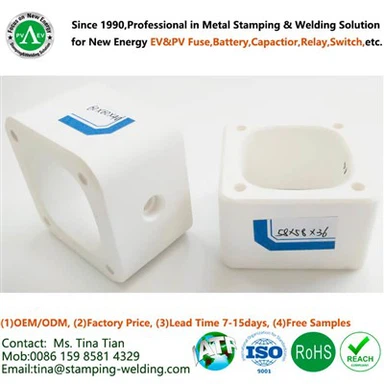
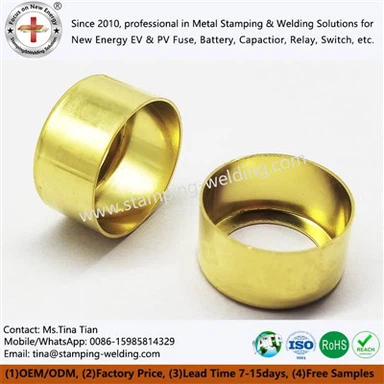
The material selection and manufacturing process directly determine the electrical performance and durability of Copper holder for fuse bases. Modern fuse bases widely use insulation materials that are resistant to high temperatures and arcs, such as ceramics, phenolic resins, or reinforced resins, to adapt to harsh electrical environments. Conductive components are usually made of high-purity copper or silver strips, and variable cross-section conductors are made through precision machining processes to optimize conductivity and thermal stability.
For special applications such as photovoltaic DC, the Copper holder for knife blade type fuse link is also filled with quartz sand as an arc extinguishing medium and designed with a fully enclosed structure to withstand the impact of high-voltage DC arcs, ensuring safety and reliability under extreme working conditions. In addition, the optimized manufacturing process also includes surface coating treatment to enhance corrosion resistance and mechanical strength.
Selection of Applications and Safety Standards
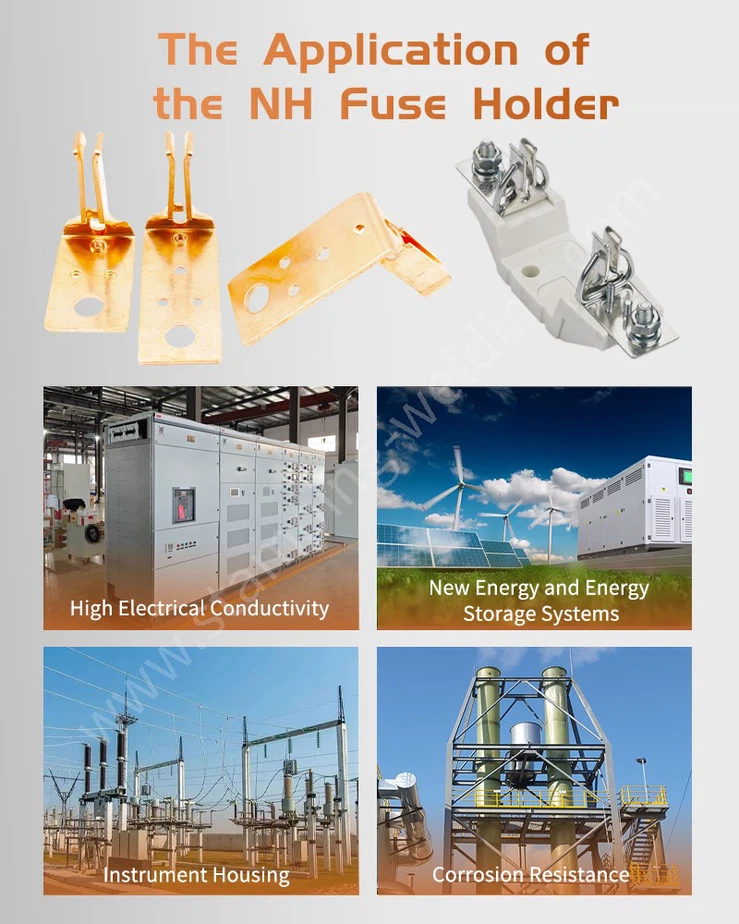
In terms of selection and application, Fuse holder for NH fuse widely serves multiple industries such as industrial automation, distribution panels, photovoltaic power generation, automotive electronics, and communication. When selecting, it is necessary to strictly follow the circuit parameters, ensure that the rated voltage and current of the base are not lower than the circuit requirements, and match the type and specifications of the fuse link. For example, photovoltaic systems require a DC dedicated base with high voltage tolerance, while industrial control cabinets tend to choose modular and compact designs to simplify installation. During the installation and maintenance process, it is necessary to comply with safety regulations and use the protective cover, locking device, and other functions provided by the Blade contact for ceramic fuse base to prevent live parts from coming into contact and ensure the safety of operation and maintenance personnel. Standardized installation procedures and regular status checks are necessary conditions for achieving long-term stable operation of electrical systems.
contact us
If you need professional technical support in specific selection or special application scenarios, our engineering team is always on standby to provide you with customized solutions for NH fuse bases. Welcome to contact us immediately for detailed product specifications and accurate quotations, to jointly build an electrical safety defense line.