Overview of Fuse copper holders technology: working principle, structure, process and selection design
Mar 31, 2026
Working principle and basic functions
Fuse copper holders, as a critical electrical connection device, have the core function of fixing and supporting fuses to provide precise overcurrent protection in circuit systems. Its working principle is mainly based on the thermal effect mechanism of fuses. When the current flowing through the circuit exceeds the rated current value of the fuse, the fuse will melt due to excessive heat accumulation, thereby cutting off the circuit.
In specific operation, the NH fuse base serves as a bridge for current transmission, and its pins need to be reliably electrically connected to the circuit board pads. The current flows into the pin through the solder pad and into the load device through the metal contact piece. Once an abnormality occurs in the circuit, the stable connection of the fuse holder ensures that the fuse can respond quickly and melt, effectively blocking the current, preventing irreversible damage to the circuit system caused by overload or short circuit, and ensuring the safe operation of electrical equipment.

Structural composition and operational standards
The structural design of Fuse copper holders is rigorous, mainly consisting of a base, fuses, and pins, which work together to ensure the stability of the circuit. The base is usually made of thermoplastic to provide necessary insulation protection and mechanical support for internal components; Fuses are often made of highly conductive metal materials such as copper and silver, and are responsible for cutting off overcurrent; The pins are the key interfaces for connecting the circuit board. At the operational level, strict regulations are a prerequisite for ensuring safety.
During installation, it is necessary to ensure that the Fuse copper base is stable, the pins are aligned with the solder pads, and appropriate soldering techniques are used to prevent virtual soldering. When selecting, the specifications of the fuse need to be accurately matched with the actual needs of the circuit. In addition, considering the pivotal position of fuse holders in circuit safety, regular inspection of their status, timely replacement of blown fuses, and troubleshooting of circuit abnormalities are necessary measures to maintain long-term stable operation of the system.
Analysis of Manufacturing Process Flow
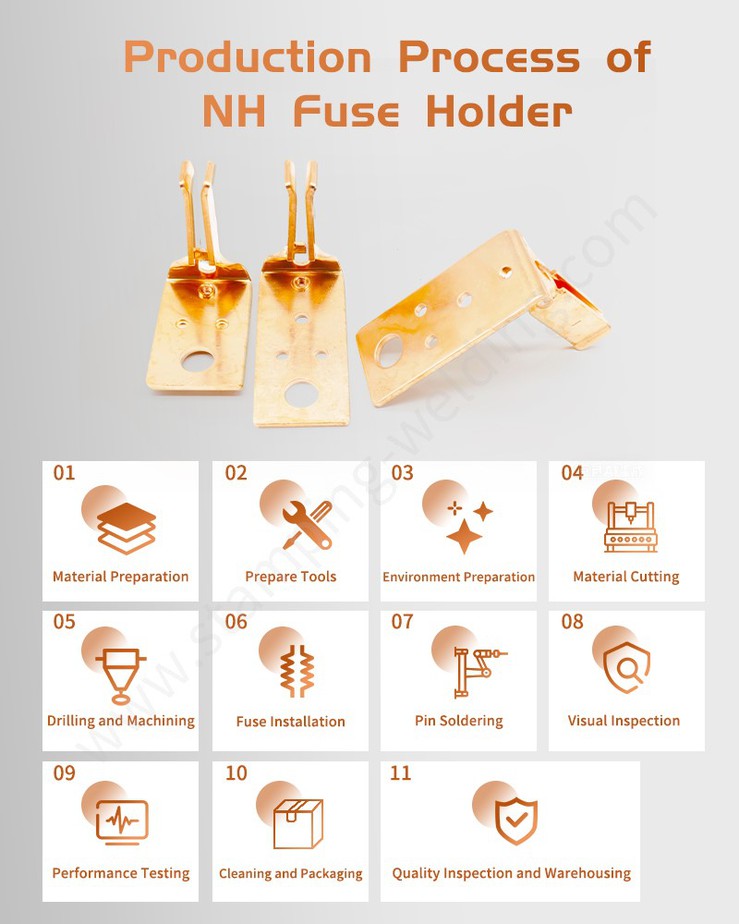
The manufacturing process of Copper holder for fuse base is interrelated, covering multiple delicate steps from material preparation to finished product warehousing. At the beginning of production, strict material and tool preparation is required, selecting insulation materials (such as ceramics, plastics) and metal accessories that meet the standards, and ensuring the cleanliness of the production environment. The processing process includes precise cutting, drilling, and deburring of materials to reserve accurate installation positions and improve appearance quality.
Subsequently, key fuse installation and pin soldering processes are carried out to ensure precise component positioning and firm soldering. After the product assembly is completed, it needs to undergo a comprehensive visual inspection and performance testing, such as withstand voltage testing and load testing, to eliminate potential defects.
Finally, after cleaning, packaging, and strict quality inspection, qualified Copper holders for knife blade type fuse links can be stored. This standardized process ensures the integrity of the product during transportation and storage, as well as its reliability during use.
Key selection parameters and design considerations
When selecting and designing a Fuse holder for NH fuse, multiple technical parameters and application environment factors must be comprehensively considered. In terms of selection, the primary criterion is the type of fuse (such as plug-in type, spiral type, etc.), and it is necessary to ensure that the base is perfectly compatible with the fuse specifications; At the same time, the current carrying capacity and voltage level must match the operating parameters of the circuit to prevent short circuits or failures caused by insufficient rated values. In addition, the impact of environmental temperature on insulation performance, the convenience of installation methods, and compliance with international certification standards such as UL and CE are all important factors that cannot be ignored when selecting.
At the application level of design, in addition to following safety standards and proper installation guidelines, it is also necessary to proactively consider the temperature, humidity, and vibration conditions of the Blade contact for ceramic fuse base working environment, reserve maintenance space and expansion capabilities, and ensure compatibility with other circuit components, in order to build an electrical system that is both safe, reliable, and easy to maintain.
Contact us
If you need more professional technical parameter advice during the selection or circuit design process of Fuse copper holders, our engineering team is always ready to provide support for you. Welcome to contact us immediately for detailed product specifications and customized solutions, and work together to build a safer and more stable electrical system.