Function and Selection Guide for NH Fuse Holder
Jan 20, 2026
The NH Fuse Holder plays a crucial role in connecting and protecting circuits, providing stable physical support for fuses and ensuring their fixed position during operation; On the other hand, a reliable electrical connection between the circuit and the fuse can be achieved. When there are abnormal situations such as overload or short circuit in the circuit, the fuse will quickly melt, and the Contact Blade can effectively isolate the faulty circuit, prevent the accident from further expanding, and ensure the safe and stable operation of the electrical system.
Fuse Copper Holders typically consist of a base and an upper cover. The base is used to secure onto the mounting plate of electrical equipment and is equipped with precise positioning holes and mounting slots for easy installation and positioning. The upper cover can be opened and closed, used to fix the fuse. There is usually a clear identification area on the cover, indicating important parameters such as rated current and voltage, which is easy for users to identify and operate. The internal contact structure is exquisitely designed to closely fit with the fuse, ensuring good electrical connection. At the same time, in order to prevent misoperation, some Fuse Holders for NH Fuses are also equipped with safety locking buckles or insulation protective covers.

Core functional positioning
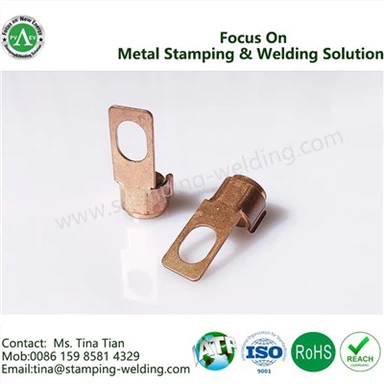
The core functions of NH Fuse Holder are reflected in three key dimensions. Firstly, it has the function of fixation and connection, which can firmly assemble the fuse and achieve a reliable connection with the circuit board and other equipment through a specific structure, ensuring the stable operation of the fuse under complex working conditions. The design rationality of Blade Contact directly affects the tightness of the connection. Secondly, it collaborates with fuses to achieve circuit protection. When the current in the circuit exceeds the rated value of the fuse, the two work together to quickly cut off the circuit, effectively resisting the impact of overload and short-circuit currents on the equipment. The conductivity of the Contact Blade plays an important role in this process. Finally, its humanized design facilitates fuse replacement. When the fuse is damaged due to a malfunction, there is no need to replace the entire fuse component; only the fuse needs to be replaced separately, significantly reducing maintenance costs and downtime. One of the core design highlights of the Knife Type Contact Blade Fuse Link Base Holder is its convenient replacement.

Core considerations for selecting a fuse base
In practical applications, the scientific selection of fuse bases requires comprehensive consideration of multiple factors, combined with precise matching of circuit parameters and usage scenarios. The size of the base is a fundamental consideration factor, usually positively correlated with the carrying current and voltage capacity. For high-power and high-voltage load scenarios, a base with an appropriate size should be selected, while ensuring that it matches the overall specifications of the load equipment. Fuse for Siemens has optimized the size design for specific power scenarios. Voltage capacity adaptation is a core requirement, and there are differences in the voltage-carrying capacity of different bases. It is necessary to strictly select according to the voltage rating of the load electrical device to avoid safety hazards caused by voltage mismatch. The material characteristics of the Contact Terminal for NH Fuse directly determine the voltage carrying capacity.
Quality and safety are the core prerequisites for selection, and products with excellent materials and mature processes should be prioritized. Fuse Blocks Holders have advantages in safety and reliability due to the excellent conductivity and heat resistance of copper materials. Dc Fuse Holder further improved the anti-aging and impact resistance of the product by optimizing the structural design. The installation method needs to comply with the equipment installation specifications and on-site working conditions. Different installation methods are applicable in different scenarios, and it is necessary to strictly follow the electrical instructions and industry standards. The structural design of the Fuse Copper Knife is adapted to the installation requirements of specific scenarios.

Summary
NH Fuse Holder is the core supporting component of circuit protection, with core functions including fixed connection, collaborative protection, and convenient fuse replacement. Selection requires comprehensive consideration of key factors such as size, voltage capacity, quality and safety, installation method, etc., combined with scenario adaptation materials and product types, taking into account cost-effectiveness and delivery time, in order to ensure the safe and stable operation of circuits and equipment. In special scenarios, attention should also be paid to the detailed design of the base. For example, the elastic design of the Fuse Clip Terminal directly affects the contact stability, while the Ceramic Fuse Holder is suitable for harsh working conditions with high temperature and strong interference due to the high temperature resistance and insulation performance of ceramic materials. In summary, the selection of fuse holders needs to take into account functionality, adaptability, safety, and economy, combined with specific circuit parameters and usage scenarios for comprehensive evaluation, in order to fully play its circuit protection role, ensure long-term safe and stable operation of equipment, and extend the service life of the overall circuit system.
contact us