Industry knowledge explanation of Fuse Holder
Jan 22, 2026
Fuse Holder Fundamentals: Definition, Classification, and Working Principles
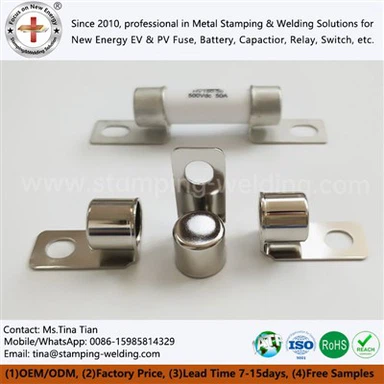
Fuse Copper Holders are core auxiliary components for fixed installation of fuses, mostly made of insulating materials such as plastic and ceramics. Their core function is to ensure the stable operation of fuses in the event of circuit overload or short circuit, ensuring that they quickly cut off the circuit. Some models have a fuse indication function. According to the material, it can be divided into plastic (for ordinary scenarios) and ceramic (for high temperature/special insulation scenarios); According to the installation method, it can be divided into screw installation, snap in installation, and rail installation; Divided into general, photovoltaic, guide rail, panel and other types according to application scenarios, you can choose as needed.
The core of the Fuse Copper Bases working principle is to firmly fix the fuse to ensure its reliable overcurrent protection function. The base should have excellent insulation, mechanical strength, heat resistance, and flame retardancy, and be able to withstand the impact of circuit faults and adapt to harsh working conditions.

Core Features and Application Scenarios: The Functional Value of Fuse Holder
Fuse Copper Knife plays multiple key roles in circuit protection systems, with its core functions reflected in fixed support, safety protection, improved protection effectiveness, and convenient maintenance. Firstly, it provides a safe and reliable installation environment for fuses, which are susceptible to external factors such as current shock and vibration during operation. The base is designed with a stable structure, combined with the excellent insulation and high temperature resistance of plastic or ceramic materials, effectively preventing safety accidents such as current leakage and fire. Secondly, Copper Holders for Knife Type NH Fuse Links help improve the protection effect of circuits. Their design usually fully considers the current specifications and working environment of the circuit, ensuring that the fuse responds quickly in case of circuit abnormalities, cuts off the power in a timely manner, and avoids equipment damage and the expansion of safety accidents. For example, the spiral fuse base has high breaking capacity and can cut off large currents in a short period of time, suitable for circuit protection scenarios with high breaking capacity requirements. Some fuse bases also have indication functions. By equipping a fuse indicator, when the fuse is blown, the indicator will pop up or change color, intuitively reminding users to replace it, greatly facilitating equipment maintenance and repair work, and further improving the safety and reliability of circuit operation.
The application scope of Fuse Clip Terminal covers multiple fields such as low voltage, high voltage, industry, semiconductor protection, etc. It is an indispensable core component in various electrical equipment and circuit protection scenarios. In the field of low-voltage circuits, it is widely used for overload and short circuit protection of household and industrial electrical equipment, such as RL6, RL7, RL96, RL52 series spiral Fuse Socket Clip, which can adapt to circuits with AC frequency of 45-62Hz, voltage of 500V and below. It can not only protect cables and lines, but also meet the special protection needs of semiconductor components and ships. In the industrial field, the application scenarios are more diversified. The RT18 and RT18X series fuse bases are suitable for AC 50Hz, voltage 380V and below, and current 63A and below lines, with automatic display and alarm function for phase failure, which can replace traditional RL series spiral fuses and LLC series plug-in fuses; The RL1B series spiral fuse base with phase failure protection is suitable for circuits with AC 50Hz, voltage of 380V and below, and current of 100A and below. Through the built-in micro switch, the control circuit power supply is cut off when the main circuit is overloaded or short-circuited, avoiding motor or electrical equipment from running in a phase failure. In the field of high voltage, the NT series has NH Fuse Base Square Pipe Knife, a filler sealed tube type blade contact, suitable for power networks and distribution devices with AC 45-62Hz and voltage of 660V. It has the characteristics of small size, light weight, low power consumption, and high breaking capacity, which can effectively protect the safety of high-voltage electrical equipment and lines.

Selection Guide: Model Adaptation and Core Considerations
The selection of the Copper Holder for Knife Type Fuses is directly related to the safety and reliability of the circuit. The core considerations include circuit parameters (voltage, current, frequency), load characteristics, short-circuit current size, and matching the appropriate model. It is necessary to clarify the circuit parameters and select the type of fuse according to the load and short-circuit current; Scientifically determine the rated current of the melt (suitable for different load scenarios), verify the protection characteristics, and ensure proper coordination between upper and lower level fuses (the fuse time of the upper level should be at least three times that of the lower level).
Common models of Knife Type Contact for Fuse Link Base Holder can be adapted as needed: RL6/7/96/52 series is suitable for AC 500V and below circuits, with strong breaking ability; The RT18 series is suitable for AC 380V, 63A and below lines, with some equipped with phase failure alarms; RL1B series with phase failure protection, suitable for AC 380V, 100A and below circuits; The NT series is suitable for high-voltage scenarios and has high breaking capacity; The NGT series is designed specifically for semiconductor protection; The BT14 series is a high breaking capacity fuse, suitable for low-voltage distribution circuits.
The selection of a Copper Holder for Fuse Bases is a critical step in electrical engineering design and construction, directly determining the safety and reliability of the circuit. The selection needs to comprehensively consider core factors such as circuit parameters, load characteristics, and short-circuit current size, while matching appropriate product models. Firstly, it is necessary to clarify the core parameters of the circuit, including voltage, current, frequency, etc. These parameters are the basis for selection. For example, there are significant differences in the requirements for the material and withstand voltage level of Fuse Blocks Holder between AC and DC circuits, high-voltage and low-voltage circuits. Secondly, the appropriate type of fuse should be selected based on the protection characteristics of the load and the magnitude of the short-circuit current. For high-capacity lighting circuits and motors, in addition to meeting overload protection requirements, the ability to break short-circuit current during a short-circuit should also be considered. In addition, it is necessary to verify the protection characteristics of the fuse to ensure that the protection characteristic curve of the selected Fuse Carrier Clip matches well with the overload characteristics of the protected object, achieving reliable protection across the entire range.

summary
This article focuses on the Fuse Holder, covering its basic understanding, core characteristics and applications, selection guidelines, and key points for matching components. The NH Fuse Bases are a core auxiliary device for circuit protection, with diverse classifications, excellent characteristics, and a wide range of application scenarios. Selection should take into account core factors such as circuit parameters and load characteristics, match the appropriate model, and pay attention to the compatibility of supporting components in order to ensure the safe and stable operation of the circuit.
contact us